 Otto DixTyskland, 1891–1969
Josef May
Kan det ses?
Ja, udstillet nu
Hvor er »Josef May« i dag? The Cleveland Museum of Art, 225 German Expressionism & Surrealism, Cleveland. Ja, udstillet nu. Kontrolleret 16. november 2026.

Lukket· åbner i morgen kl. 10.00
Udstillet for publikum.
- Kontrolleret
- Uændret siden
- Kilde
- Museet
Om maleriet
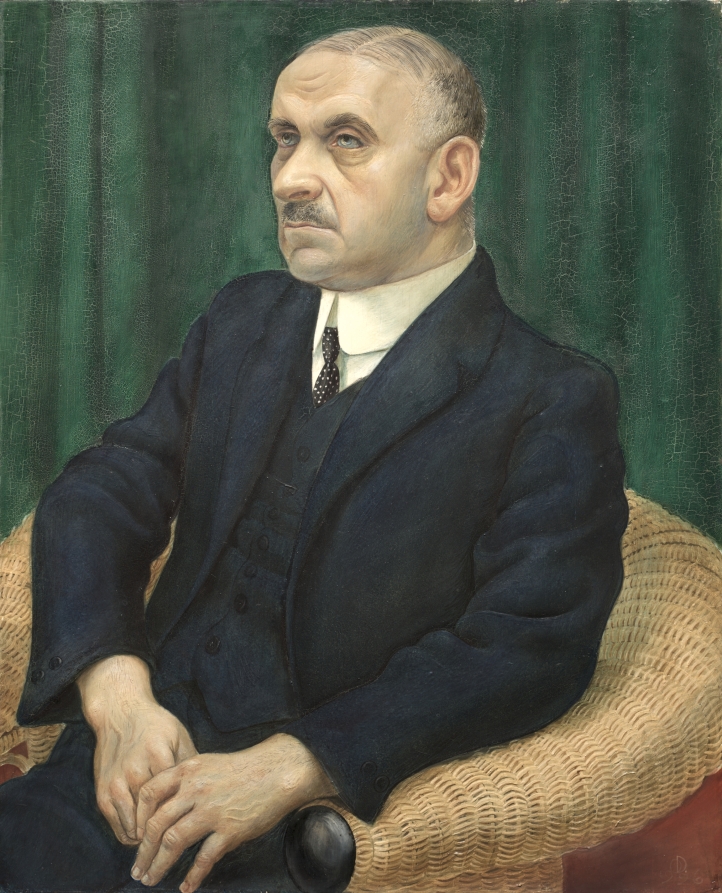
Otto Dix painted Josef May in 1926; the portrait is in the Cleveland Museum of Art, Cleveland. May, who was Jewish, managed Grünberg’s grain business in Arnsberg. After the Nazi seizure of power in 1933 he escaped to the Netherlands, where a heart attack ended his life in 1938. Dix, associated with the movement known as New Objectivity, criticised capitalist society in his paintings and combined egg tempera with other materials to sharpen the realism of his portraits. On view in gallery 225.
Med museets ord
A leader of the New Objectivity movement in Germany, Dix painted bitter critiques of modern capitalist society. To achieve a more incisive realism in his brutally honest portraits, he mixed egg tempera with other media. The sitter for this portrait, Josef May, was the Jewish manager of the Grünberg grain company in Arnsberg. When the Nazis seized power in 1933, May fled to Holland, where he died of a heart attack in 1938.
The Cleveland Museum of Art
Oplysninger
- Inventarnummer
- 1985.40
I kataloget
Kilder
- The Cleveland Museum of Art
- Billede: The Cleveland Museum of Art — © Artists Rights Society (ARS), New York / VG Bild-Kunst, Bonn
Imens i livet hos Otto Dix
Hele livet1920s
A ruthless chronicle of Weimar Germany
Like Grosz, Dix is extremely critical of contemporary German society, unsparingly depicting prostitution, violence, old age and death and often dwelling on Lustmord, or sexualized murder. His legless and disfigured veterans, a common sight on Berlin's streets in the 1920s, reveal the ugly side of war and the forgotten status of these men in German society.
c. 1924
Oil glazes over a tempera underpainting
By this time Dix is developing an increasingly realistic style of painting, using thin glazes of oil paint over a tempera underpainting in the manner of the old masters.
1924
Joining the Berlin Secession
In 1924 Dix joins the Berlin Secession.
1925
The Neue Sachlichkeit exhibition in Mannheim
Dix contributes to the Neue Sachlichkeit exhibition in Mannheim, which also features works by George Grosz, Max Beckmann, Heinrich Maria Davringhausen, Karl Hubbuch, Rudolf Schlichter, Georg Scholz and many others.
1925
The Trench scandal: Adenauer cancels the purchase
The Trench causes such a furor that the Wallraf-Richartz Museum hides the painting behind a curtain; in 1925 the then-mayor of Cologne, Konrad Adenauer, cancels the purchase of the painting and forces the museum's director to resign.
1927
Son born: Ursus Dix