ART WIKI32.963 udstillet
KortSamlingKunstnereMuseerUdstillingerJournal
Log ind

ART WIKI

Hvor mesterværket hænger, og hvornår man bliver lukket ind.

Samlinger: Art Institute of Chicago, Det Russiske Museum, Eremitagen, Getty Villa, Harvard Art Museums, Hirshhorn Museum and Sculpture Garden, J. Paul Getty Museum, Louvre, Metropolitan Museum of Art, Minneapolis Institute of Art, Museum of Modern Art, National Gallery of Art, National Museum of Asian Art, National Portrait Gallery (Smithsonian), Pusjkinmuseet, Rijksmuseum Amsterdam, Smithsonian American Art Museum, Statens Museum for Kunst, The Cleveland Museum of Art, Tretjakovgalleriet, Victoria and Albert Museum, Whitney Museum of American Art, Ruslands statskatalog over museumsfonden (274 museer), Europeana (19 museer), Wikidata (6 museer), Paris Musées (12 museer) og Joconde, det franske kulturministeriums museumsdatabase (495 museer). Billederne tilhører deres rettighedshavere.

Afsnit

  • Kort
  • Søgning
  • Samling
  • Mesterværker
  • Udstillet nu
  • Kunstnere

Mere

  • Museer & gallerier
  • Udstillinger
  • Journal
  • Hvor data kommer fra
  • Privatliv & cookies
ForsideKortKatalog
  1. Samling/
  2. Minneapolis Institute of Art/
  3. Hotei Within his Sack
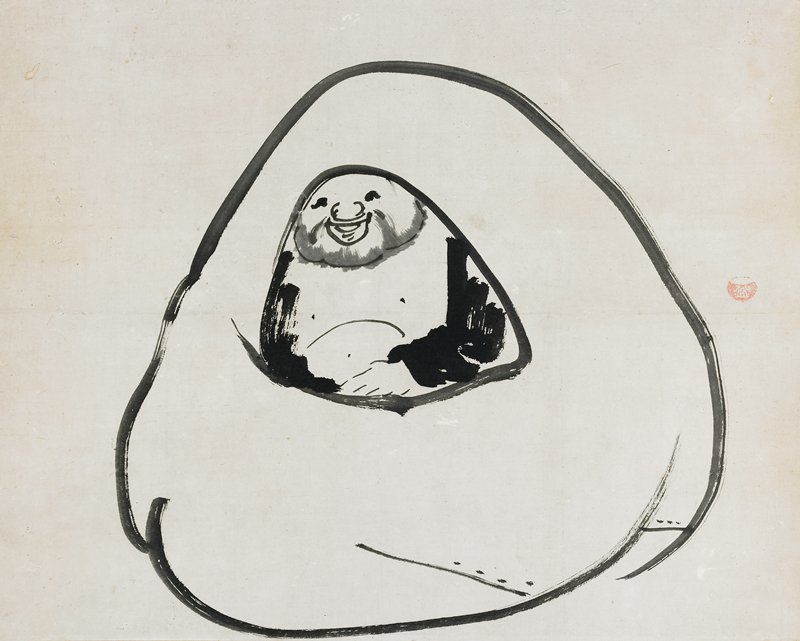
Hotei Within his Sack, Kōgan Gengei, 1800
KKōgan GengeiJapan, 1748–1821

Hotei Within his Sack

1800 · Painting · 41.91 × 52.71 cm

Må man se det?

Tager ikke imod for tiden

Minneapolis Institute of Art

Minneapolis, USA

Det hører til samlingen, men er ikke udstillet for tiden.

Kontrolleret
for 3 dage siden
Uændret siden
25. sep. 2026
Kilde
Museet
På kortetMuseets side

Om maleriet

Budai (Jp. Hotei) grins broadly as he sits enveloped in his large bag. Budai was an eccentric Tang-dynasty (618–907) itinerant monk who was skilled at ink painting. His nickname, which literally translates to “jute bag, ” refers to the large traveling sack he used for carrying belongings and food as well as accepting alms. He is often depicted with a large belly and a broad smile to reflect his cheery nature. In Japan, he became part of the seven gods of fortune and was associated with wealth and prosperity. Within Chan (Jp. Zen) Buddhism, Budai was considered the incarnation of Maitreya, the present bodhisattva and future Buddha.

Læs videre

Kōgan Gengei was a Japanese Zen priest in the lineage of Hakuin Ekaku (1686-1769), who was an influential Zen Buddhist monk, painter, and calligrapher. In Chan Buddhism, paintings were a tool to express religious teachings. Ink paintings were particularly suitable because they only required a brush, ink, and paper, all everyday objects in a monastery.
Minneapolis Institute of Art

Oplysninger

1800 · 52 år gammel
17481821
Inventarnummer
2004.46.1

I kataloget

MalerierTuschJapansk maleriKlassicismeRomantikken1800-talletZengaJapan

Kilder

  • Minneapolis Institute of Art
  • Billede: Minneapolis Institute of Art — public domain

Mere af Kōgan Gengei

Alle værker
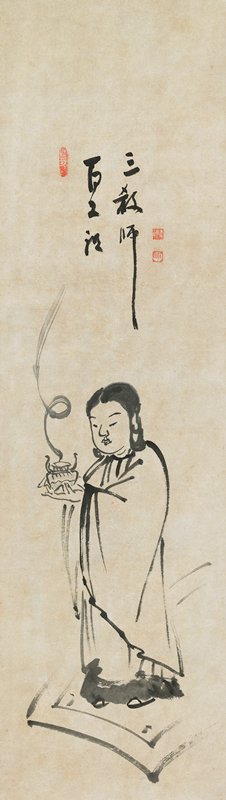
Shotoku Taishi, Kōgan Gengei, 1800

Shotoku Taishi

1800 · Ikke udstillet · Minneapolis Institute of Art

Naboer på Minneapolis Institute of Art

Museets side
Olive Trees, Vincent van Gogh, 1889

Vincent van Gogh

Olive Trees, 1889

Grainstack, Sun in the Mist, Claude Monet, 1891

Claude Monet

Grainstack, Sun in the Mist, 1891

Lucretia, Rembrandt van Rijn, 1666

Rembrandt van Rijn

Lucretia, 1666

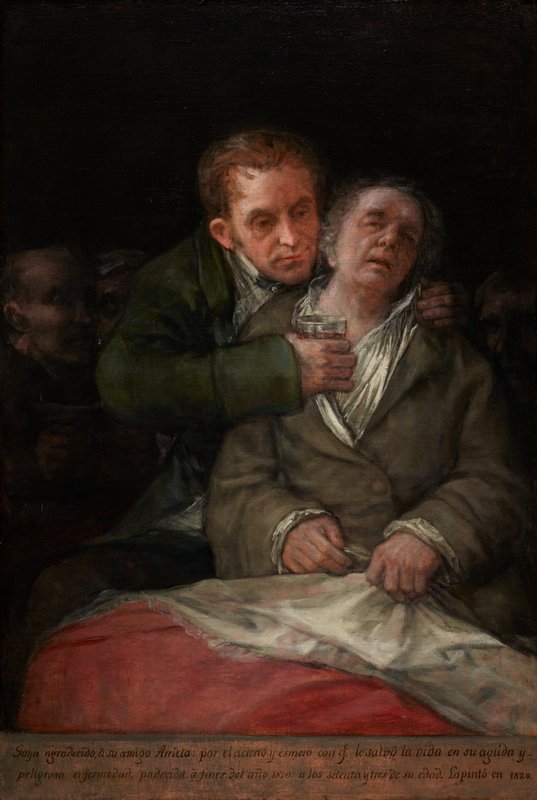
Self-Portrait with Dr. Arrieta, Francisco José de Goya y Lucientes, 1820

Francisco de Goya

Self-Portrait with Dr. Arrieta, 1820

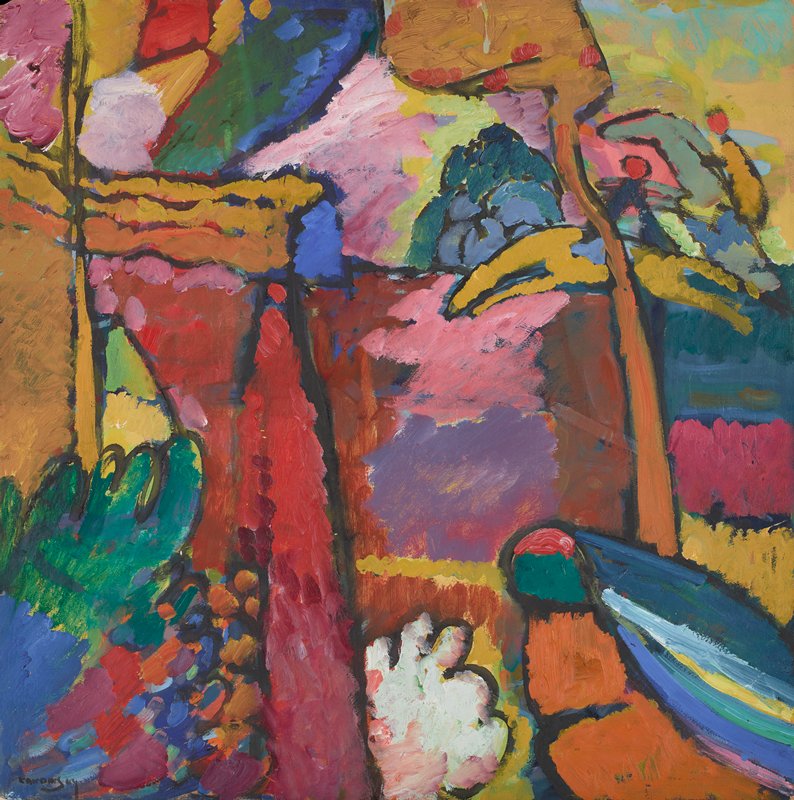
Study for Improvisation V, Vassily Kandinsky, 1910

Vasily Kandinsky

Study for Improvisation V, 1910

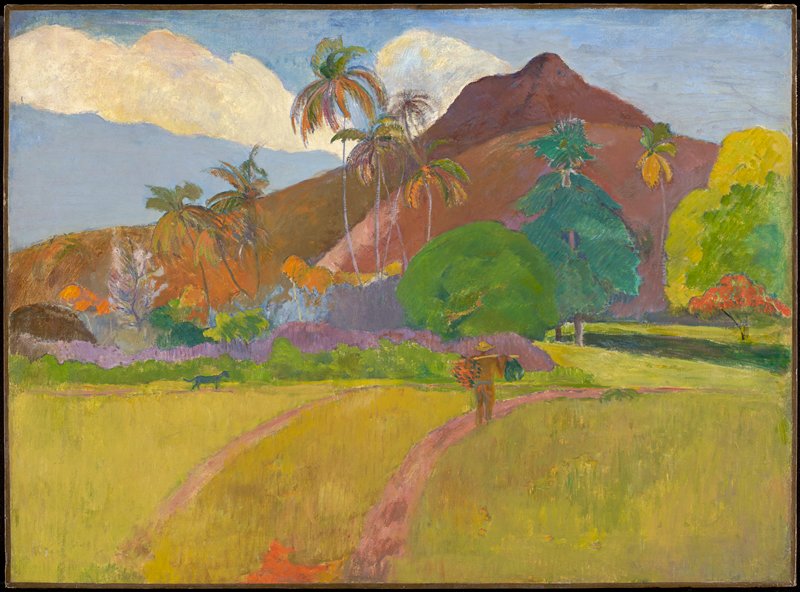
Tahitian Landscape, Paul Gauguin, 1891

Paul Gauguin

Tahitian Landscape, 1891

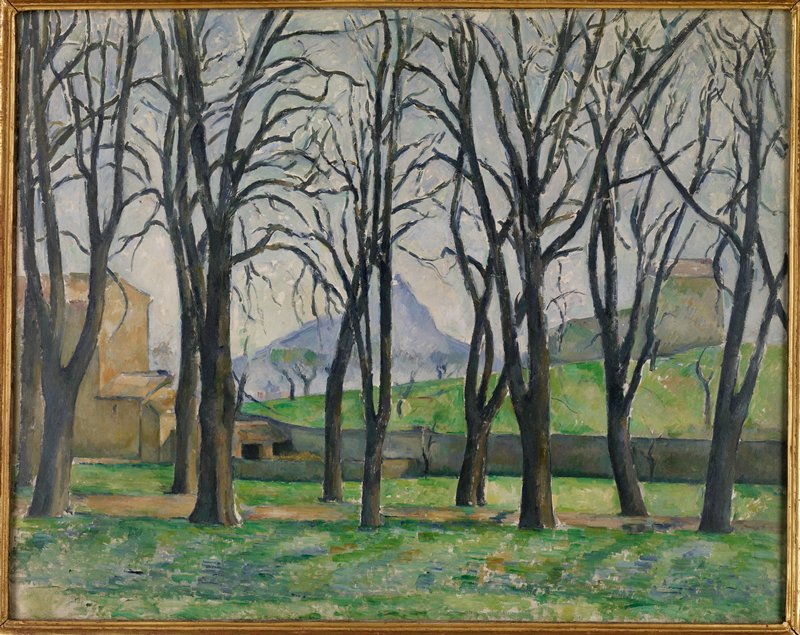
Chestnut Trees at Jas de Bouffan, Paul Cézanne, c. 1885–86

Paul Cézanne

Chestnut Trees at Jas de Bouffan, c. 1885–86

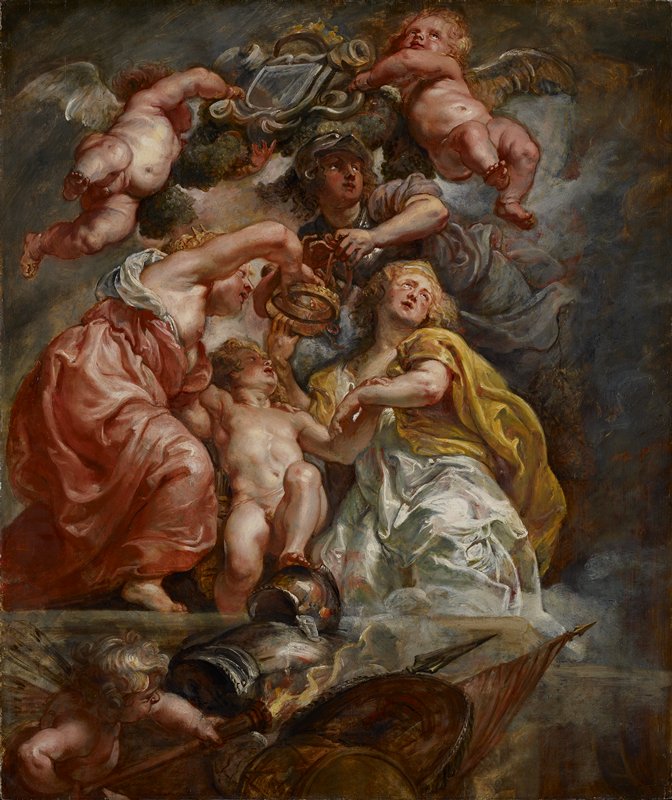
The Union of England and Scotland (Charles I as the Prince of Wales), Peter Paul Rubens, 1633–34

Peter Paul Rubens

The Union of England and Scotland (Charles I as the Prince of Wales), 1633–34