 Emil NoldeTyskland, Danmark, 1867–1956
Goldsmiths
Kan det ses?
Ja, udstillet nu
Hvor er »Goldsmiths« i dag? The Cleveland Museum of Art, 225 German Expressionism & Surrealism, Cleveland. Ja, udstillet nu. Kontrolleret 16. november 2026.

Lukket· åbner i morgen kl. 10.00
Udstillet for publikum.
- Kontrolleret
- Uændret siden
- Kilde
- Museet
Om maleriet
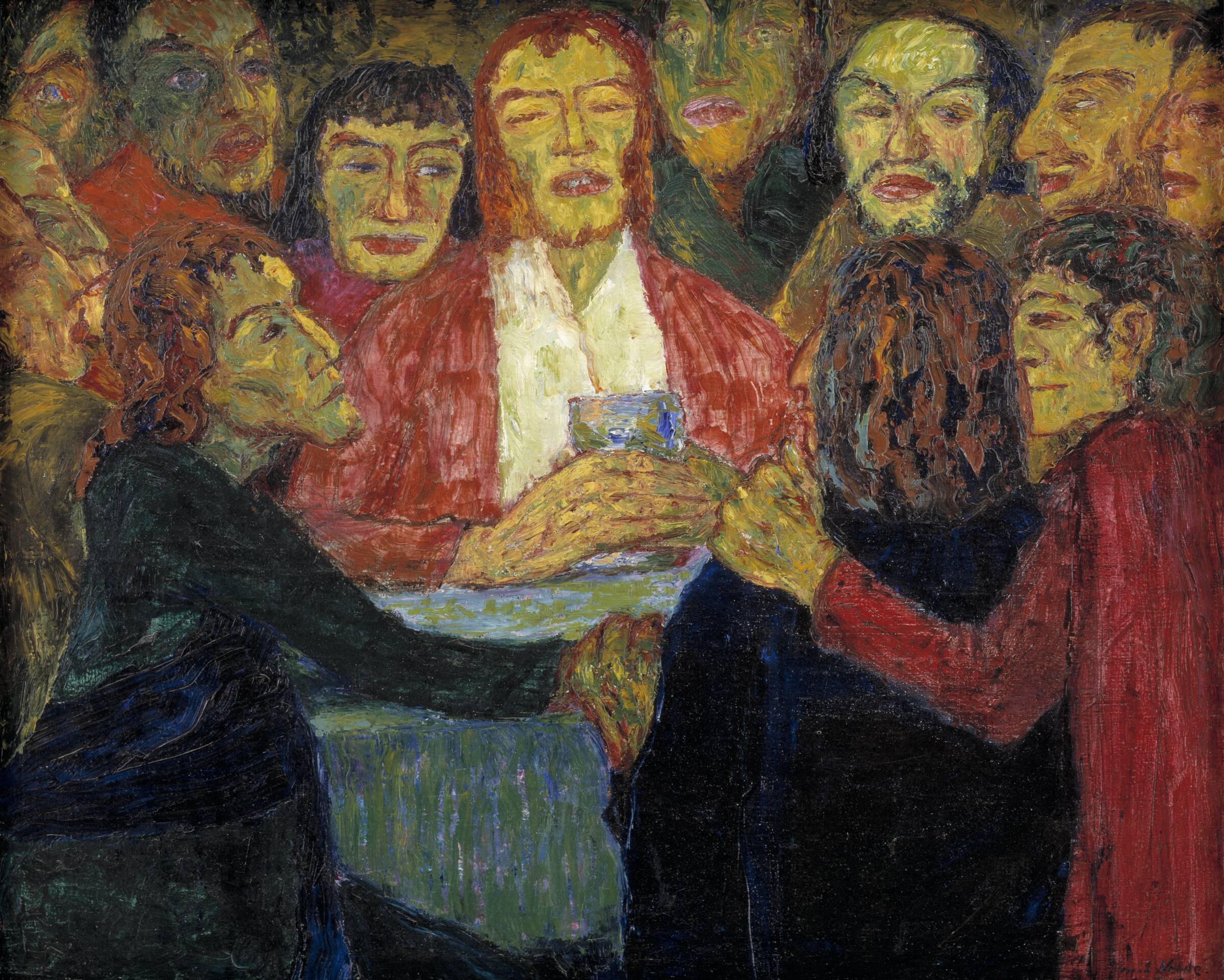
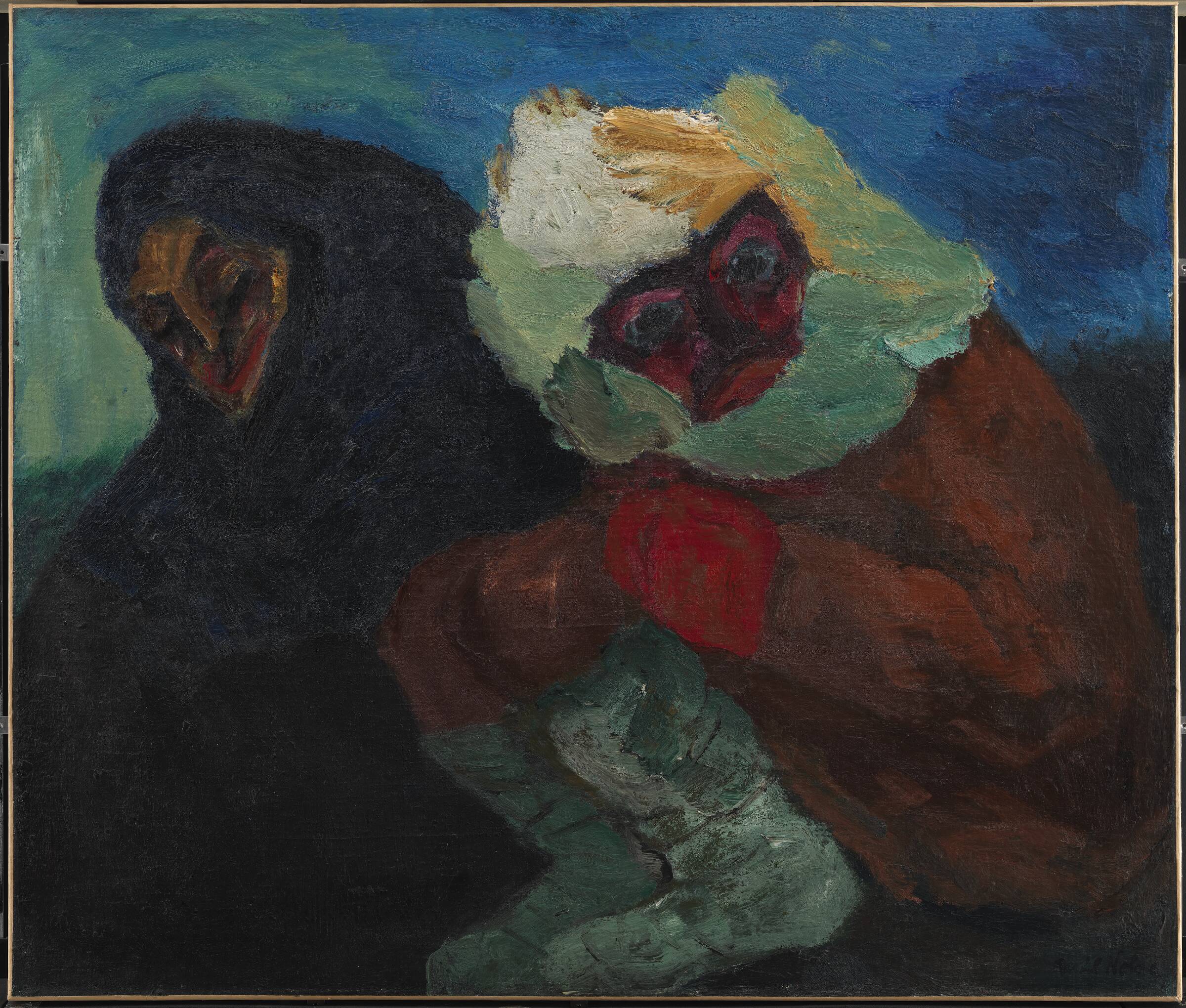
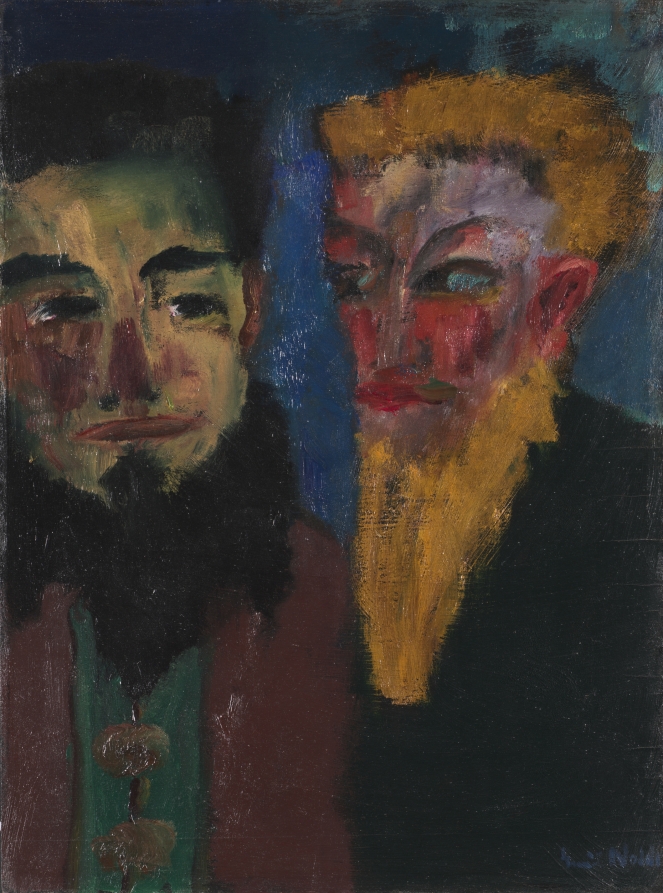
Emil Nolde painted Goldsmiths in 1919; it is in the Cleveland Museum of Art, Cleveland. The figures may be the craftsmen chosen by God to make sacred objects, later blessed by Moses for their work. Nolde understood such religious pictures as imaginative visions rather than literal biblical illustrations. Simplified forms and forceful colour served his aim of spiritual expression. His sources included Oceanic carving and the medieval religious paintings of Matthias Grünewald. On view in room 225, German Expressionism & Surrealism.
Med museets ord
A leading artist of the German Expressionist group Die Brücke (The Bridge), Nolde criticized French modernism as overly intellectual and tepid. Seeking a new art of radically simplified form and emotive color, he found inspiration in Oceanic sculpture and the medieval paintings of Matthias Grünewald. Deeply religious, Nolde depicted biblical subjects with a deliberately crude, ferocious vigor intended to elevate spirituality over descriptive form. This painting may allude to two goldsmiths divinely selected to make religious objects, and whose work so pleased God that Moses blessed them (Exodus 35:30-43). Such images are not literal illustrations, Nolde explained, but visions that sprang from his own imagination, driven by the spontaneous release of emotion. "In art" he wrote, "I fight for unconscious creation. Labor destroys paintings."
The Cleveland Museum of Art
Oplysninger
- Inventarnummer
- 2008.36
I kataloget
Kilder
- The Cleveland Museum of Art
- Billede: The Cleveland Museum of Art — © the artist or rights holder