Oskar SchlemmerTyskland, 1888–1943
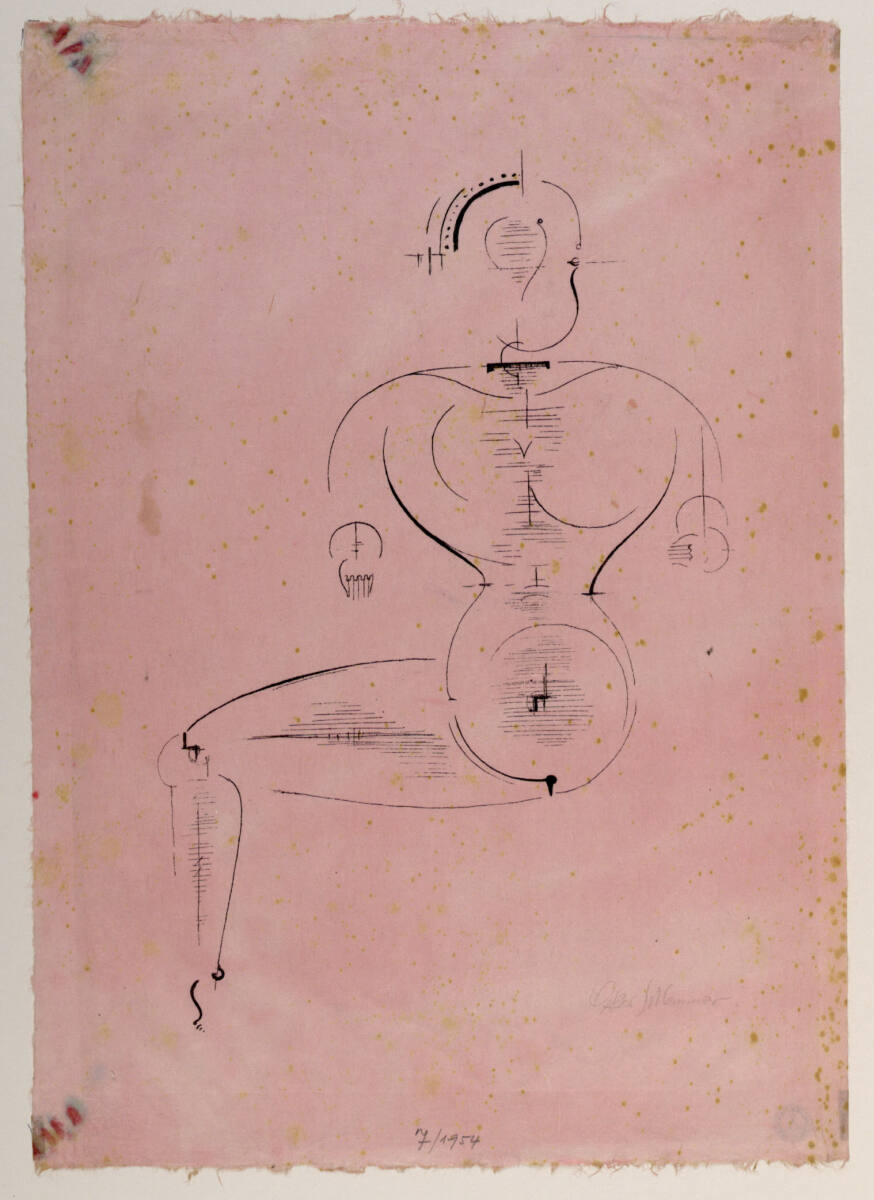
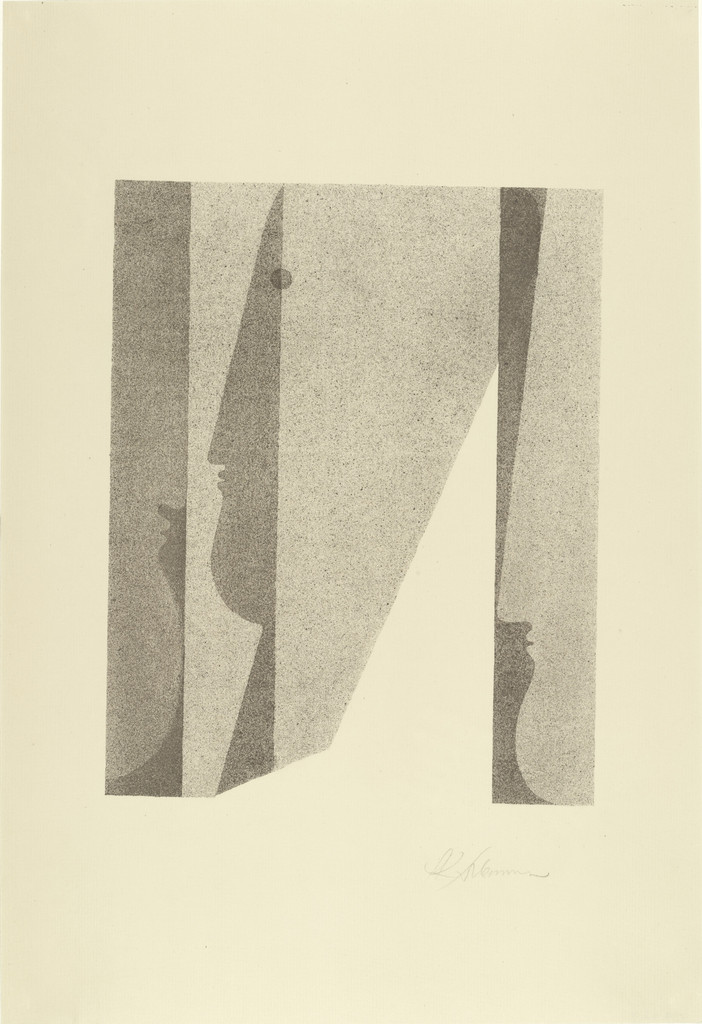
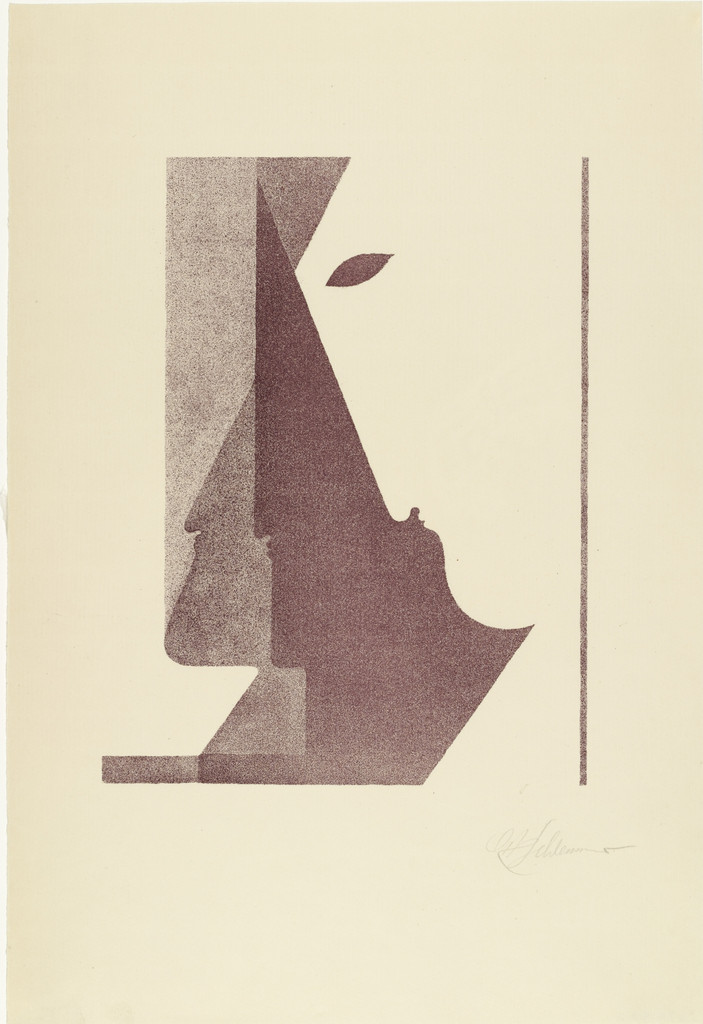
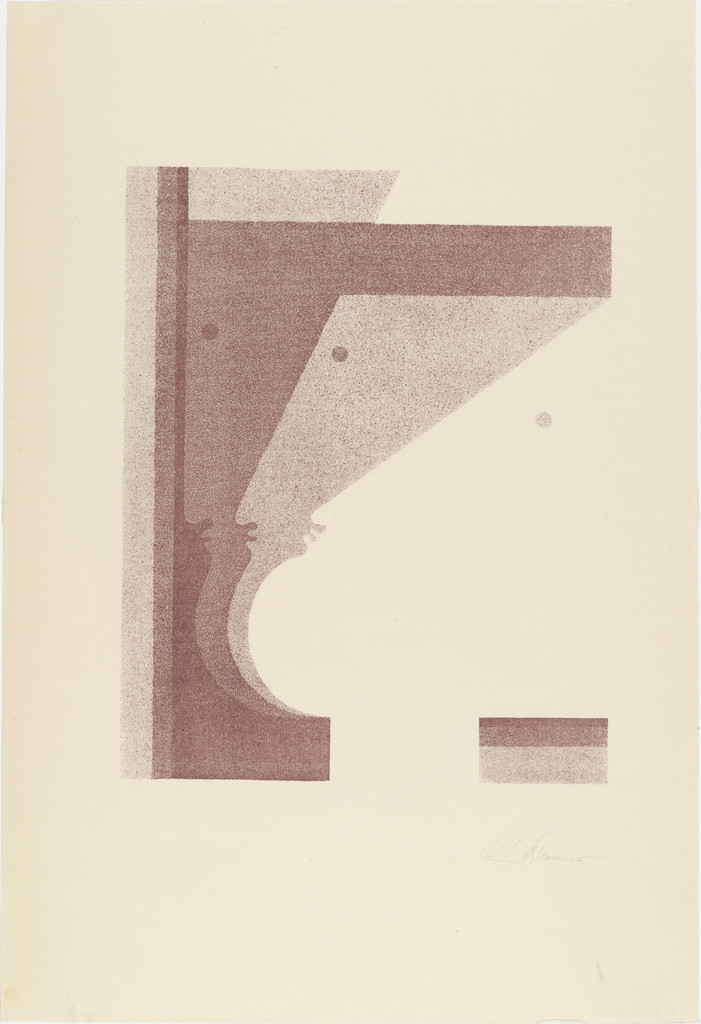
Figurenplan K1 (Figure Design K1)
Kan det ses?
Ukendt
Hvor er »Figurenplan K1 (Figure Design K1)« i dag? Samling: Rijksmuseum Amsterdam, Amsterdam. Ukendt.

Amsterdam, Holland
Ejeren er kendt; om værket er udstillet i dag, vides ikke.
- Kilde
- Museet
Om værket
Schlemmer only made about twenty prints in total. As with his paintings and designs for the dance and theatre, his prints take the human figure as their central focus. The stylized shapes of the figures in this lithograph give them the appearance of mannequins or puppets. They are assemblages of forms, rather than creatures of flesh and blood.
Rijksmuseum Amsterdam
Oplysninger
- Inventarnummer
- BI-2018-1-12
I kataloget
Kilder
- Rijksmuseum Amsterdam
- Billede: Rijksmuseum Amsterdam — public domain
Imens i livet hos Oskar Schlemmer
Hele livet1919
Turns to sculpture; exhibition at the Der Sturm gallery
In 1919 Schlemmer turns to sculpture and holds an exhibition of his work at the gallery Der Sturm in Berlin.
1919
Helps to update the Stuttgart Academy’s curriculum
At the same time Schlemmer helps to update the curriculum of the Stuttgart Academy of Fine Arts with the appointment of new faculty and exhibitions of modern art; those involved include Paul Klee and Willi Baumeister.
1920
Gropius invites Schlemmer to the Weimar Bauhaus
Walter Gropius invites Schlemmer to the Bauhaus in Weimar: by one account he runs the mural-painting and sculpture departments, by another he first heads the metal workshop and from 1922 the sculpture workshop.
1920
Marries Helena Tutein
In 1920 Schlemmer marries Helena Tutein; after the wedding he is invited to Weimar by Walter Gropius.
1923
Takes over the theatre workshop from Lothar Schreyer
In 1923 Schlemmer becomes Master of Form at the Bauhaus theatre workshop, taking it over from Lothar Schreyer. His complex ideas prove influential, making him one of the most important teachers at the school at that time.
1923
The influence of Metaphysical painting
From 1923 Schlemmer’s style is strongly influenced by Metaphysical painting (Pittura Metafisica): the number of figures in his pictures noticeably decreases, and they are arranged on a clearly divided surface in a choreographic order that reflects universal harmony. The National Gallery in Berlin and the Folkwang Museum in Essen acquire works from this period, and recognition and fame come to the artist.