ART WIKI32.963 udstillet
KortSamlingKunstnereMuseerUdstillingerJournal
Log ind

ART WIKI

Hvor mesterværket hænger, og hvornår man bliver lukket ind.

Samlinger: Art Institute of Chicago, Det Russiske Museum, Eremitagen, Getty Villa, Harvard Art Museums, Hirshhorn Museum and Sculpture Garden, J. Paul Getty Museum, Louvre, Metropolitan Museum of Art, Minneapolis Institute of Art, Museum of Modern Art, National Gallery of Art, National Museum of Asian Art, National Portrait Gallery (Smithsonian), Pusjkinmuseet, Rijksmuseum Amsterdam, Smithsonian American Art Museum, Statens Museum for Kunst, The Cleveland Museum of Art, Tretjakovgalleriet, Victoria and Albert Museum, Whitney Museum of American Art, Ruslands statskatalog over museumsfonden (274 museer), Europeana (19 museer), Wikidata (6 museer), Paris Musées (12 museer) og Joconde, det franske kulturministeriums museumsdatabase (495 museer). Billederne tilhører deres rettighedshavere.

Afsnit

  • Kort
  • Søgning
  • Samling
  • Mesterværker
  • Udstillet nu
  • Kunstnere

Mere

  • Museer & gallerier
  • Udstillinger
  • Journal
  • Hvor data kommer fra
  • Privatliv & cookies
ForsideKortKatalog
  1. Samling/
  2. The Cleveland Museum of Art/
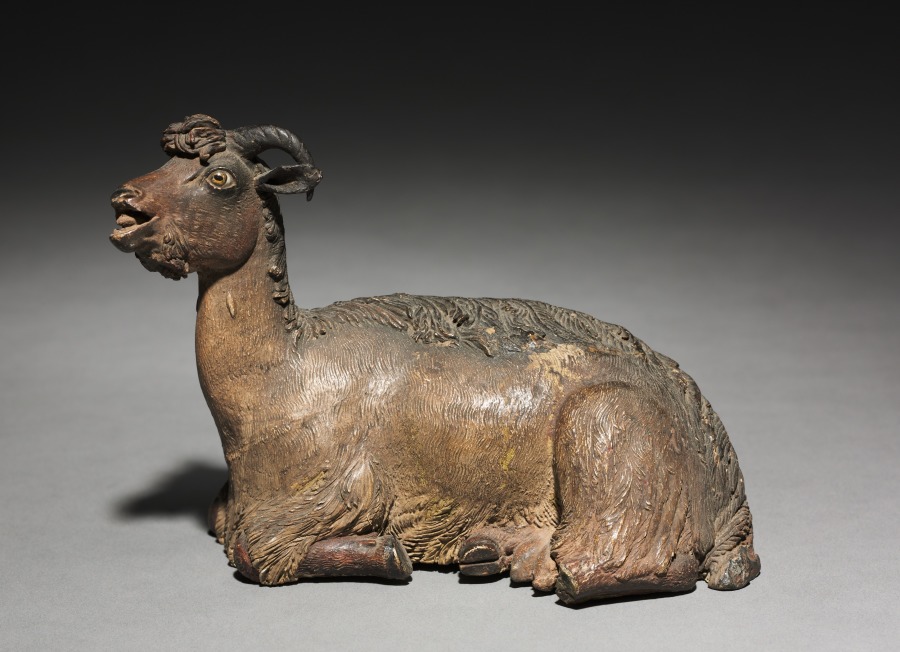
  3. Figure from a Crèche: Sitting Ram
Figure from a Crèche: Sitting Ram, 1780–1830

Figure from a Crèche: Sitting Ram

1780–1830 · Sculpture

Må man se det?

Tager ikke imod for tiden

The Cleveland Museum of Art

Cleveland, USA

Det hører til samlingen, men er ikke udstillet for tiden.

Kontrolleret
for 3 dage siden
Uændret siden
19. aug. 2026
Kilde
Museet
På kortetMuseets side

Om skulpturen

The practice of creating scenes of the Nativity for the home dates from the early 1700s in Italy, where people began to set up doll-like figures of about a foot or less in height. The custom was particularly popular in Naples around 1800, where crèche scenes (crèche means cradle, or crib) included many figures, whose heads and hands of painted terracotta, stuffed cloth bodies, and clothing adapted from contemporary local costumes gave them an amazingly realistic character.

Læs videre

Representations of the birth of Jesus can be traced to the first few centuries of Christianity. Both living creatures and sculptural depictions of them were used from early times. By the late middle ages it was customary to create life-size figures of wood or stone, naturalistically painted, to represent the characters who participated in the events of Jesus's early life. These sculptures were then arranged in scenes illustrating one or both of the most important of these events, the Adoration of the Shepherds and the Adoration of the Magi-the three kings from the East who came to pay homage to the Christ child. Used in churches, these large figures were especially popular in Italy, Central Europe, Spain, and Portugal.

This Object in Focus presentation was organized by Henry Hawley, Curator of Renaissance and Later Decorative Arts and Sculpture.

The Cleveland Museum of Art

Oplysninger

Inventarnummer
1972.368.21

I kataloget

SkulpturTerrakotta og keramikItaly, Naples, late 18th-early 19th century

Kilder

  • The Cleveland Museum of Art
  • Billede: The Cleveland Museum of Art — Museum open access
Naboer på The Cleveland Museum of Art

Museets side
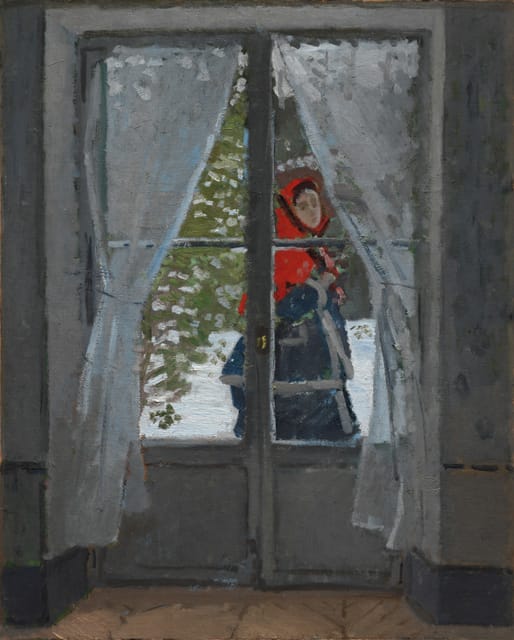
The Red Kerchief, Claude Monet, c. 1868–73

Claude Monet

The Red Kerchief, c. 1868–73

Melencolia I, Albrecht Dürer, 1514

Albrecht Dürer

Melencolia I, 1514

The Virgin and Child with the Pear, Albrecht Dürer, 1511

Albrecht Dürer

The Virgin and Child with the Pear, 1511

The Nativity, Albrecht Dürer, probably c. 1509/1510

Albrecht Dürer

The Nativity, probably c. 1509/1510

The Virgin and Child on a Crescent with a Starry Crown, Albrecht Dürer, 1508

Albrecht Dürer

The Virgin and Child on a Crescent with a Starry Crown, 1508

The Lamentation, Albrecht Dürer, 1507

Albrecht Dürer

The Lamentation, 1507

Large Horse, Albrecht Dürer, 1505

Albrecht Dürer

Large Horse, 1505

Nemesis (The Great Fortune), Albrecht Dürer, c. 1501/1502

Albrecht Dürer

Nemesis (The Great Fortune), c. 1501/1502