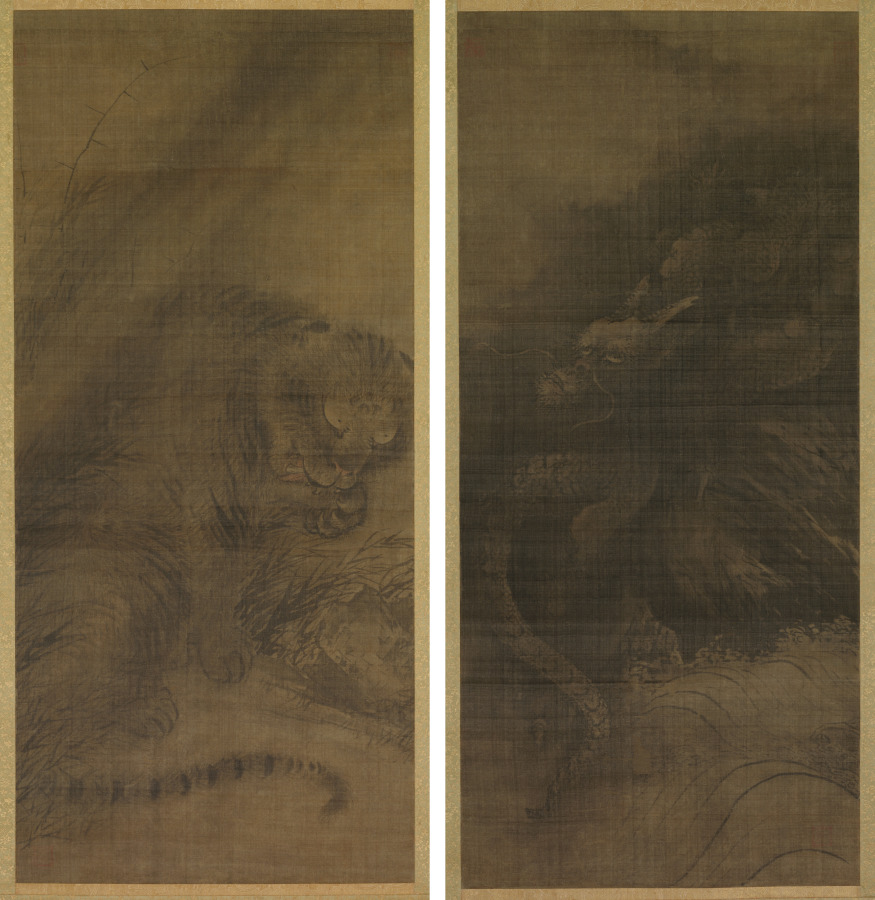
Dragon; Tiger
Kan det ses?
Ikke udstillet lige nu
Hvor er »Dragon; Tiger« i dag? Samling: The Cleveland Museum of Art, Cleveland. Ikke udstillet lige nu. Kontrolleret 29. september 2026.

Cleveland, USA
Det hører til samlingen, men er ikke udstillet for tiden.
- Kontrolleret
- Uændret siden
- Kilde
- Museet
Om maleriet
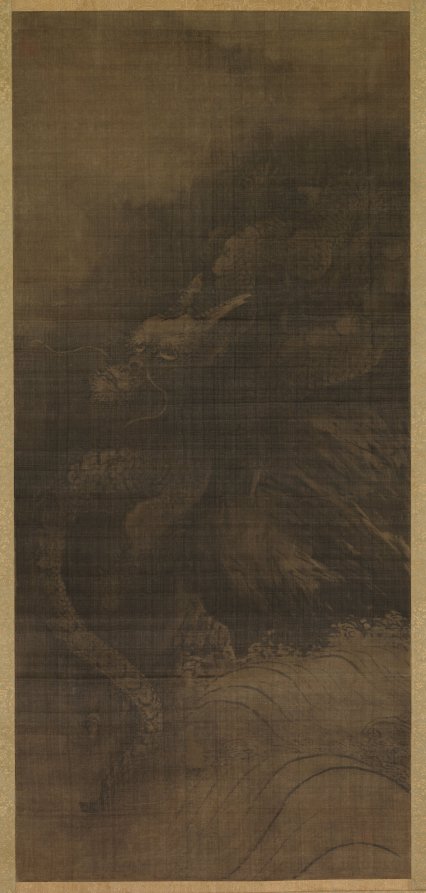
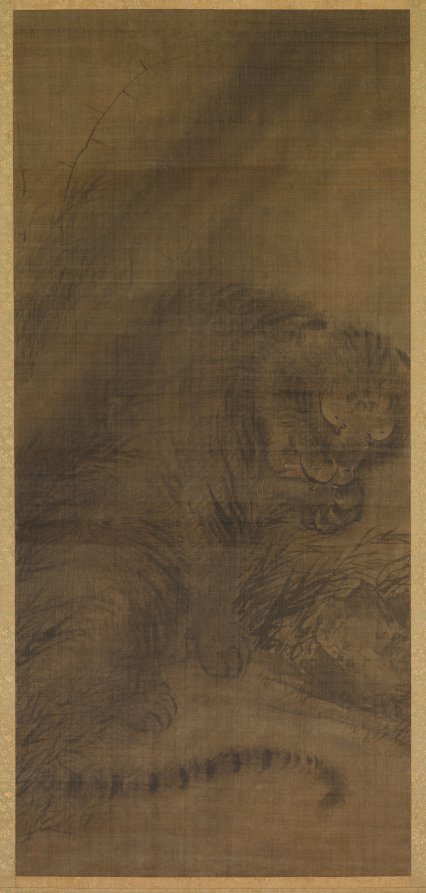
Dragon, Tiger (Chinese: 龍虎圖) are a set of two hanging scroll paintings on silk, painted by the Chan (Zen) artist Muqi Fachang during the Southern Song dynasty, contemporary to that of the Kamakura period. Now housed at the Cleveland Museum of Art, the painting was exported from China to Japan soon after its creation, where it enjoyed long time ownership under the Ashikaga shogunate.
Like the painting Six Persimmons, held by Daitoku-ji, Kyoto, Muqi's paintings has long been considered popular in Japan.
Med museets ord
The dragon and tiger are tied to the philosophical concept of yin and yang, which describes opposite but complementary forces. The dragon occupies a tiered background of waves and mist. Its luminous head emerges from the darker passages, and its narrow twisting body is serpent-like. By contrast, the close-up view of the tiger emphasizes its bulk. The tiger bends its head to lick its paw while its tail curls in the foreground.
In their original Chan Buddhist context, this pair of scrolls likely flanked a central image, like the Bodhisattva Guanyin. The silk has darkened over the centuries, and the slight reddish shading in the tiger’s tongue and nose has faded.
The Cleveland Museum of Art
Oplysninger
- Inventarnummer
- 1958.427
I kataloget
Kilder
- The Cleveland Museum of Art
- Billede: The Cleveland Museum of Art — Museum open access