ART WIKI32.963 udstillet
KortSamlingKunstnereMuseerUdstillingerJournal
Log ind

ART WIKI

Hvor mesterværket hænger, og hvornår man bliver lukket ind.

Samlinger: Art Institute of Chicago, Det Russiske Museum, Eremitagen, Getty Villa, Harvard Art Museums, Hirshhorn Museum and Sculpture Garden, J. Paul Getty Museum, Louvre, Metropolitan Museum of Art, Minneapolis Institute of Art, Museum of Modern Art, National Gallery of Art, National Museum of Asian Art, National Portrait Gallery (Smithsonian), Pusjkinmuseet, Rijksmuseum Amsterdam, Smithsonian American Art Museum, Statens Museum for Kunst, The Cleveland Museum of Art, Tretjakovgalleriet, Victoria and Albert Museum, Whitney Museum of American Art, Ruslands statskatalog over museumsfonden (274 museer), Europeana (19 museer), Wikidata (6 museer), Paris Musées (12 museer) og Joconde, det franske kulturministeriums museumsdatabase (495 museer). Billederne tilhører deres rettighedshavere.

Afsnit

  • Kort
  • Søgning
  • Samling
  • Mesterværker
  • Udstillet nu
  • Kunstnere

Mere

  • Museer & gallerier
  • Udstillinger
  • Journal
  • Hvor data kommer fra
  • Privatliv & cookies
ForsideKortKatalog
  1. Samling/
  2. Herzog Anton Ulrich-Museum/
  3. [Die Auferstehung Christi]
[Die Auferstehung Christi], Karel van Mander the Elder, 1581–1600
Karel van Mander the Elder, portrætKarel van Mander the ElderDe historiske Nederlande, 1548–1606

[Die Auferstehung Christi]

1581–1600 · Print

Oplysninger

1581–1600
15481606

Imens i livet hos Karel van Mander the Elder

Hele livet
  1. 1578–1580

    Marries an eighteen-year-old local girl

    Settled in Meulebeke, van Mander marries an 18-year-old local girl, with whom he has a son.

  2. 1580

    Flees to Kortrijk from religious troubles

    Because of religious troubles caused by Catholic zealots, van Mander — who had become a Mennonite and was therefore a possible target — leaves Meulebeke; in Kortrijk the family finds refuge with the Grauwe Minnebroeders. There he receives a commission for an altarpiece, and another son is born.

  3. 1583

    Flees by ship to Haarlem

    Threatened by religious troubles and the plague, van Mander flees by ship with his family and his mother-in-law to the Dutch Republic and settles in Haarlem, where he will live for the next twenty years.

  4. 1583–1603

    Evenings of drawing and pupils in his home

    After the Calvinist iconoclasm religious themes have gone out of fashion and mythology has become popular, but few painters could afford a trip to Italy, so van Mander receives budding artists in his home for evenings of communal drawing and study of classical mythology, to educate them in the proper techniques. A firm believer in the hierarchy of genres, and in the idea that true-to-life historical allegories can be achieved only through proper study of existing works, he counts Frans Hals and Hendrick Gerritsz Pot among his Haarlem pupils.

  5. 1585

    Spranger's drawings for Goltzius

Mere af Karel van Mander the Elder

Alle værker

Fra samlingen: Herzog Anton Ulrich-Museum

Museets side

Om samme emne · Auferstehung

Alle værker om emnet

Van Mander shows his friend Hendrick Goltzius drawings by Bartholomeus Spranger, then the leading artist of Northern Mannerism and court artist of Emperor Rudolf II in Prague. The drawings have a galvanising effect on Goltzius; his engravings after them spread the Mannerist style, and van Mander, Goltzius and Cornelis van Haarlem become known as the “Haarlem Mannerists” — with a strong awareness of style, cultivated elegance, artful ingenuity rather than naturalism, exaggeratedly brawny figures, violent drama and a heightened richness of detail.

  • 1587

    Founding of the Haarlem academy

    Together with Cornelis van Haarlem and Hendrick Goltzius van Mander founds an “academy to study after life”, later known as the Haarlem Academy of Mannerists. What it actually did is not entirely clear: by one account, modelled on the Italian pattern, it studied anatomy and drew from nude models, including women, which was forbidden in the North at the time; by another, it was an informal discussion group, and by a third it was literary in nature.

  • Må man se det?

    Ukendt

    Herzog Anton Ulrich-Museum

    Braunschweig, Tyskland

    Ejeren er kendt; om værket er udstillet i dag, vides ikke.

    Uændret siden
    27. sep. 2026
    Kilde
    Museet
    På kortetMuseets side

    Hvad det viser

    AuferstehungKristusAngelGrabSaintPassionChristus, der in der Regel eine Fahne hält, steigt aus dem Grab (zusätzlich sind häufig schlafende und/oder erschrockene Soldaten dargestellt)Cherubim, d.h. Kinderköpfe mit FlügelnEin Engel verkündet (mehrere Engel verkünden) den drei Marien die Botschaft von der Auferstehung Christi

    I kataloget

    GrafikRenæssancen1500-tallet

    Kilder

    • Herzog Anton Ulrich-Museum
    • Billede: Herzog Anton Ulrich-Museum — CC BY-NC-SA 4.0
    De grootmoedigheid van Scipio, Karel van Mander, 1600

    De grootmoedigheid van Scipio

    1600 · Rijksmuseum Amsterdam

    The Massacre of the Innocents, Karel van Mander the Elder, 1600

    The Massacre of the Innocents

    1600 · Eremitagen

    The Departure of the Prodigal Son, Karel van Mander I

    The Departure of the Prodigal Son

    Ikke udstillet · National Gallery of Art

    The Good Thief, Karel van Mander I

    The Good Thief

    Ikke udstillet · National Gallery of Art

    Der Ehehandel, Karel van Mander the Elder

    Der Ehehandel

    Albertina

    Diana und Aktäon, Karel van Mander the Elder

    Diana und Aktäon

    Kupferstich-Kabinett Dresden

    Allegorie, Karel van Mander the Elder

    Allegorie

    Albertina

    Die Weisheit der Narren (Der Narr mit der Eule), Karel van Mander the Elder

    Die Weisheit der Narren (Der Narr mit der Eule)

    Albertina

    Portrait d'Adolphe de Vignacourt Grand Maître de Malthe, Caravaggio, 1704–1755

    Caravaggio

    Portrait d'Adolphe de Vignacourt Grand Maître de Malthe, 1704–1755

    Ecce Homo, Caravaggio, 1674–1684

    Caravaggio

    Ecce Homo, 1674–1684

    Heiliger Hieronymus, Caravaggio

    Caravaggio

    Heiliger Hieronymus

    Bildnis eines Mannes, Rembrandt, 1839–1850

    Rembrandt van Rijn

    Bildnis eines Mannes, 1839–1850

    Bildnis einer Frau, Rembrandt, 1839–1850

    Rembrandt van Rijn

    Bildnis einer Frau, 1839–1850

    Tobias und seine Frau, Rembrandt, 1773

    Rembrandt van Rijn

    Tobias und seine Frau, 1773

    Tobias und seine Frau, Rembrandt, 1773

    Rembrandt van Rijn

    Tobias und seine Frau, 1773

    Lot mit seinen Töchtern, Rembrandt, 1771

    Rembrandt van Rijn

    Lot mit seinen Töchtern, 1771

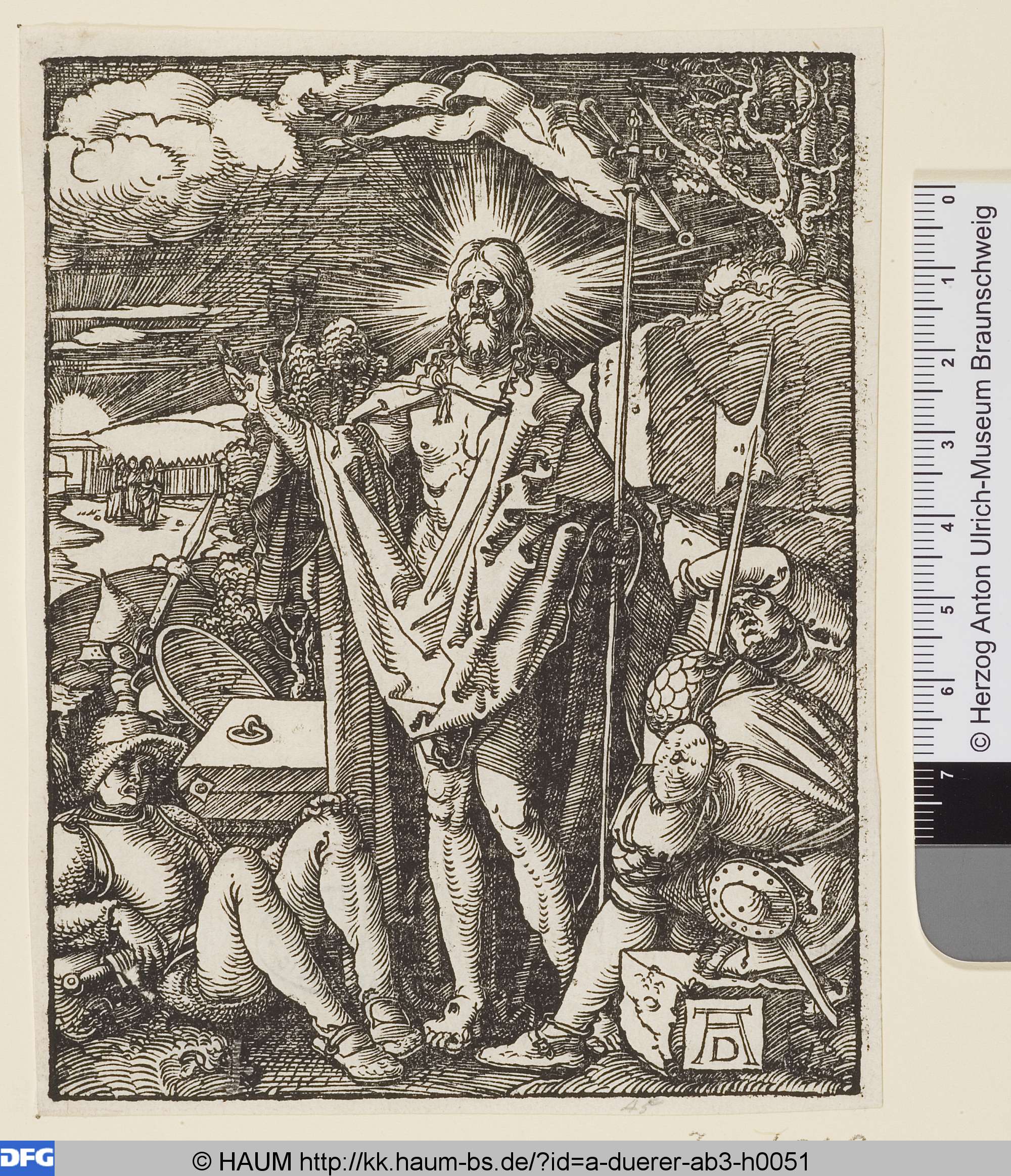
    Die Auferstehung Christi, Albrecht Dürer, 1630–1673

    Albrecht Dürer

    Die Auferstehung Christi, 1630–1673

    Herzog Anton Ulrich-Museum

    Christus erscheint seiner Mutter, Albrecht Dürer, 1509

    Albrecht Dürer

    Christus erscheint seiner Mutter, 1509

    Herzog Anton Ulrich-Museum

    Die Auferstehung, Albrecht Dürer, 1509

    Albrecht Dürer

    Die Auferstehung, 1509

    Herzog Anton Ulrich-Museum

    Die Auferstehung, Albrecht Dürer, 1512

    Albrecht Dürer

    Die Auferstehung, 1512

    Herzog Anton Ulrich-Museum

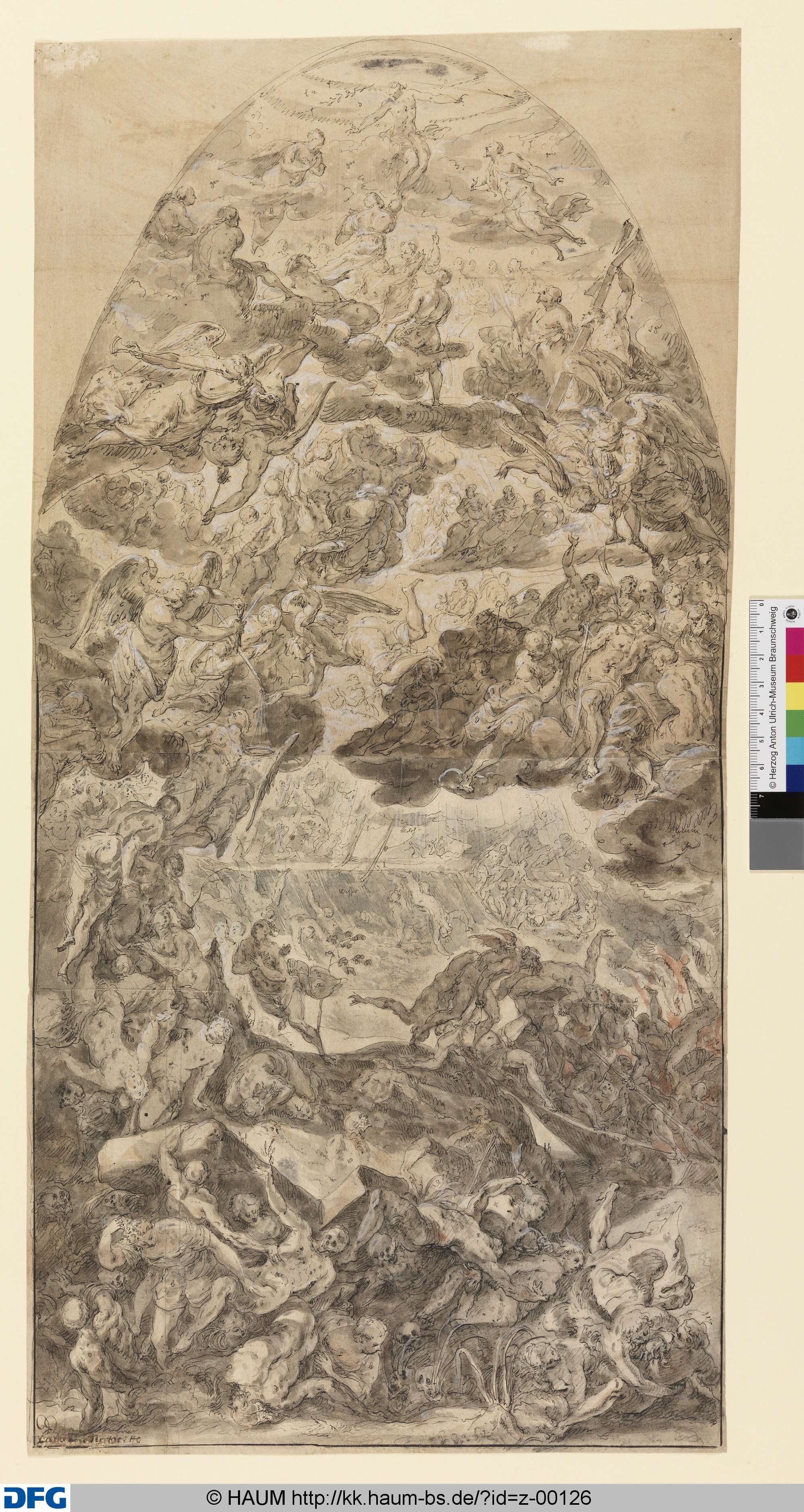
    Das Jüngste Gericht, Jacopo Tintoretto, 1627–1642

    Jacopo Tintoretto

    Das Jüngste Gericht, 1627–1642

    Herzog Anton Ulrich-Museum

    Die Auferstehung Christi, Paolo Veronese, 1570–1575

    Paolo Veronese

    Die Auferstehung Christi, 1570–1575

    Gemäldegalerie Alte Meister

    [Das Paradies; Le Paradis], Jacques Callot, 1610–1611

    Jacques Callot

    [Das Paradies; Le Paradis], 1610–1611

    Herzog Anton Ulrich-Museum

    [Christus als Welterlöser; Le Sauveur], Jacques Callot, 1631–1632

    Jacques Callot

    [Christus als Welterlöser; Le Sauveur], 1631–1632

    Herzog Anton Ulrich-Museum