 Paolo VeroneseItalien, 1528–1588
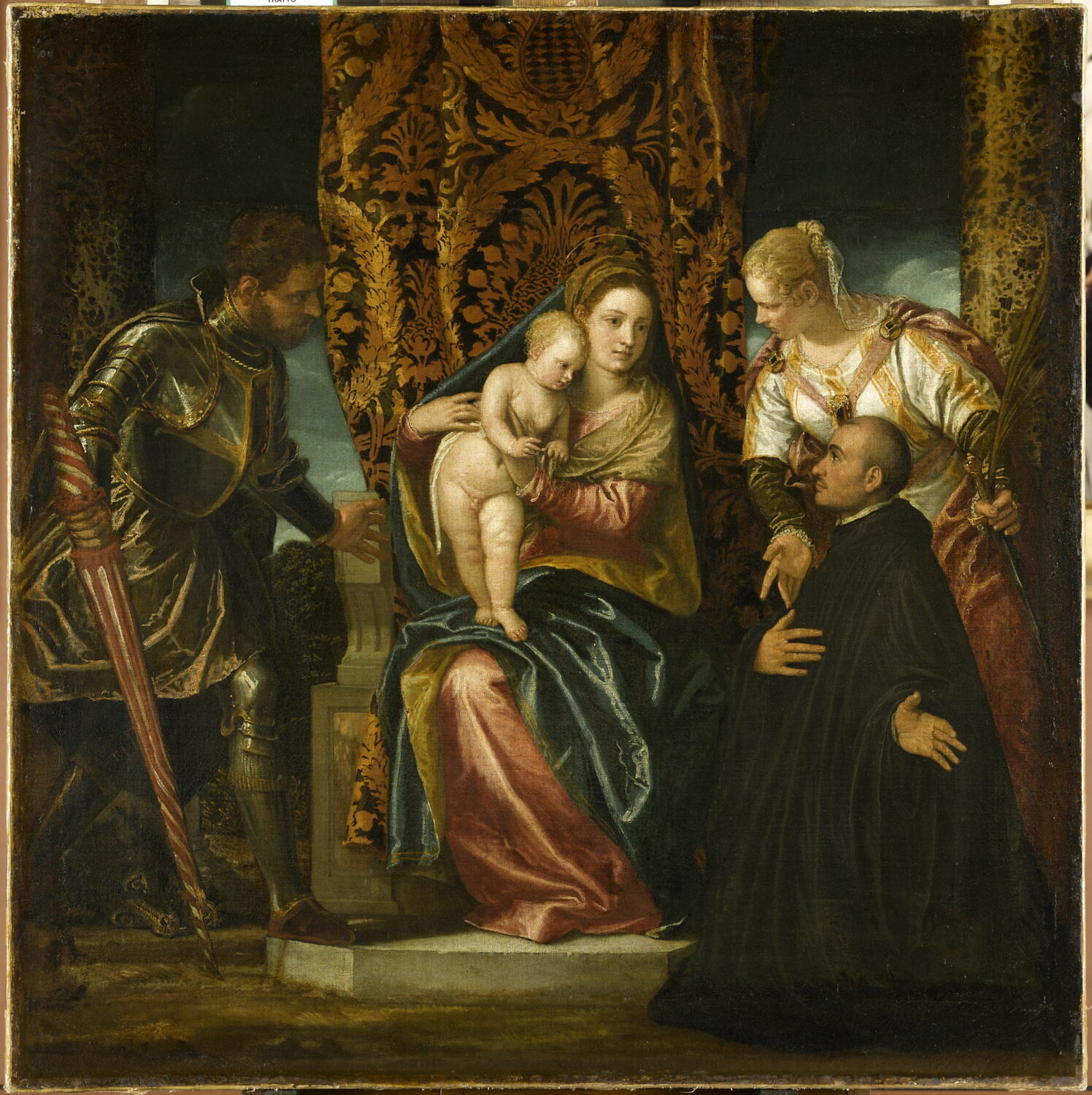
Die Auferstehung Christi
Må man se det?
Ukendt

Dresden, Tyskland
Ejeren er kendt; om værket er udstillet i dag, vides ikke.
- Uændret siden
- Kilde
- Museet
Oplysninger
Hvad det viser
I kataloget
Kilder
- Gemäldegalerie Alte Meister
- Billede: Gemäldegalerie Alte Meister — In Copyright
Imens i livet hos Paolo Veronese
Hele livet1568
Vasari includes Veronese in his “Lives”
The second edition of Giorgio Vasari's “Lives of the Most Excellent Painters, Sculptors, and Architects” (1568), with improved coverage of the Venetian school, included a biography of Paolo Veronese.
7. september 1568
Son born: Gabriele Caliari
1570
Son born: Carlo Caliari
18 July 1573
Summoned before the Holy Inquisition over the “Last Supper”
On 18 July 1573 Veronese was summoned before the Venetian Inquisition, which objected to figures, animals and indecorum unsuited to a Last Supper in his canvas. He answered that painters take the same liberties as poets and madmen; the tribunal ordered him to repaint the picture, but he refused, and in the end it was merely re-titled the “Feast in the House of Levi”.
after 1575
Signs “Paolo Caliari” again
For several years in Venice Veronese signed his works “Paolo Veronese”, but after about 1575 he resumed signing “Paolo Caliari”, the signature that also appears on his earliest known painting.
1576
Commissions from Emperor Rudolf II
From 1576 Veronese worked on commissions from the Emperor Rudolf II of Habsburg; in this way the Venetian painter also influenced the “Rudolfine” artists of the Prague court.






![[Das Paradies; Le Paradis], Jacques Callot, 1610–1611](https://diglib.hab.de/varia/haum/callot-j-ab3-0144/max/000001.jpg)
![[Christus als Welterlöser; Le Sauveur], Jacques Callot, 1631–1632](https://diglib.hab.de/varia/haum/callot-j-ab3-0080/max/000001.jpg)
![[Die Auferstehung des Lazarus; Il ressuscite Lazare], Jacques Callot, 1635](https://diglib.hab.de/varia/haum/callot-j-v3-0861-09/max/000001.jpg)