 Théodore GéricaultFrankrig, 1791–1824
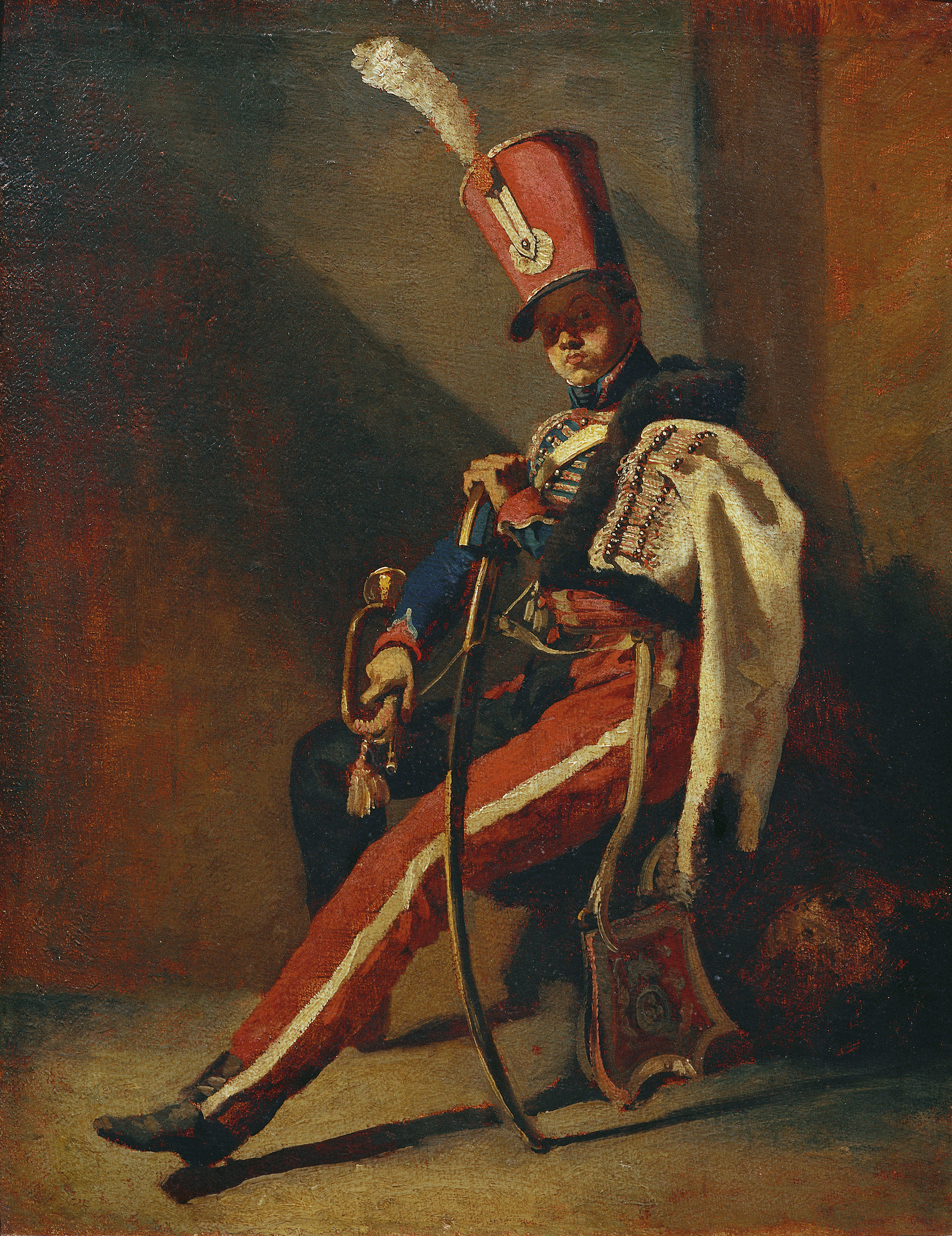
Der Trompeter der Orleans-Husaren
Kan det ses?
Ukendt
Hvor er »Der Trompeter der Orleans-Husaren« i dag? Samling: Österreichische Galerie Belvedere, Wien. Ukendt.

Wien, Østrig
Ejeren er kendt; om værket er udstillet i dag, vides ikke.
- Uændret siden
- Kilde
- Museet
Oplysninger
I kataloget
Kilder
- Österreichische Galerie Belvedere
- Billede: Österreichische Galerie Belvedere — CC BY-SA 4.0
Imens i livet hos Théodore Géricault
Hele livet5. februar 1811 · Uddannelse
Beaux-Arts de Paris
1812
Salon debut: “Officer of the Imperial Guard Chasseurs”
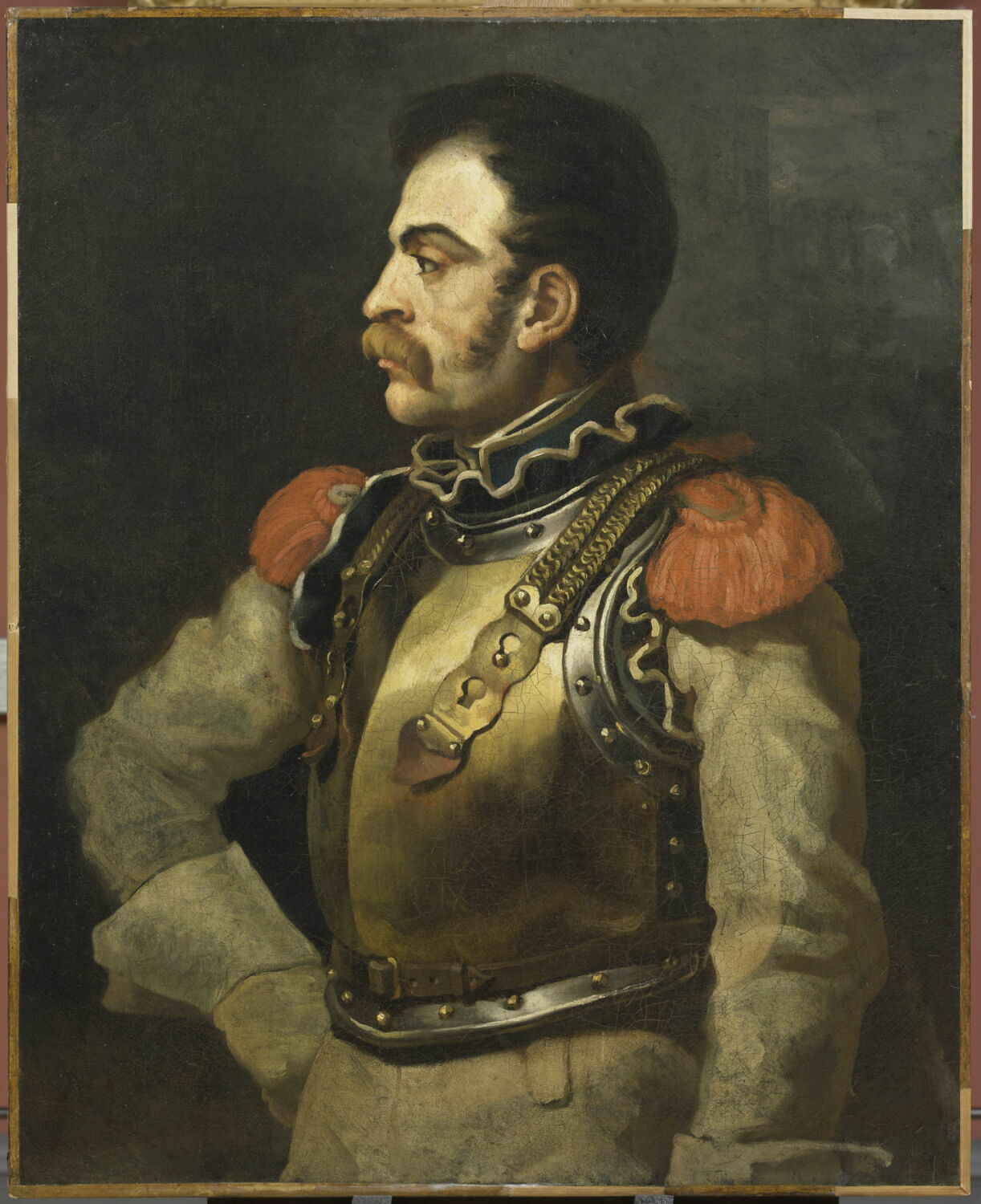
In 1812 Géricault sent “Portrait of Dieudonné” (now “Officer of the Imperial Guard Chasseurs Charging”, Louvre) to the Paris Salon. An artist unknown until then, said to have “hardly studied”, he at once drew the critics' attention: Boutard advised him to take up battle painting, Durdent called him “perhaps the best of all our painters”, and David himself noticed the picture.
1814
Salon of 1814: “Wounded Cuirassier” and cold reviews
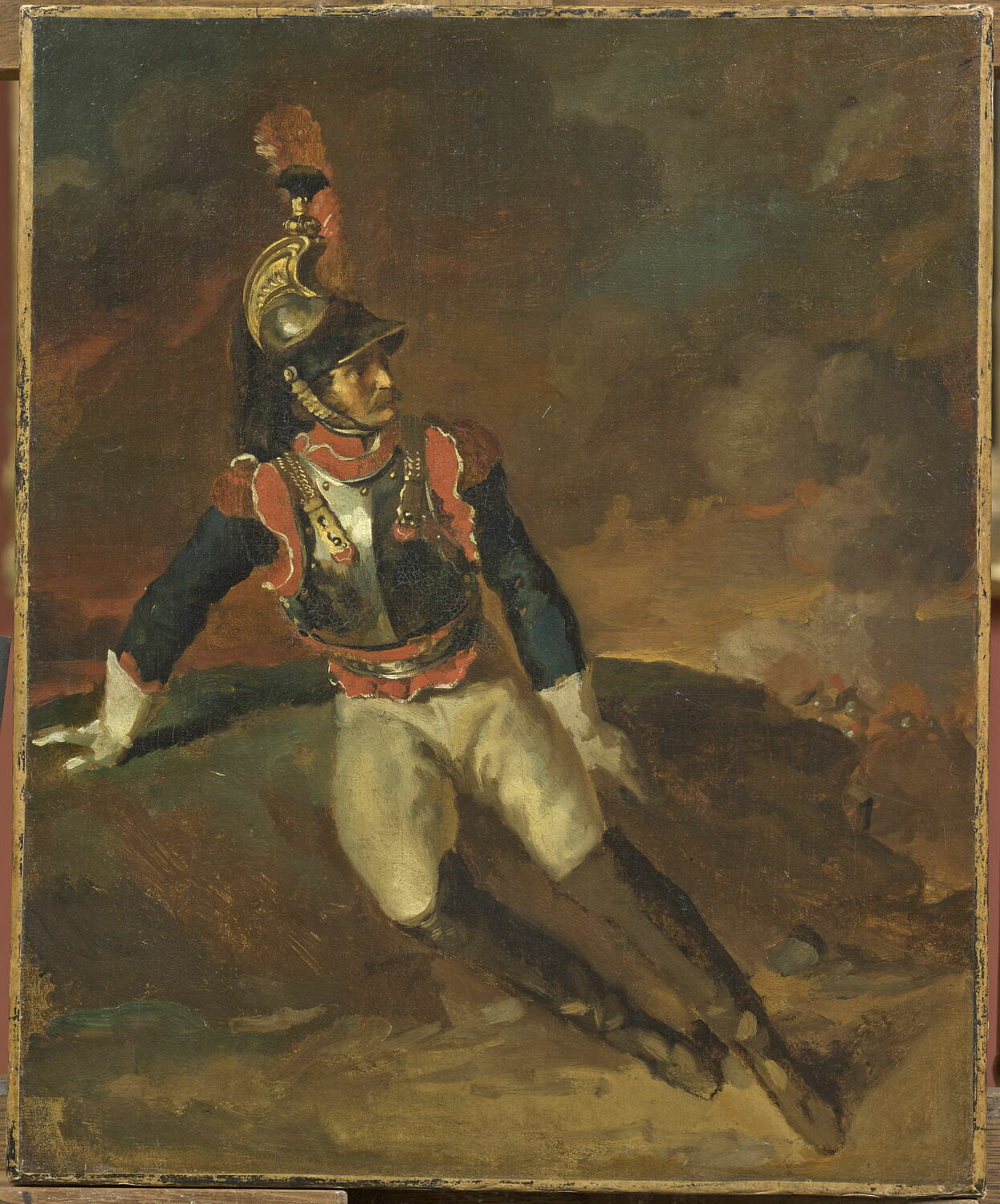
At the Salon of 1814, held after Napoleon's fall, the “Officer” was shown paired with “Wounded Cuirassier Leaving the Field of Battle”, the only reminder of a passing tragic and glorious era among the neutral subjects chosen by other artists. Critics either said nothing of Géricault's pictures or received them unfavorably.
December 1814
He buys a commission as a musketeer
Having recently evaded military service, in December 1814 Géricault, with the help of his father and uncle, bought a commission in the musketeer company commanded by Lauriston, a privileged military unit. His biographers find it hard to explain what motivated him.
1815
The Hundred Days: Louis XVIII's escort and flight to Normandy
During the Hundred Days Géricault was in the escort of the fleeing Louis XVIII and then, disguised as a peasant, made his way to Normandy, where he probably stayed until the middle of the summer of 1815.
1816–1817
Naples and Rome: the shock of Michelangelo
Géricault visited Naples, drawing the landscapes and people, but spent most of his time in Rome. The frescoes of the Sistine Chapel shook him: Michelangelo's monumentality of form inspired his pen drawings, such as “Man Felling a Bull”, among the most interesting made in Rome.