Piet MondrianHolland, 1872–1944
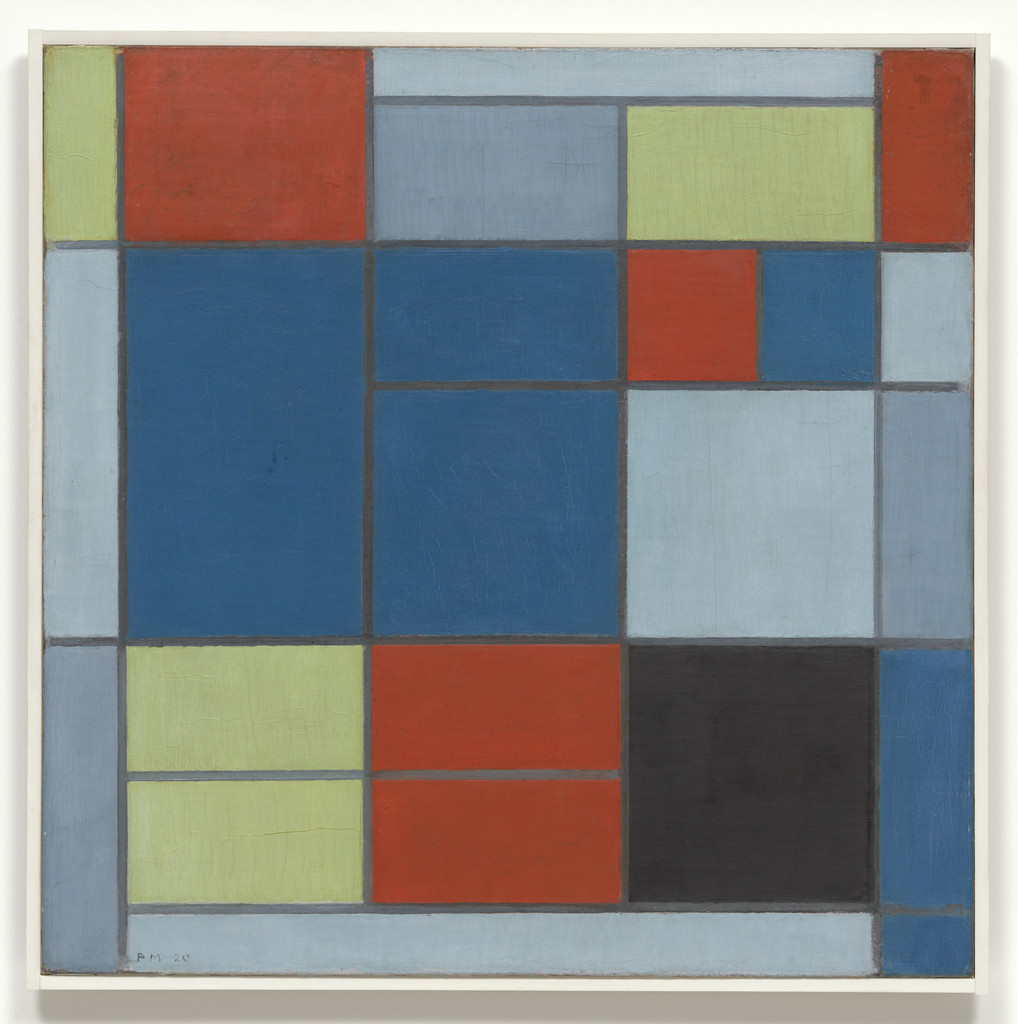
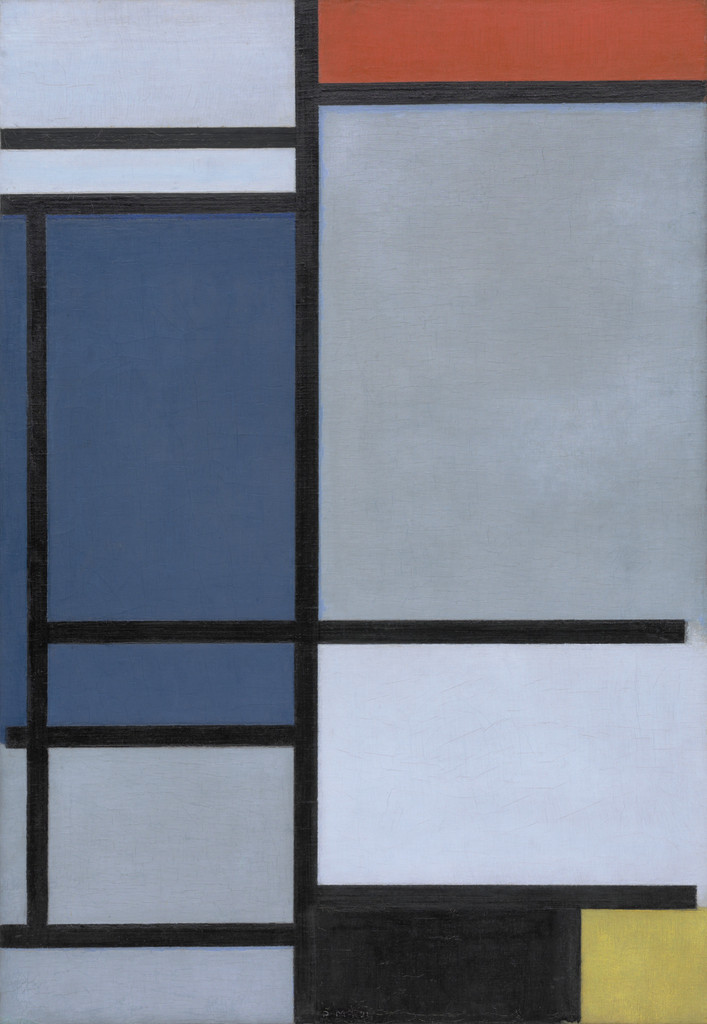
Composition in Red, Yellow and Blue
Kan det ses?
Ukendt
Hvor er »Composition in Red, Yellow and Blue« i dag? Samling: Musée d'Orsay, Paris. Ukendt.

Paris, Frankrig
Ejeren er kendt; om værket er udstillet i dag, vides ikke.
- Uændret siden
- Kilde
- Museet
Oplysninger
- Inventarnummer
- RF 2000 45
I kataloget
Kilder
- Wikidata
- Billede: Musée d'Orsay — Piet Mondrian · Public domain · Wikimedia Commons
Imens i livet hos Piet Mondrian
Hele livet1918–1921
Theosophical declarations of 1918 and 1921
In 1918 Mondrian wrote that he had got everything from Blavatsky's “Secret Doctrine”, and in a letter to Rudolf Steiner in 1921 he argued that Neoplasticism was the art of the foreseeable future for all true Anthroposophists and Theosophists.
1919–1920
The first grid paintings
From late 1919 Mondrian produced grid-based paintings, and in 1920 the style for which he became renowned began to appear: at first thin grey lines fading towards the edges of the canvas, with the forms filled with primary colours.
1919–1938
Return to Paris
In 1919 Mondrian left the Netherlands for Paris for the second and last time and at once turned to his studio: to hide its flaws he tacked large single-colour placards to the walls, accented by compositions of smaller coloured paper rectangles. From then on, periods of painting alternated with experiments in regrouping the papers on the walls.
1920
Translations of “Neoplasticism”: French and Polish
In 1920 his text was translated into French and published as “Le Néoplasticisme”; in letters of late 1926 and early 1927 Mondrian mentioned several times that he was busy laying out a Polish translation, prepared with Polish avant-garde artists, for which Henryk Stażewski designed the cover.
1920–1921
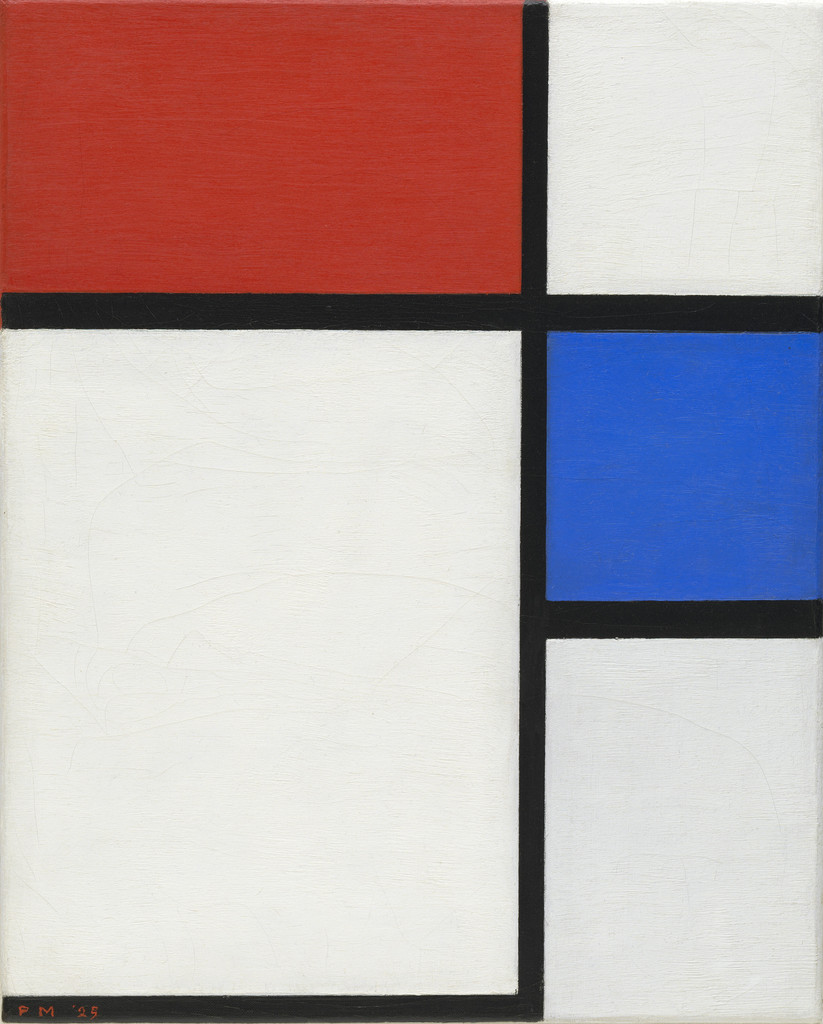
The mature manner: thick black lines
In late 1920 and 1921 Mondrian's paintings reached what casual observers take for their definitive form: thick black lines separating larger and fewer forms, more and more of which are left white.