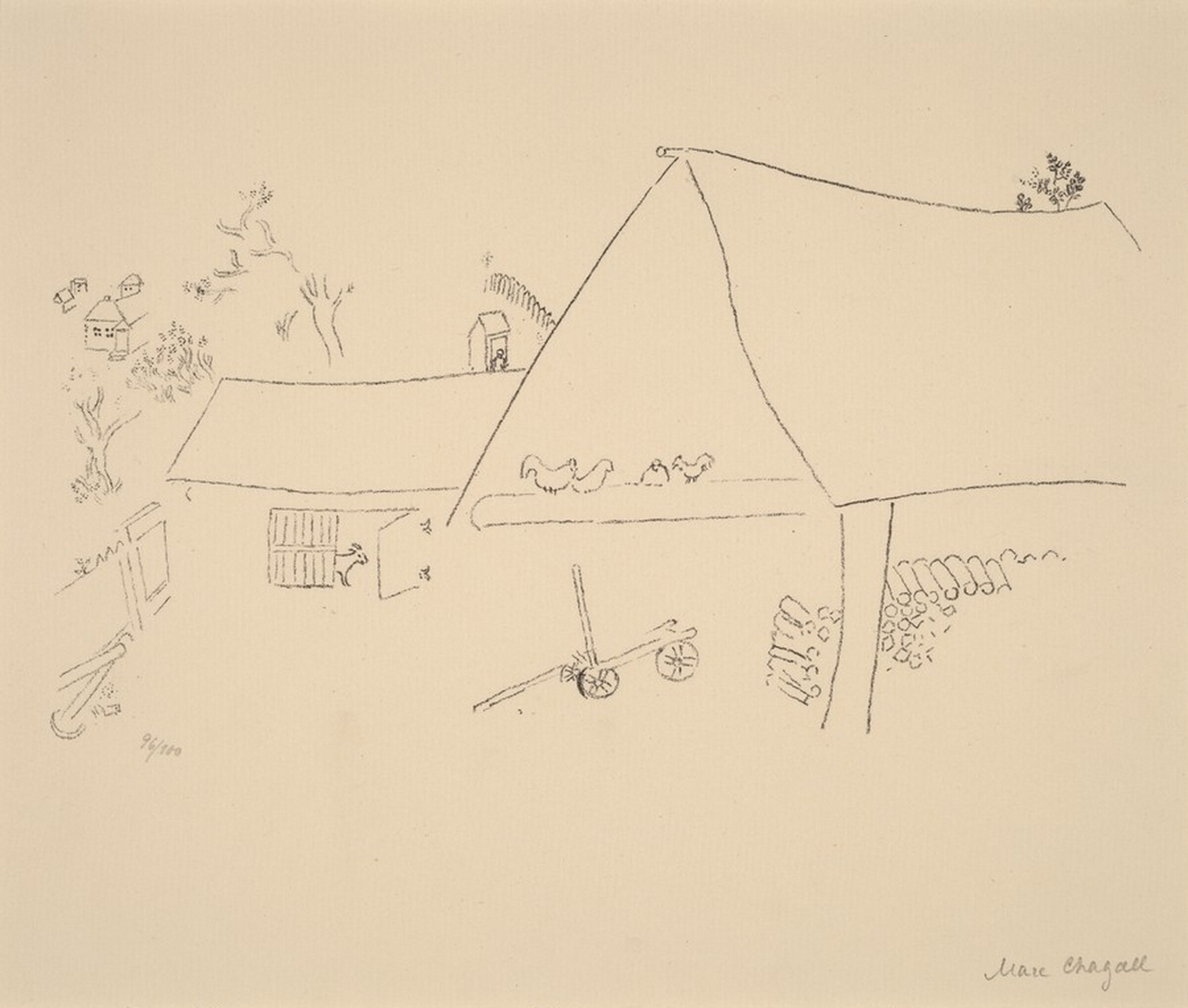
Paul GauguinFrankrig, 1848–1903
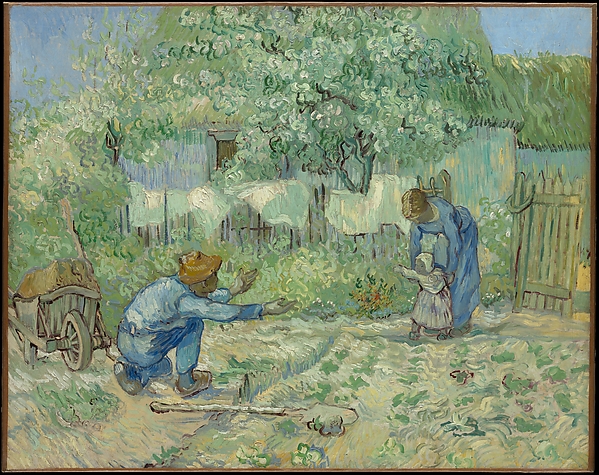
A Farm in Brittany
Kan det ses?
Ja, udstillet nu
Hvor er »A Farm in Brittany« i dag? Metropolitan Museum of Art, Sal 825, New York City. Ja, udstillet nu. Kontrolleret 29. september 2026.

New York City, USA
Lukket· åbner kl. 10.00
Udstillet for publikum.
- Kontrolleret
- Uændret siden
- Kilde
- Museet
Oplysninger
- Inventarnummer
- 54.143.2
Hvad det viser
I kataloget
Kilder
- Metropolitan Museum of Art
- Billede: Metropolitan Museum of Art — Open Access (CC0)
Imens i livet hos Paul Gauguin
Hele livet1891–1901 · Virkested
Tahiti
1892
Teha'amana, His Tahitian Wife
As Gauguin recounted in his book Noa Noa, at this time he took the young Tahitian girl Teha'amana (Tehura in the book) as his vahine; by the end of summer 1892 she was expecting his child. Teha'amana became the model for a number of his works.
1893
Return to France
In August 1893 Gauguin returned to France, where he continued painting Tahitian subjects such as Mahana no atua and Nave nave moe; he rented an apartment on rue Vercingétorix on the edge of Montparnasse and held a weekly salon, cultivating an exotic image.
1894
Exhibition at Durand-Ruel
The exhibition at the Durand-Ruel gallery had moderate success: 11 of the 40 paintings shown were sold at fairly high prices; soon afterwards, however, Gauguin lost Durand-Ruel's patronage.
February – April 1895
Failed Auction and the Oviri Scandal
In February 1895 Gauguin tried to repeat the Hôtel Drouot auction, but without success; in April he submitted the large ceramic sculpture Oviri to the salon of the Société Nationale des Beaux-Arts, whose reception caused a scandal, and wrote an indignant letter on the state of modern ceramics in Le Soir.
28 June 1895
Final Departure for Oceania
On 28 June 1895 Gauguin sailed once more for Tahiti — Eugène Carrière arranged cheap passage for him — arriving in September; he never saw Europe again. He spent the next six years mostly near Papeete, building a spacious house at Punaauia.