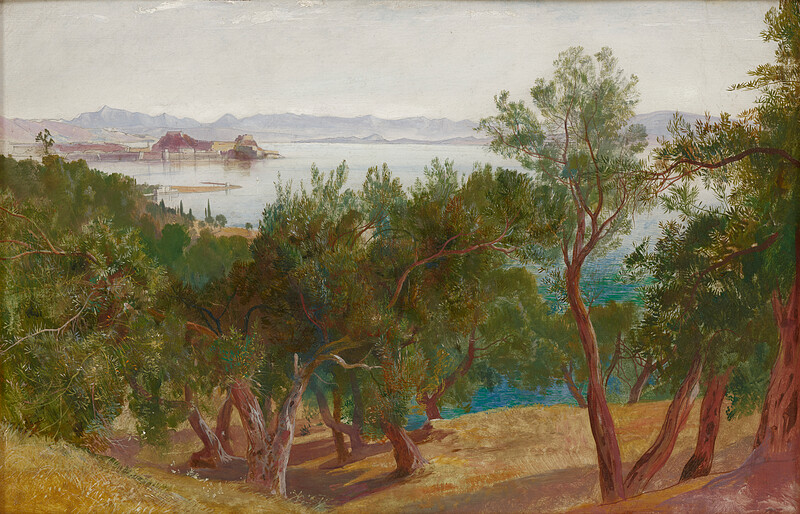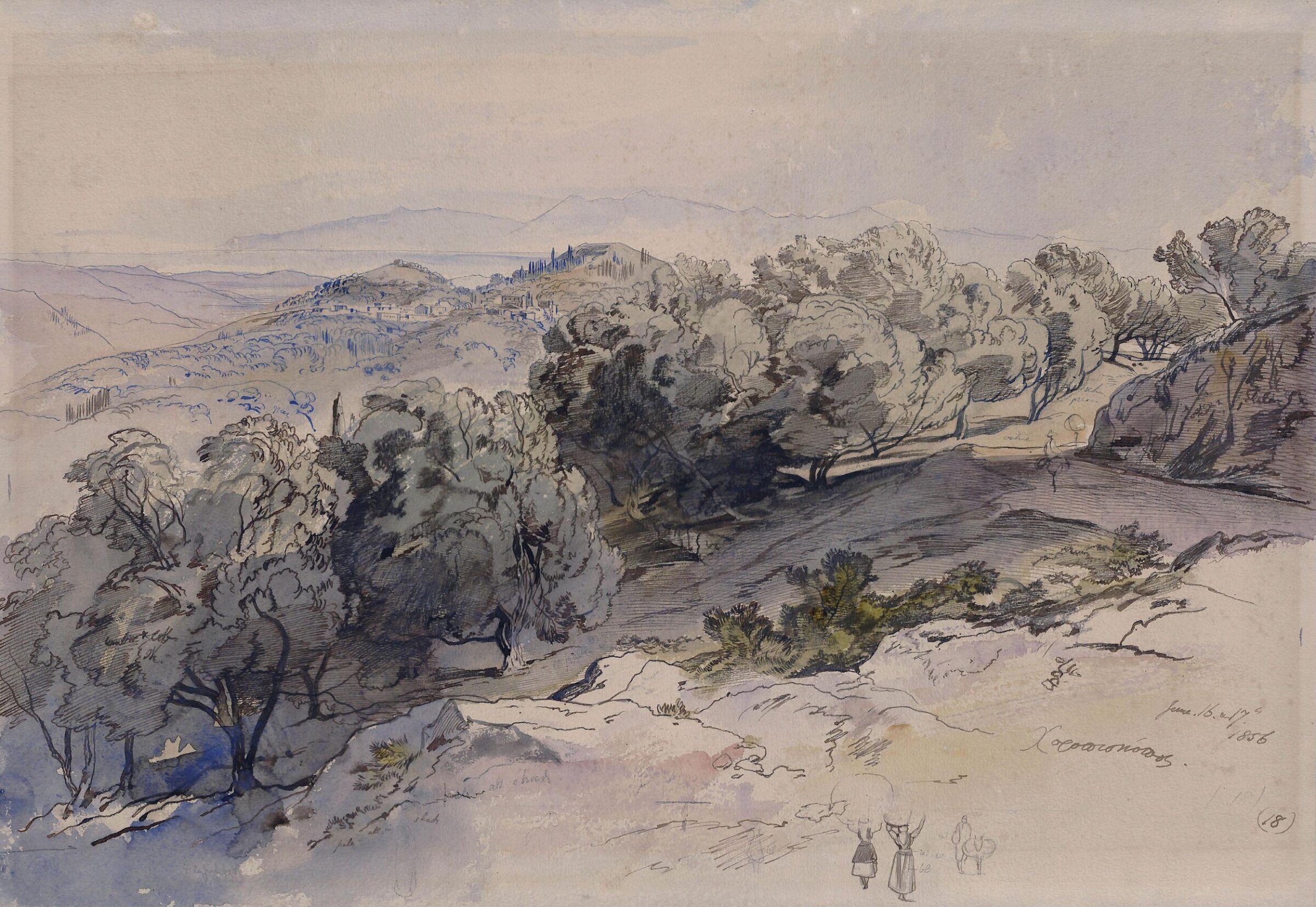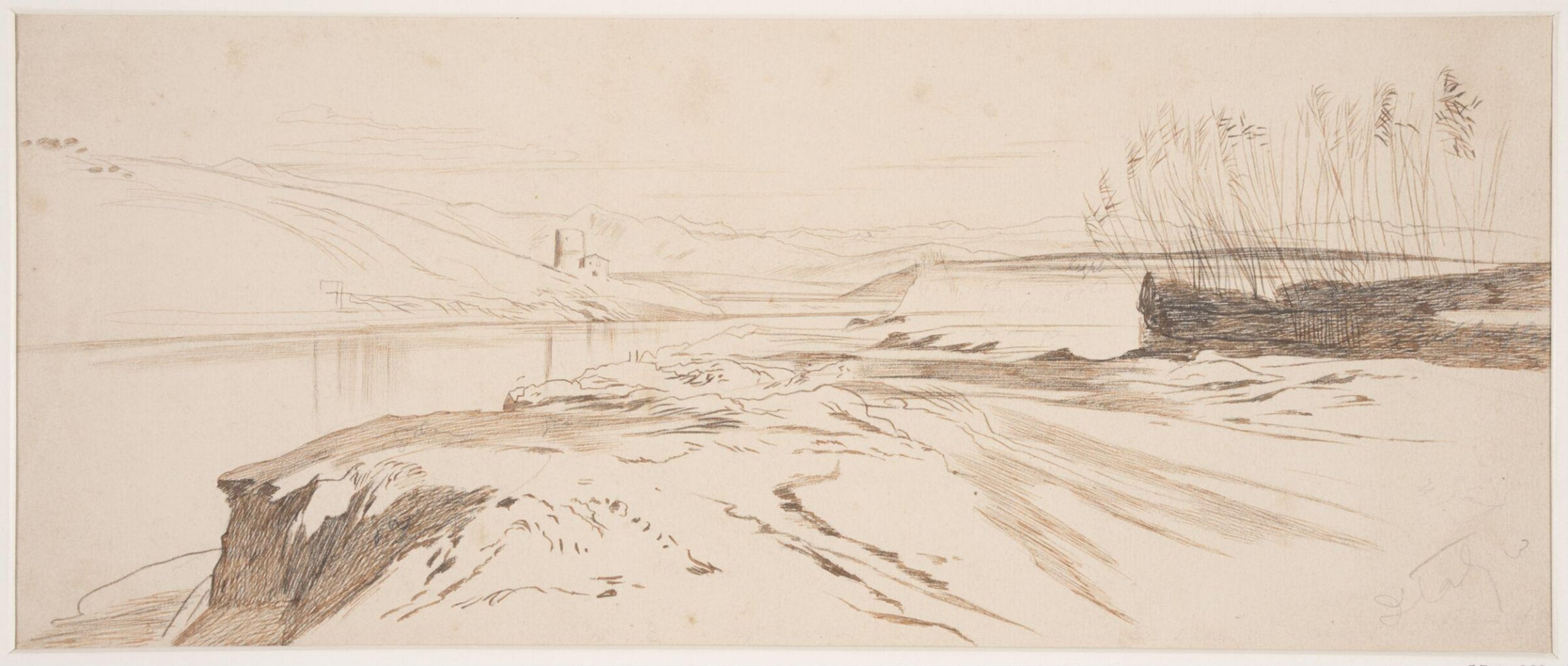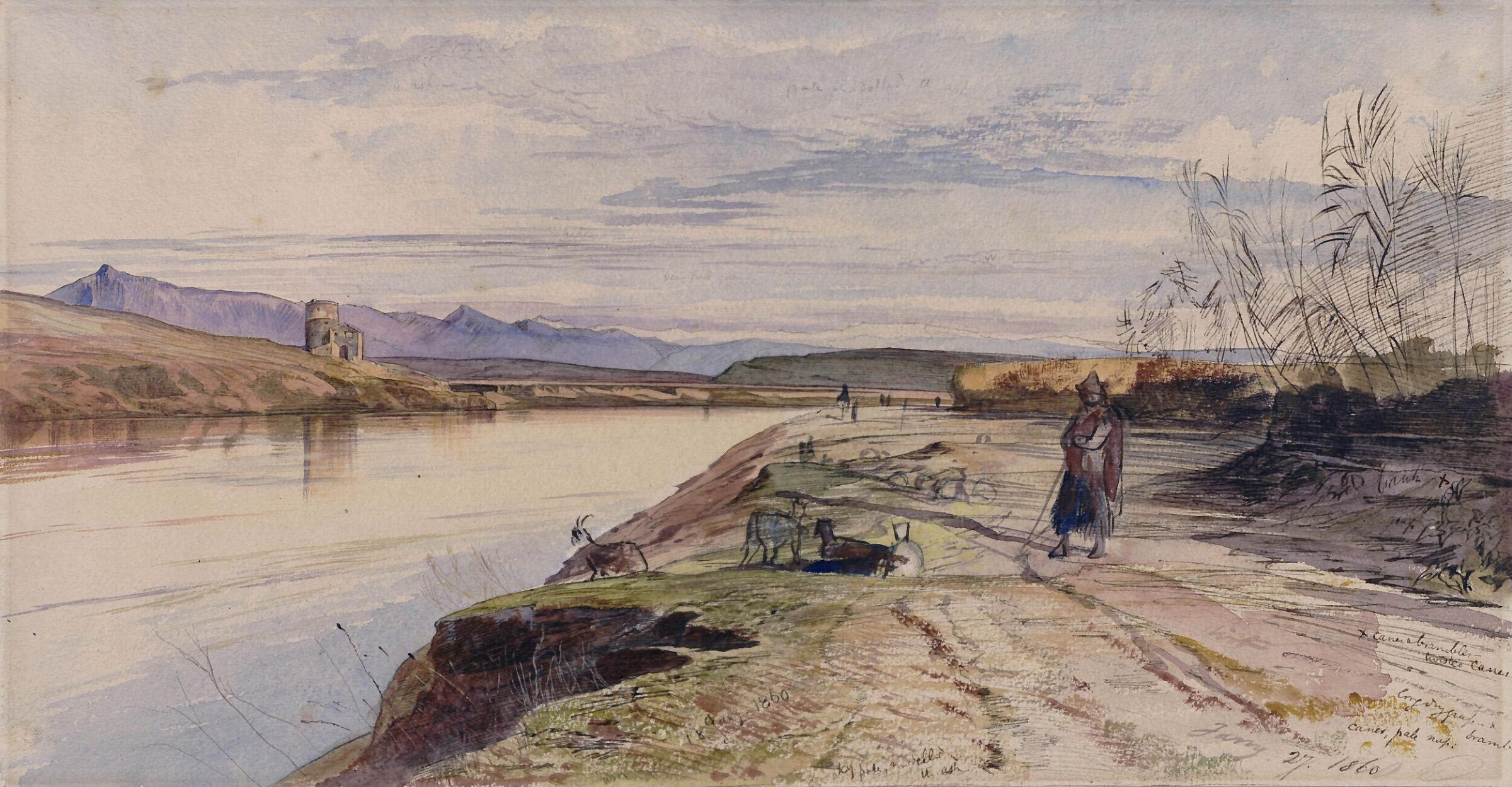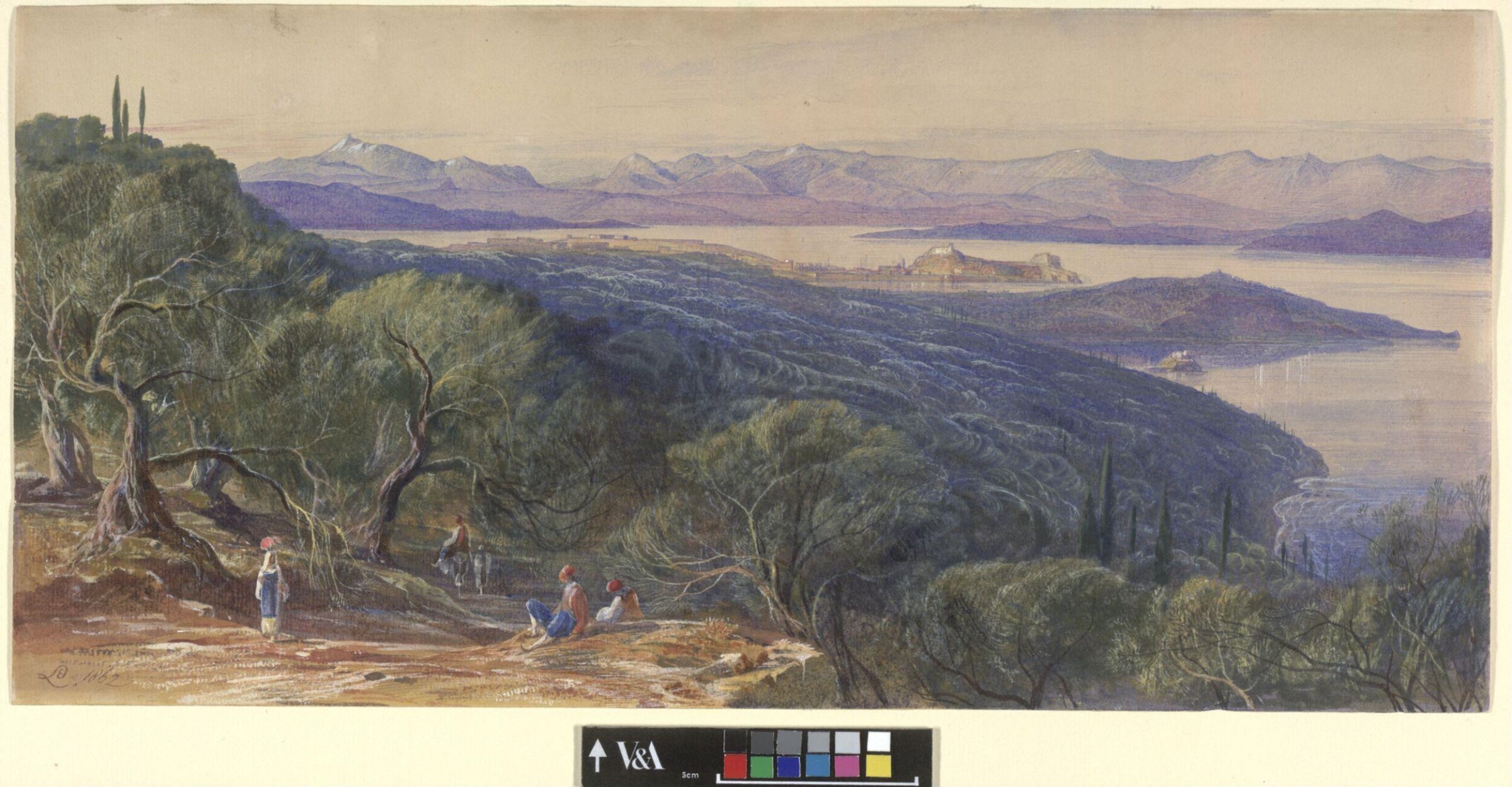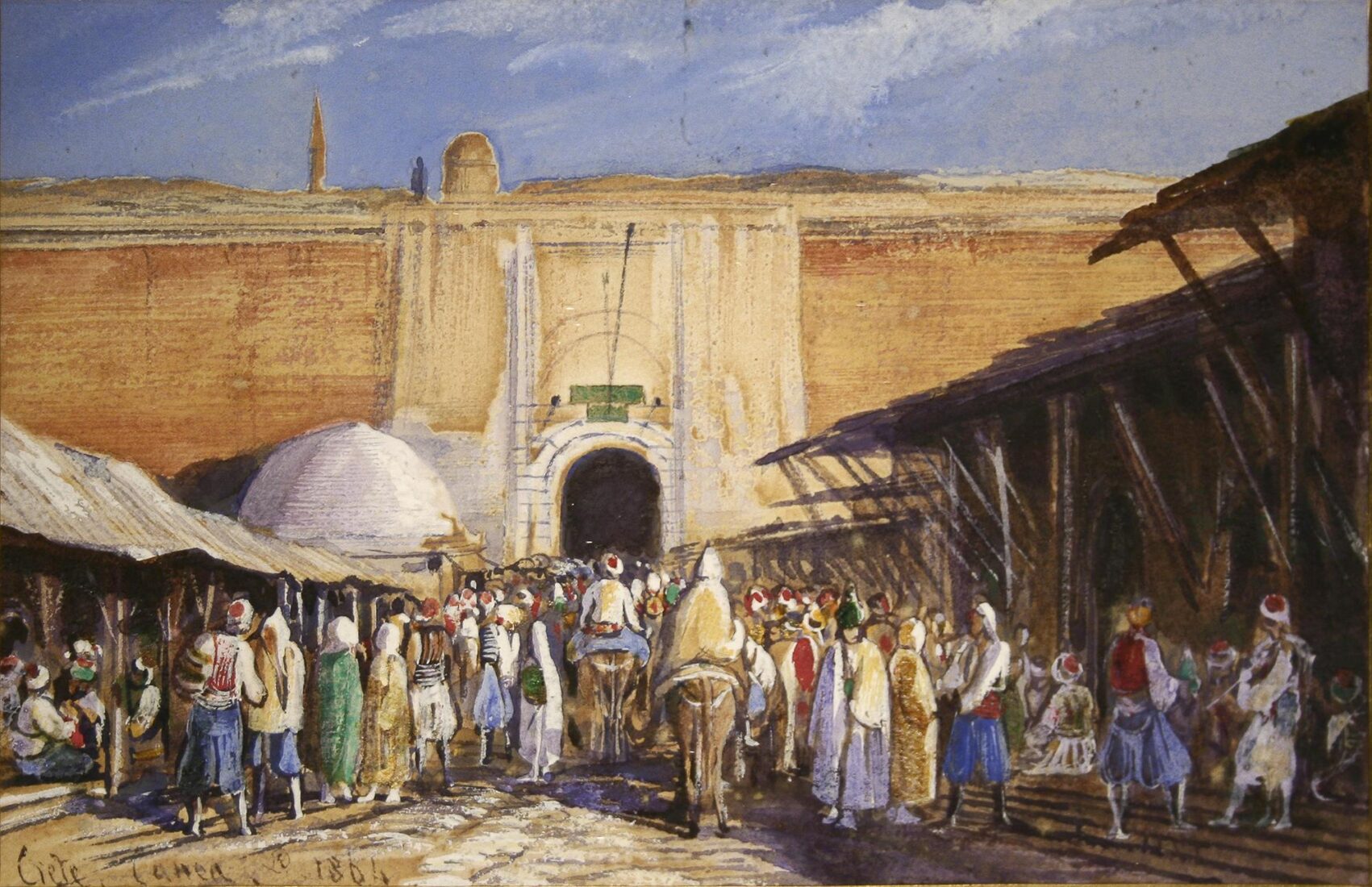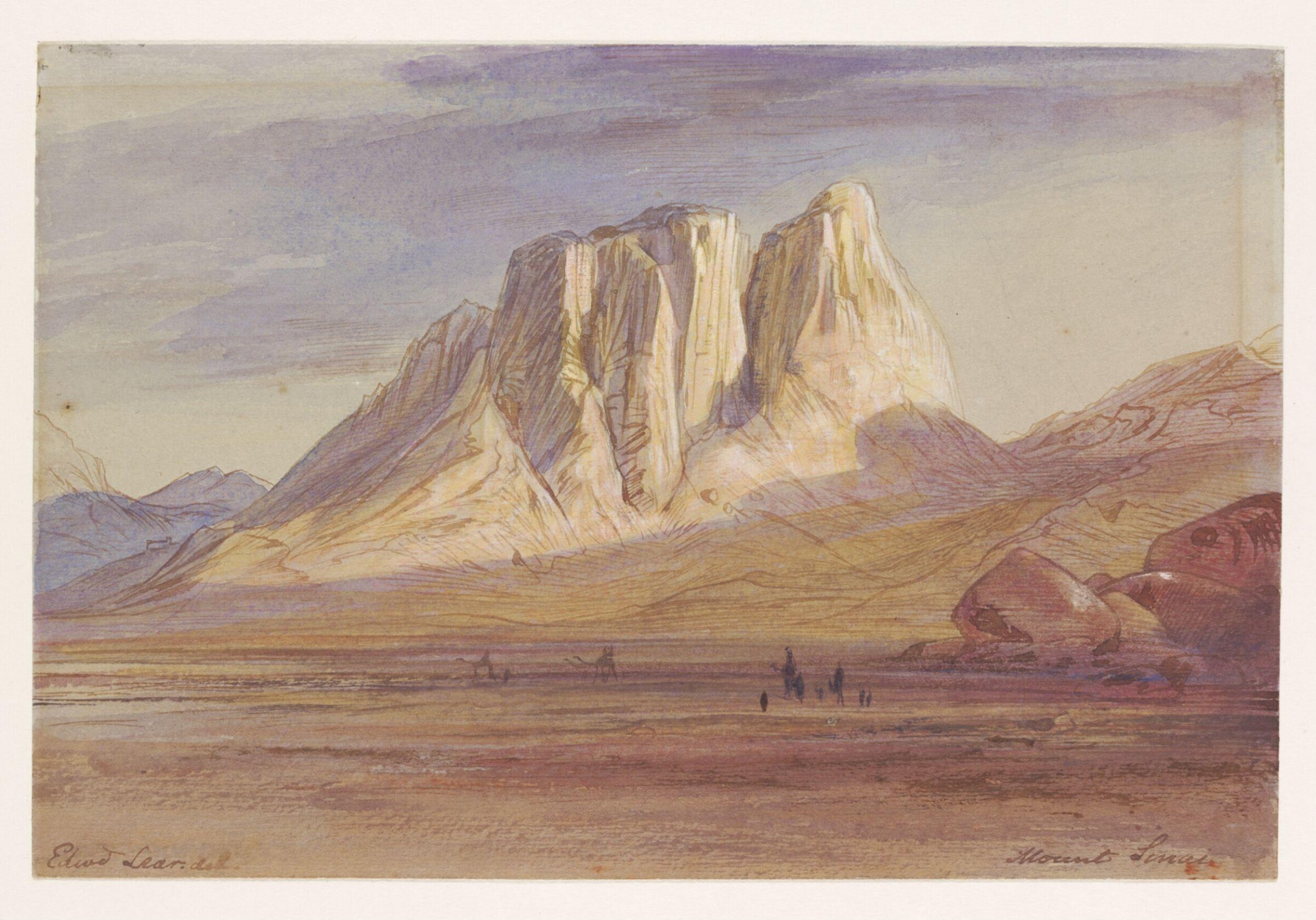
Edward Lear (født 12. maj 1812 i Highgate i London, død 29. januar 1888 i San Remo i Italien) var en britisk forfatter, billedkunstner og illustrator. Lear er i dag mest kendt for sine mange limericks og nonsensvers, men han var også tegner og skrev flere rejseskildringer.
Edward was born into a middle-class family, the penultimate of 21 children of the stockbroker Jeremiah Lear and Ann Clark Skerrett; he was raised by his eldest sister, also named Ann, who was 21 years his senior.
1816
Familie · aged four (1816 – 1817)
The father’s ruin: Edward and his sister Ann leave the family home
Their father, Jeremiah Lear, defaulted on the London Stock Exchange in the economic upheaval after the Napoleonic Wars; because of the family’s limited means, four-year-old Edward and his sister Ann had to leave the family home, Bowmans Lodge, and live together. Ann went on acting as a mother to him until her death.
1818
Helbred · from age six (c. 1818) · Highgate
From the age of six: frequent epileptic seizures
From the age of six Lear had frequent tonic-clonic seizures, later joined by bronchitis, asthma and, in later life, partial blindness. His first seizure came at a fair near Highgate when he was with his father; the fright and shame stayed with him for life.
1819
Helbred · aged about seven (c. 1819)
The first signs of depression in childhood
At about the age of seven Lear began to show signs of depression, possibly because of the instability of his childhood; he called his periods of severe melancholia “the Morbids”.
1820– 1829
1827
Familie · aged 15 (1827 – 1828)
At fifteen he sets up house with his sister
When Edward was 15, he settled with his elder sister Ann in a separate house.
1828
Karriere · by age 16 (1828 – 1829)
At sixteen he draws “for bread and cheese”
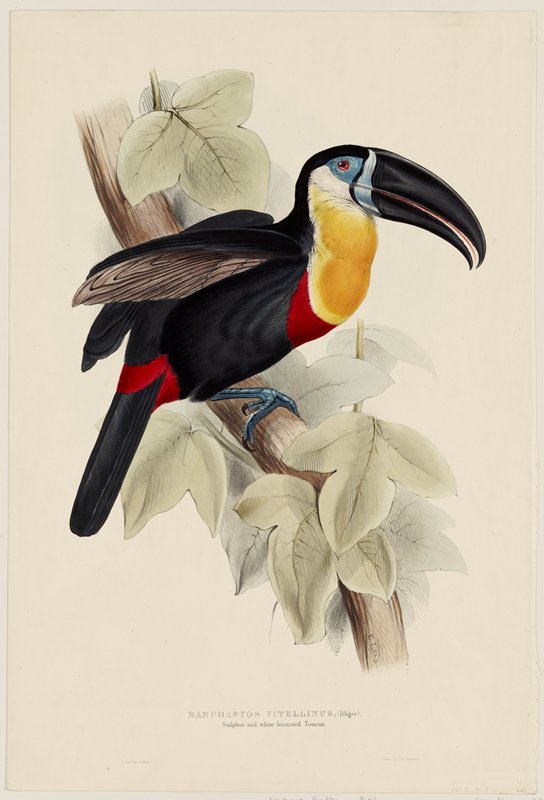
By the age of sixteen Lear was already drawing “for bread and cheese”, that is, for a living, and soon grew into a serious “ornithological draughtsman”.
1830– 1839
1830
Udgivelse · 1830–1832
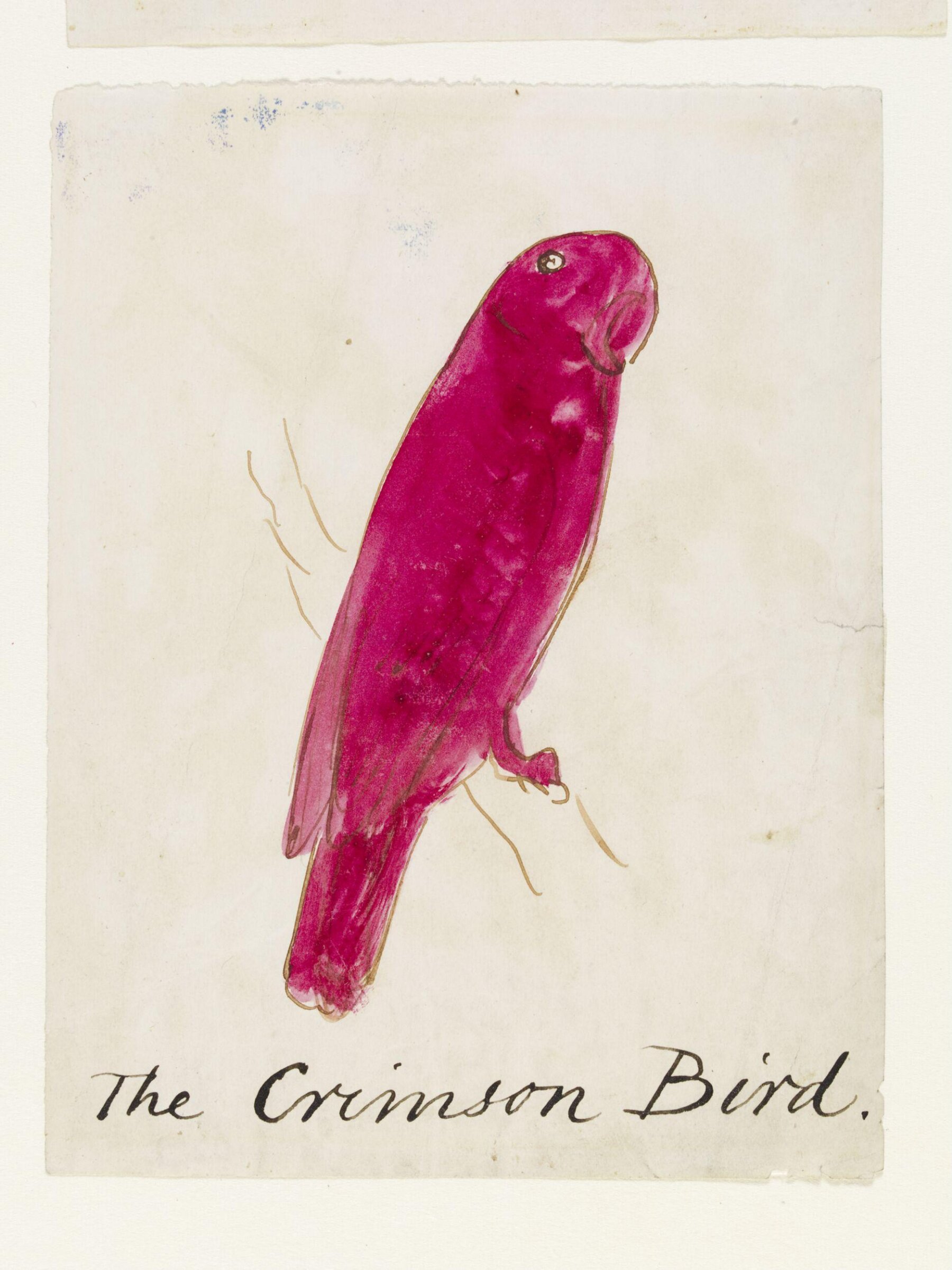
First book: “Illustrations of the Family of Psittacidae”
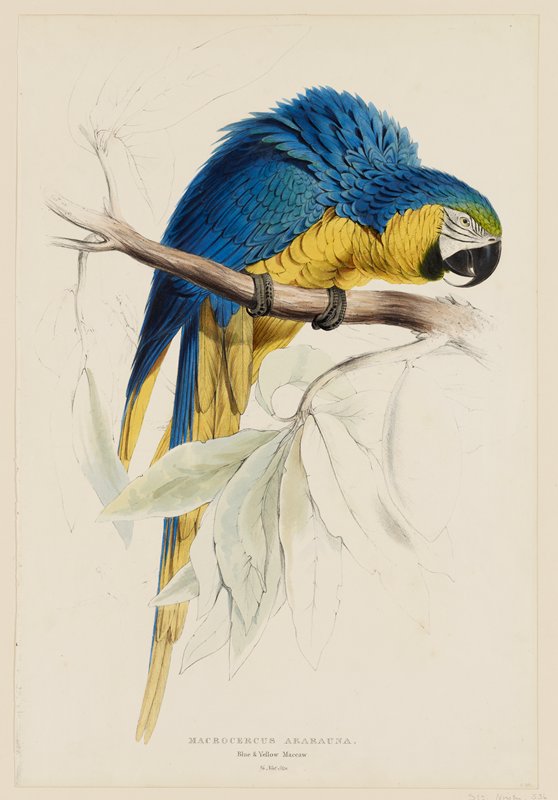
At the age of 19 Lear published his first book, Illustrations of the Family of Psittacidae, or Parrots.
Karriere · 1830s
Ornithological draughtsman for the Zoological Society
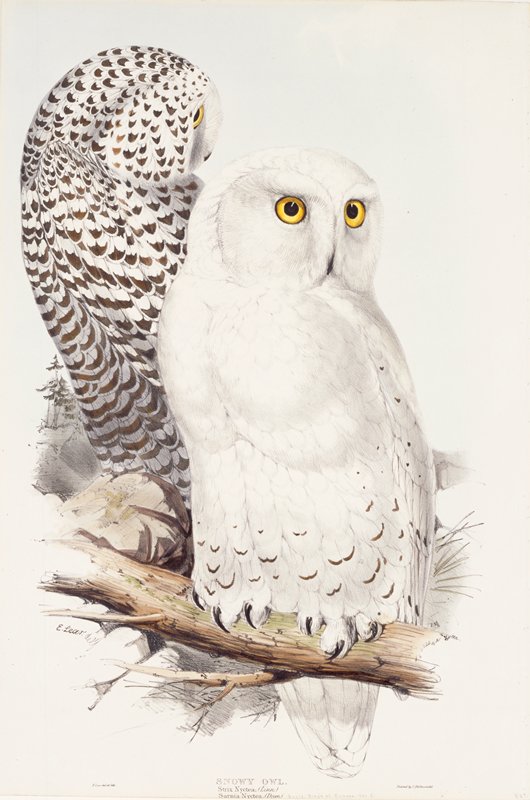
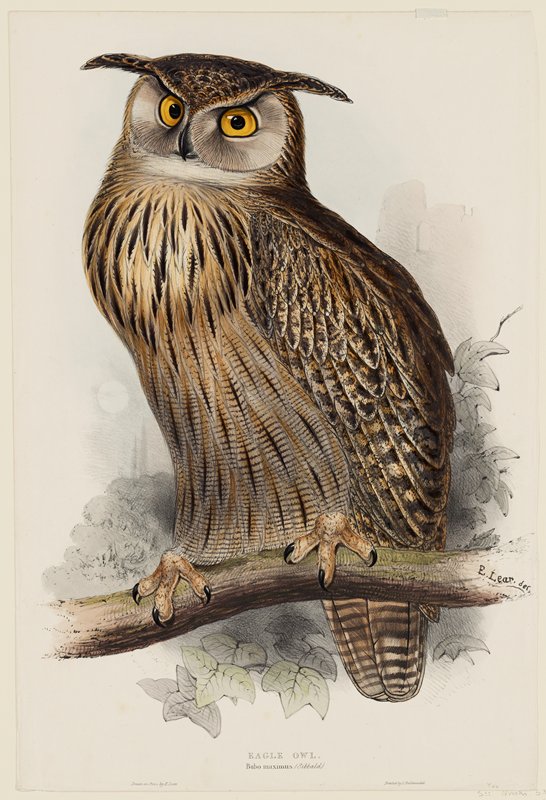
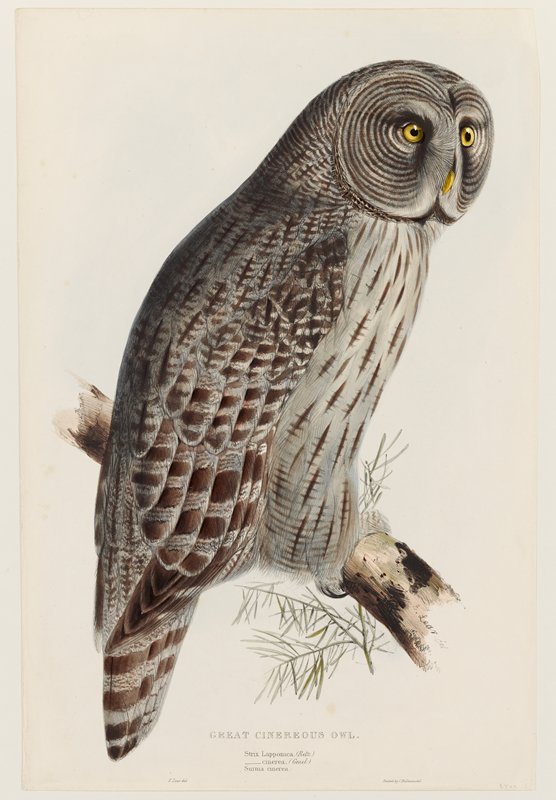
Lear worked for the Zoological Society and became one of the greatest ornithological artists of his era: he was the first major bird artist to draw birds from life rather than from the skins of specimens. He taught Elizabeth Gould and contributed to John Gould’s works; some compared him to Audubon.
1832
Karriere · 1832–1836
Working for the Earl of Derby at Knowsley Hall
From 1832 to 1836 Lear was employed by the Earl of Derby, who kept a private menagerie at his estate, Knowsley Hall; the Earl became his patron, and for his children Lear later wrote “The Owl and the Pussy-Cat”.
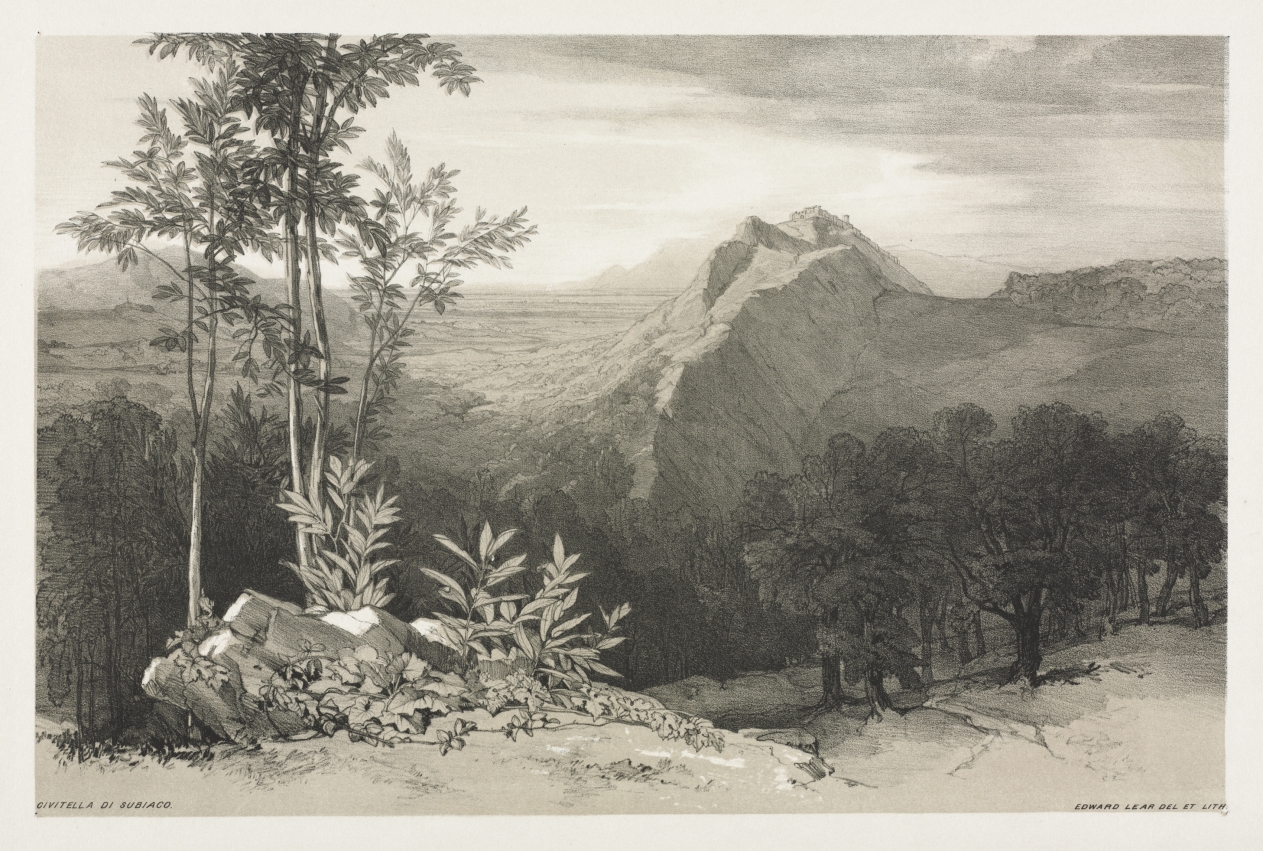
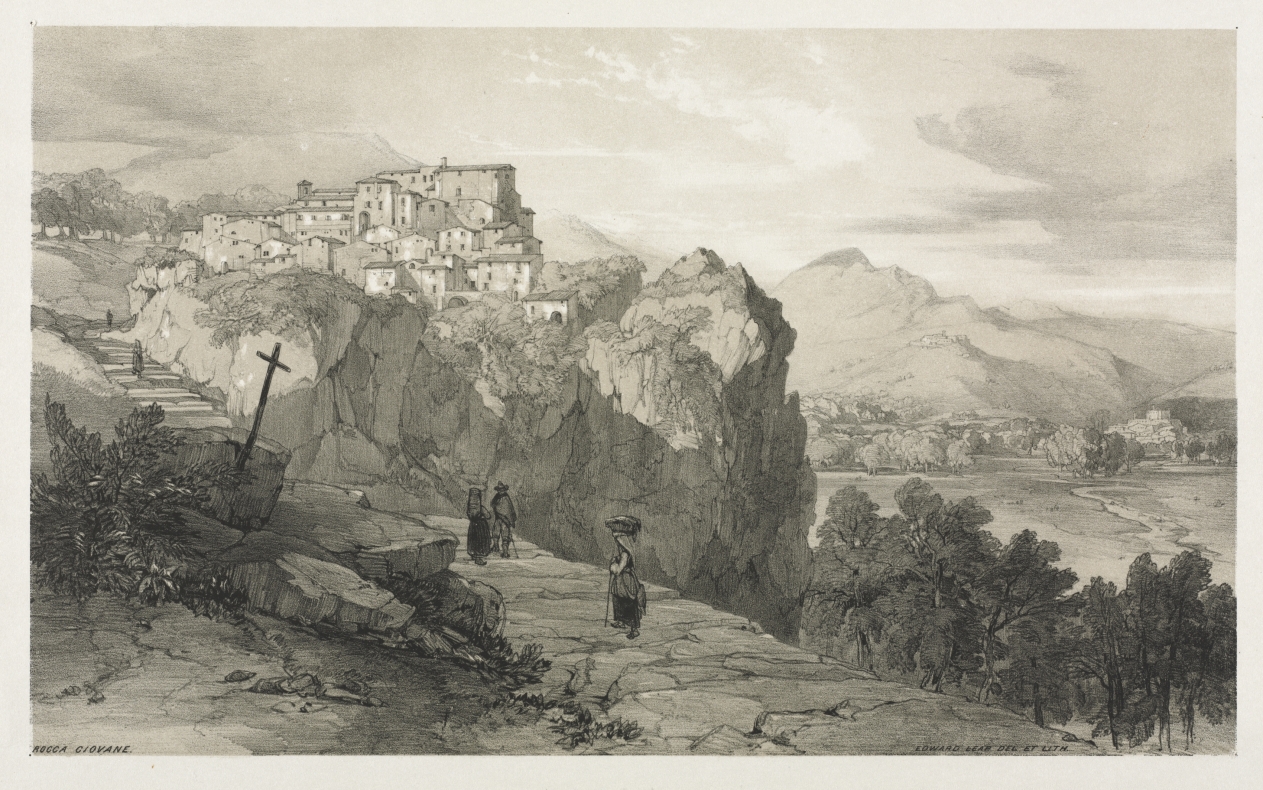
In 1841 Lear’s book Views in Rome and its Environs was published.
1842
Rejse
A journey through Italy, from Lazio to Sicily
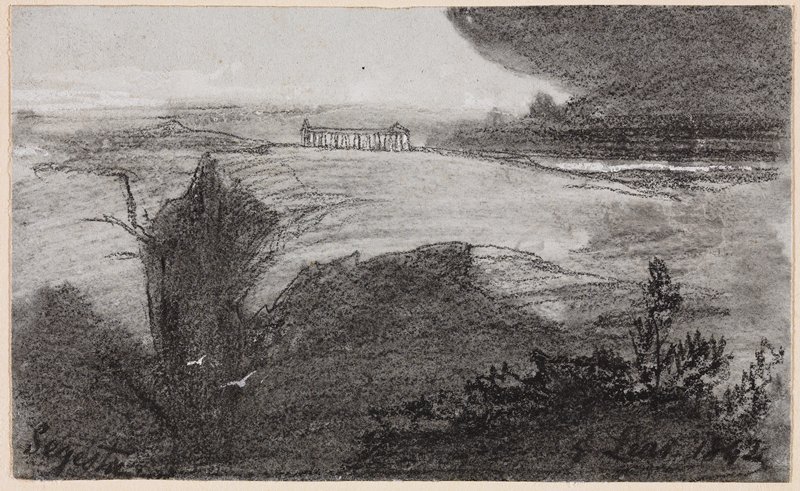
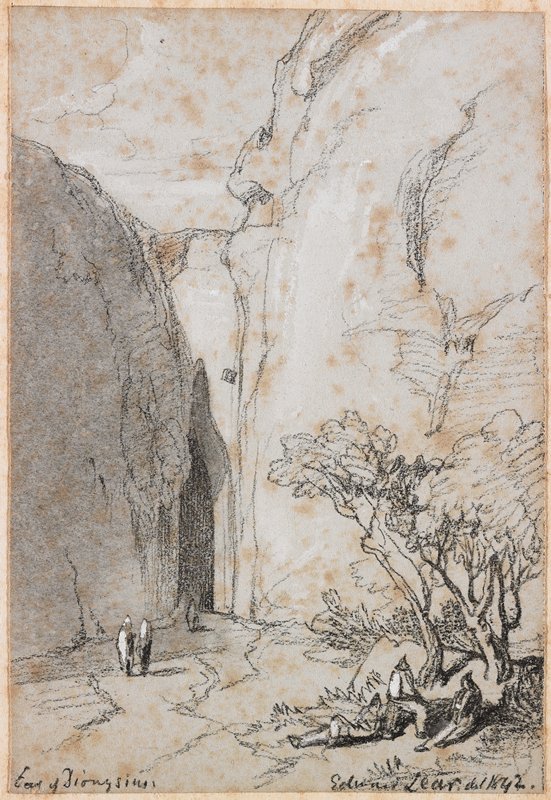
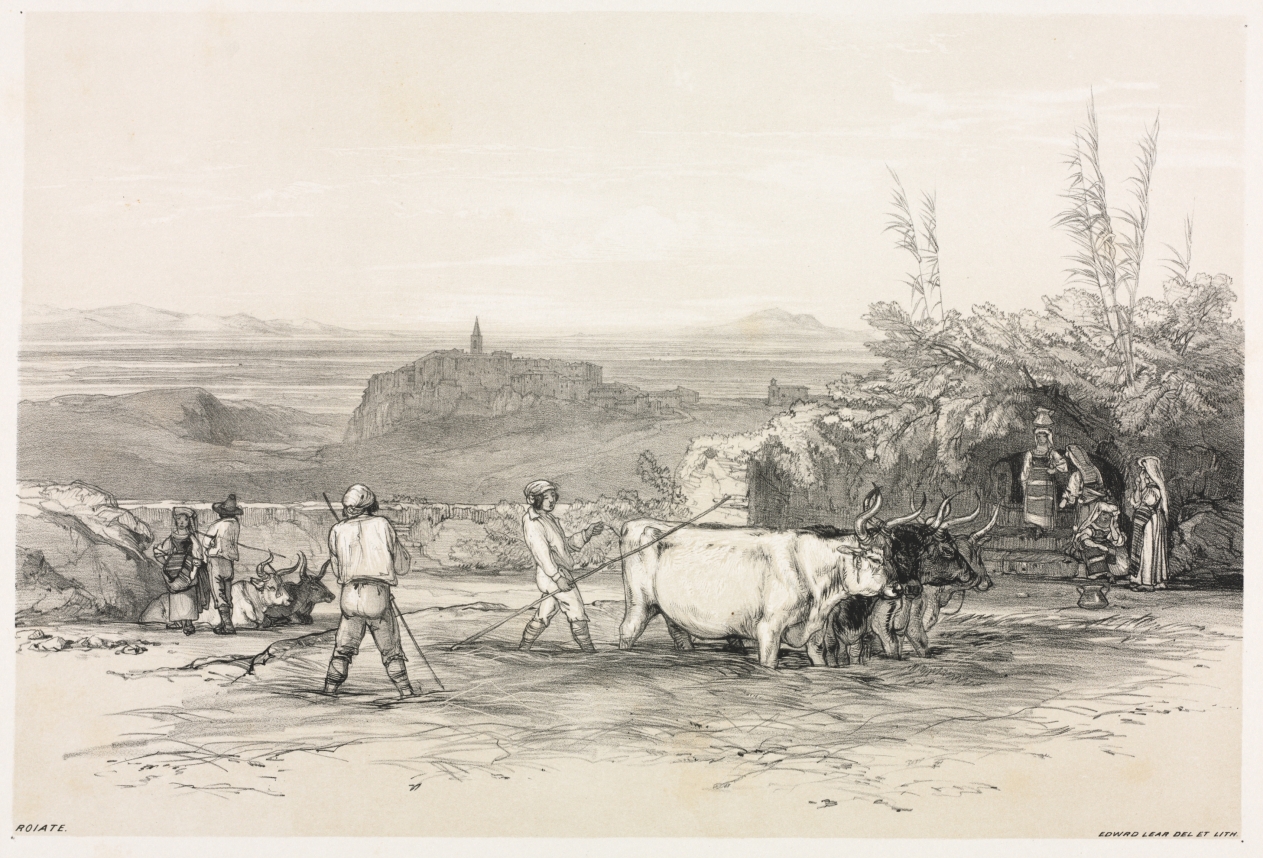
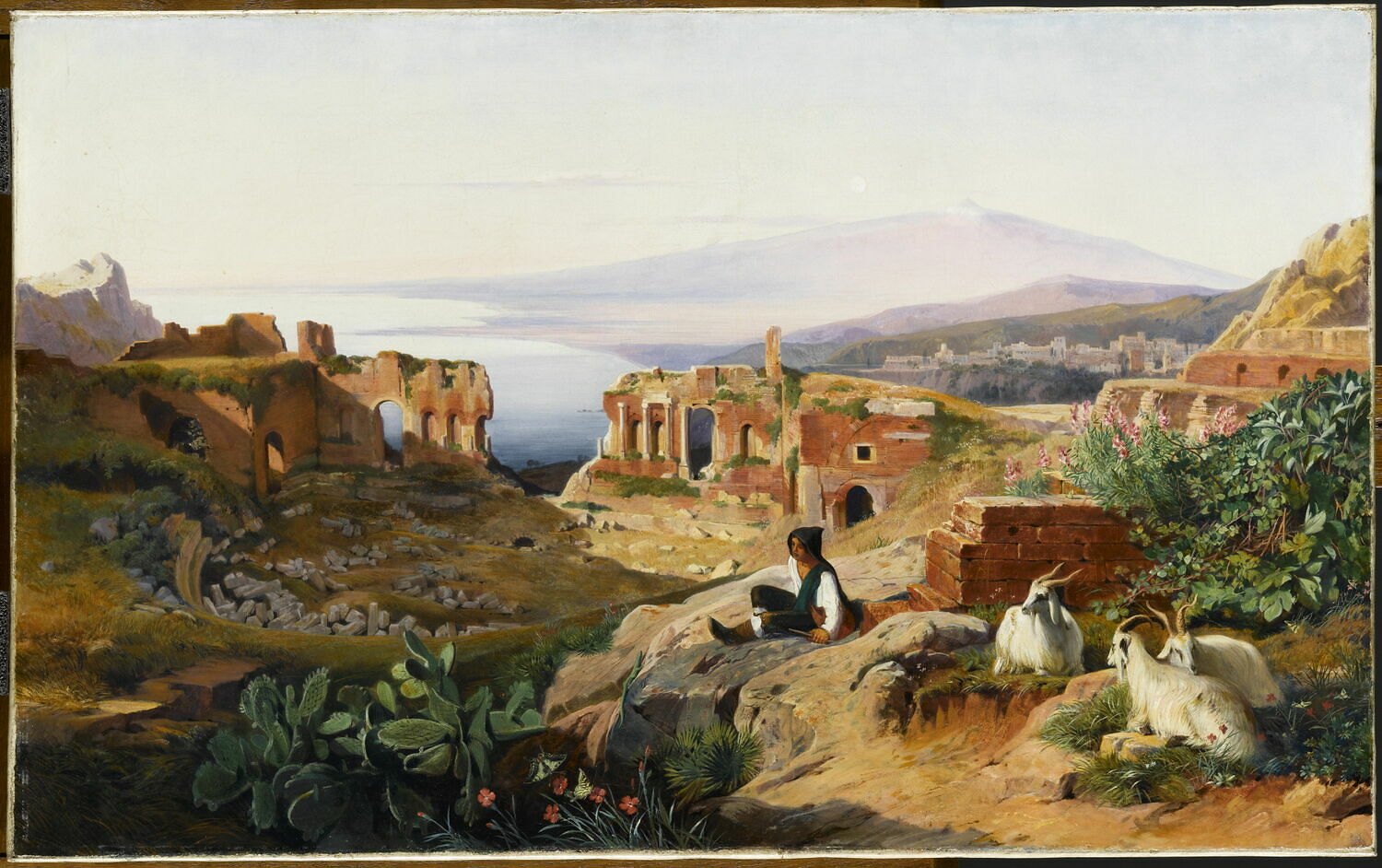
In 1842 Lear began a journey through the Italian peninsula, travelling through Lazio, Rome, Abruzzo, Molise, Apulia, Basilicata, Calabria and Sicily; in notes and drawings he gathered his impressions of the Italian way of life, folk traditions and the beauty of the ancient monuments.
In 1843 Lear visited Abruzzo: along an old sheep track of the shepherds he went through the Marsica (Celano, Avezzano, Alba Fucens, Trasacco) and the plateau of Cinque Miglia (Castel di Sangro, Alfedena). He sketched the medieval village of Albe with Mount Sirente, described Celano with the Piccolomini castle dominating the plain of Lake Fucino, and noted the winter stillness of the mountains at Castel di Sangro.
1846
Udgivelse
“A Book of Nonsense” is published
In 1846 Lear published A Book of Nonsense, a volume of limericks that went through three editions and helped popularise the form and the genre of literary nonsense.
Udgivelse
Two books of 1846: Italy and the Knowsley menagerie
The same year, 1846, saw the publication of Illustrated Excursions in Italy, a fruit of his Italian journeys, and Gleanings from the Menagerie and Aviary at Knowsley Hall.
1847
Rejse
A journey through Calabria
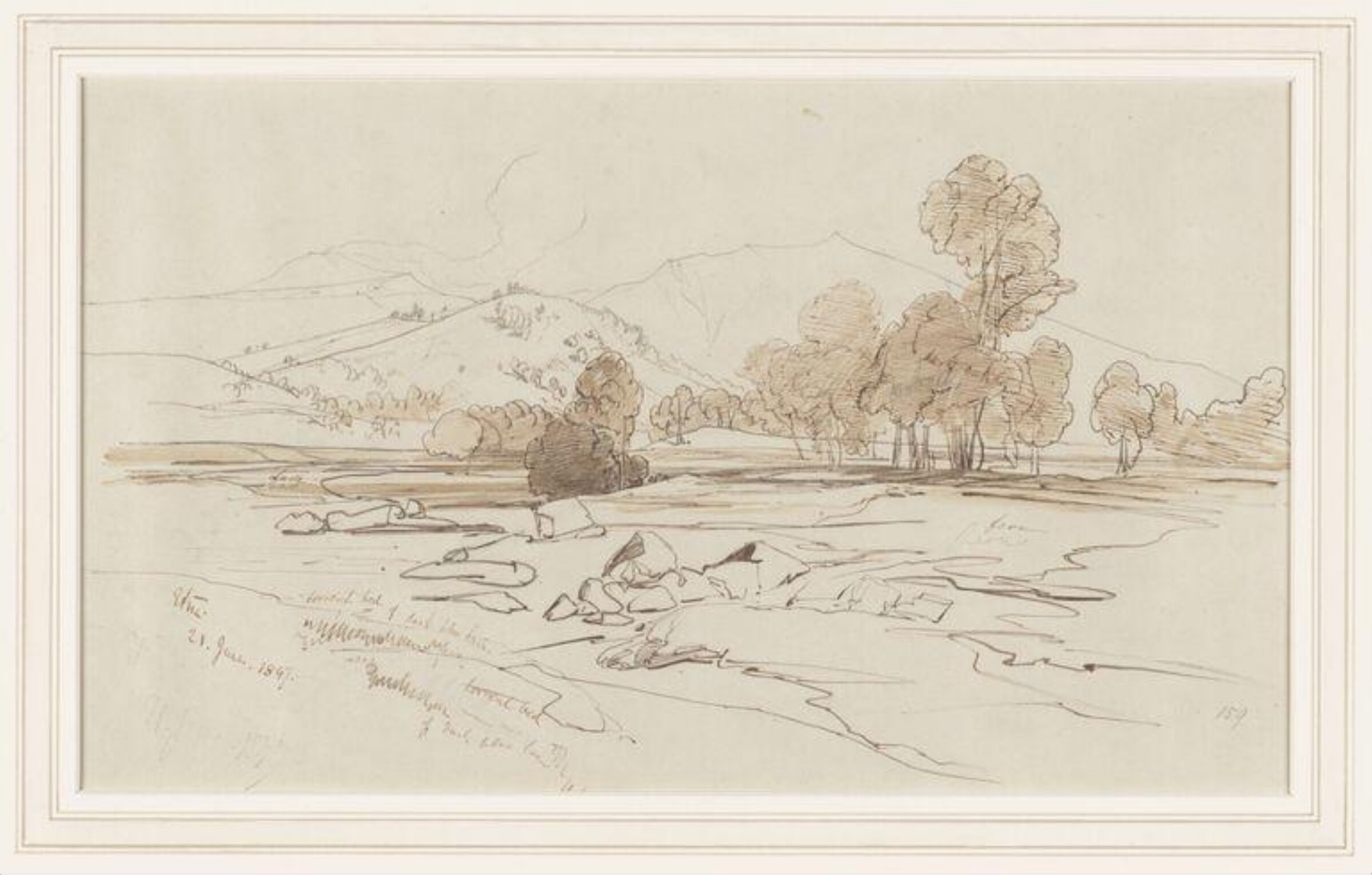
In 1847 Lear travelled to southern Italy, to Calabria; he described his itinerary among breathtaking landscapes and often surreal characters in Journals of a Landscape Painter in Southern Calabria, whose Calabria section is thought to be among the best of his travel literature.
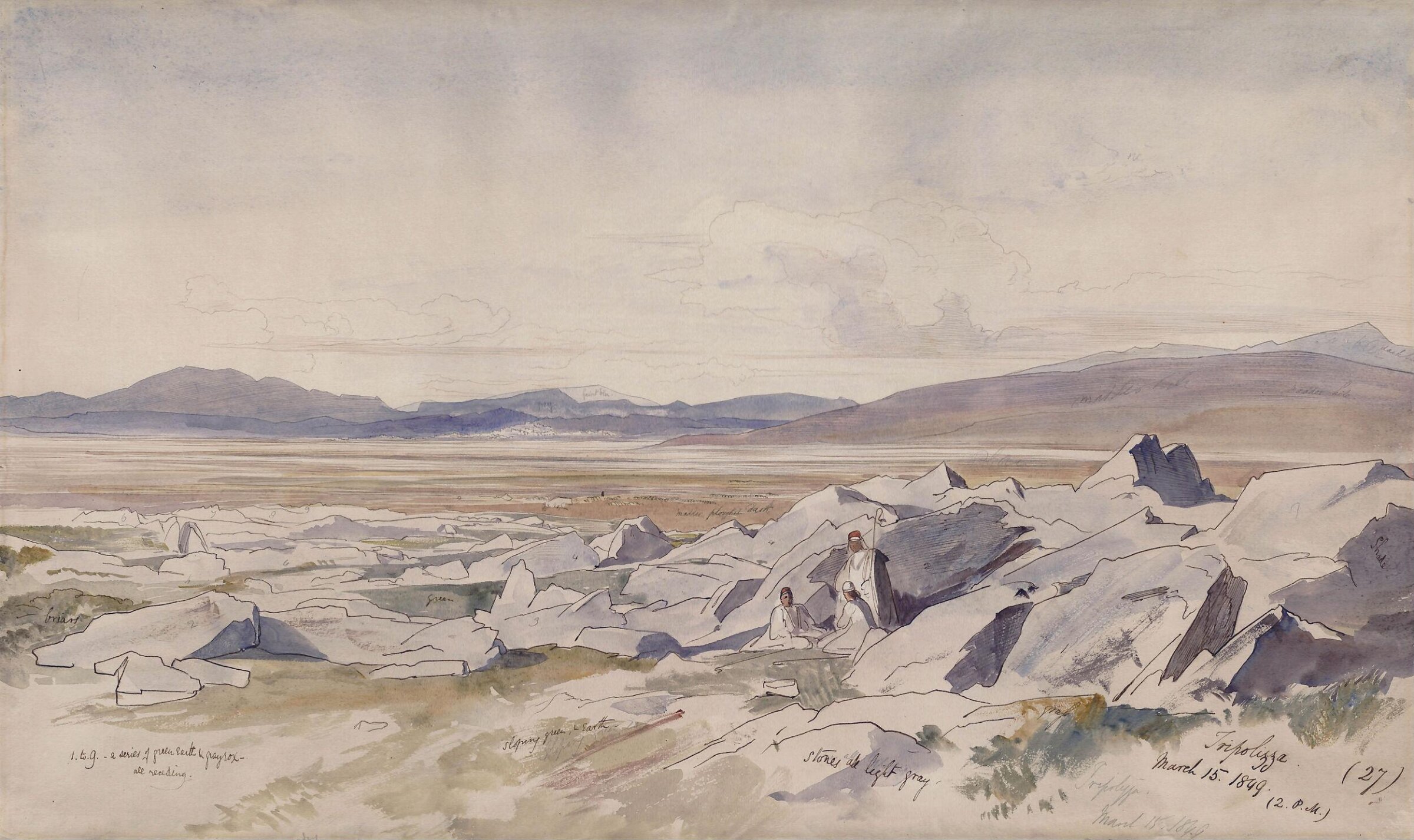
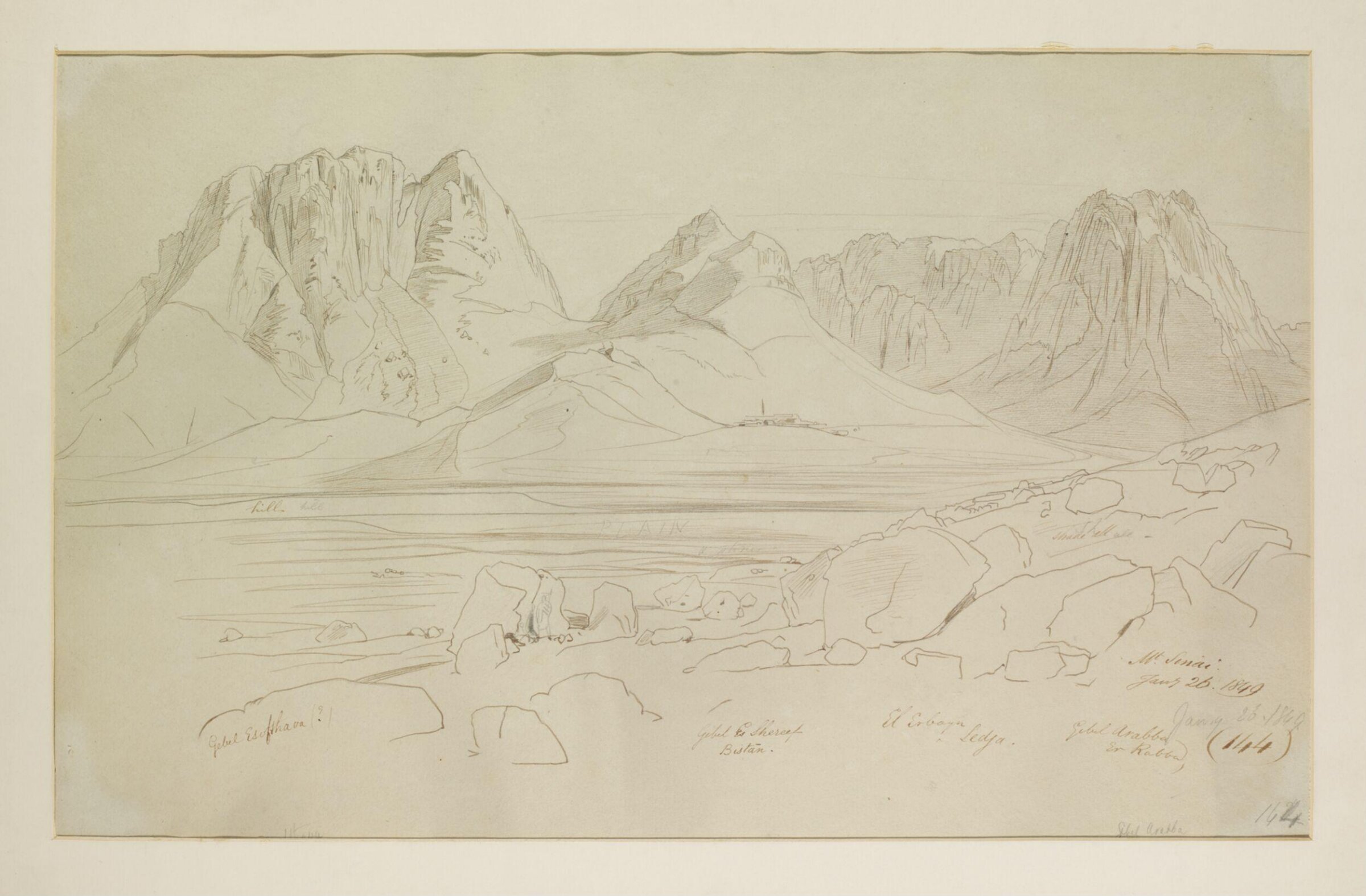
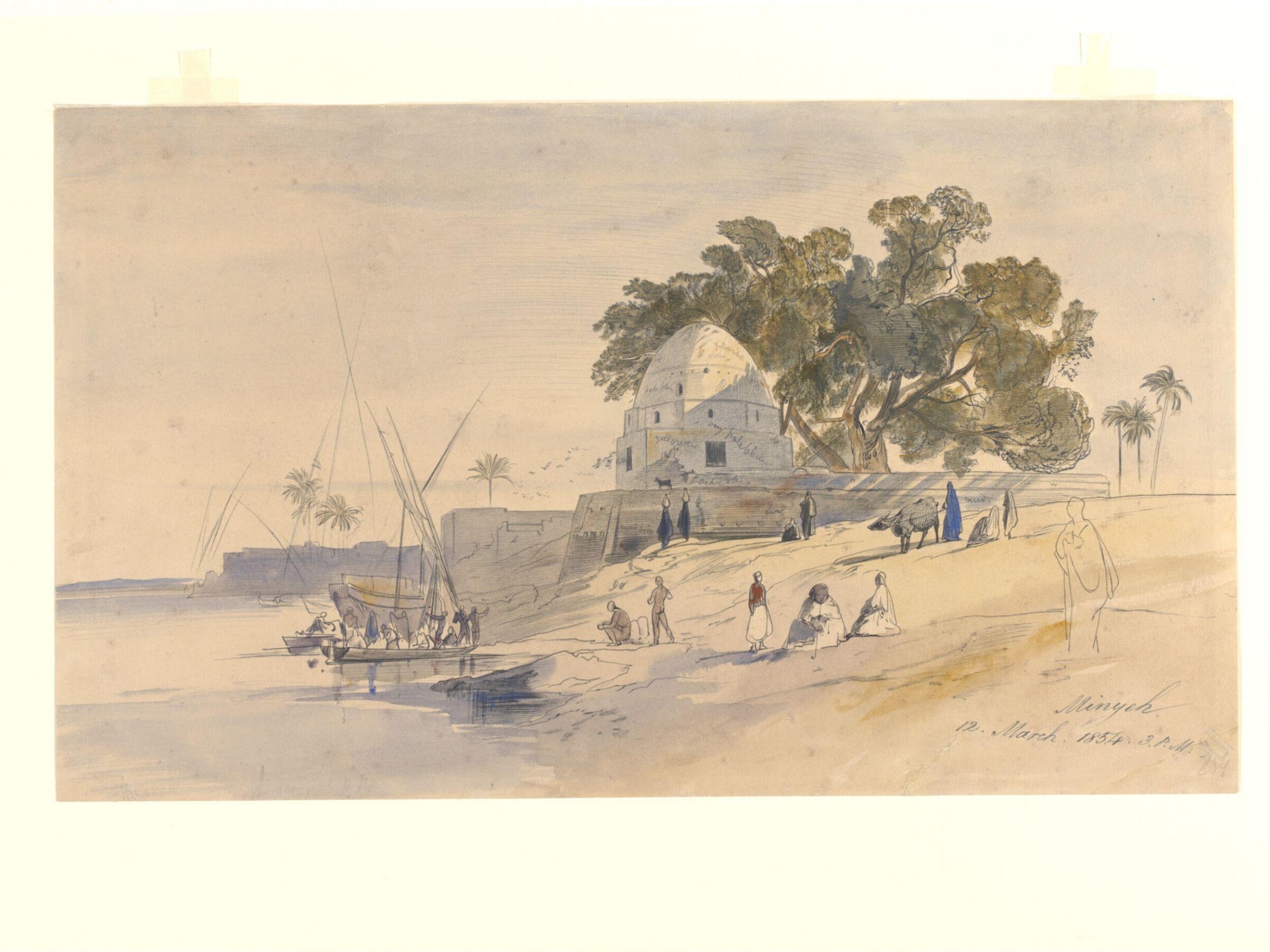
In 1848–49 Lear visited Albania, Vardar Macedonia, Egypt (all then part of the Ottoman Empire) and Greece. On the way he produced large quantities of coloured wash drawings, which he later converted in his studio into oil and watercolour paintings and into prints for his books.
In 1848, during his Albanian journey, Lear made the drawing “Mount Timohorit, Albania”.
1849
Familie
Meets Franklin Lushington on Malta
In 1849 on Malta Lear met the young barrister Franklin Lushington and toured southern Greece with him. It was the most fervent and painful friendship of his life and lasted almost forty years, until Lear’s death; Lushington did not wholly reciprocate his feelings.
Værk
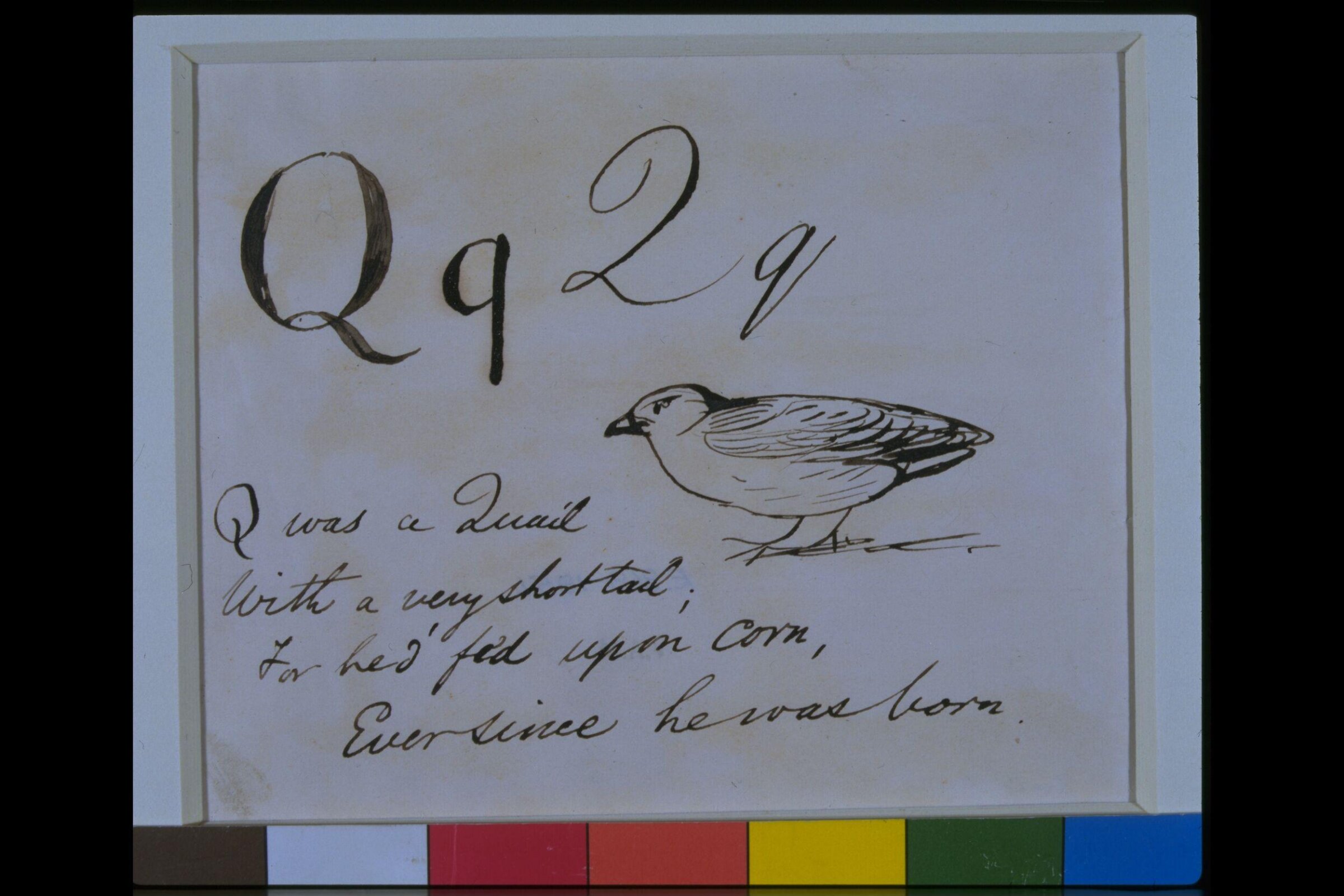
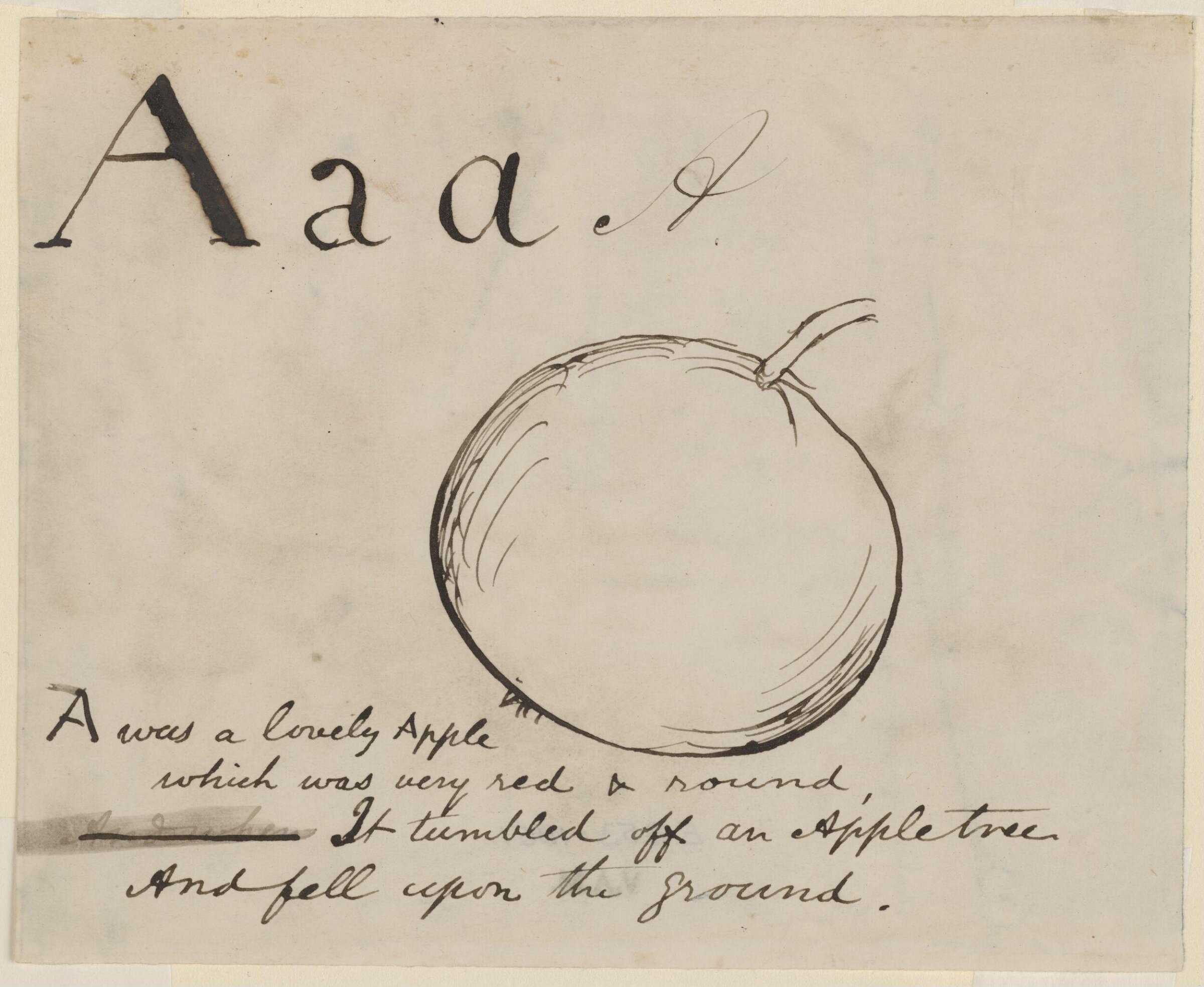
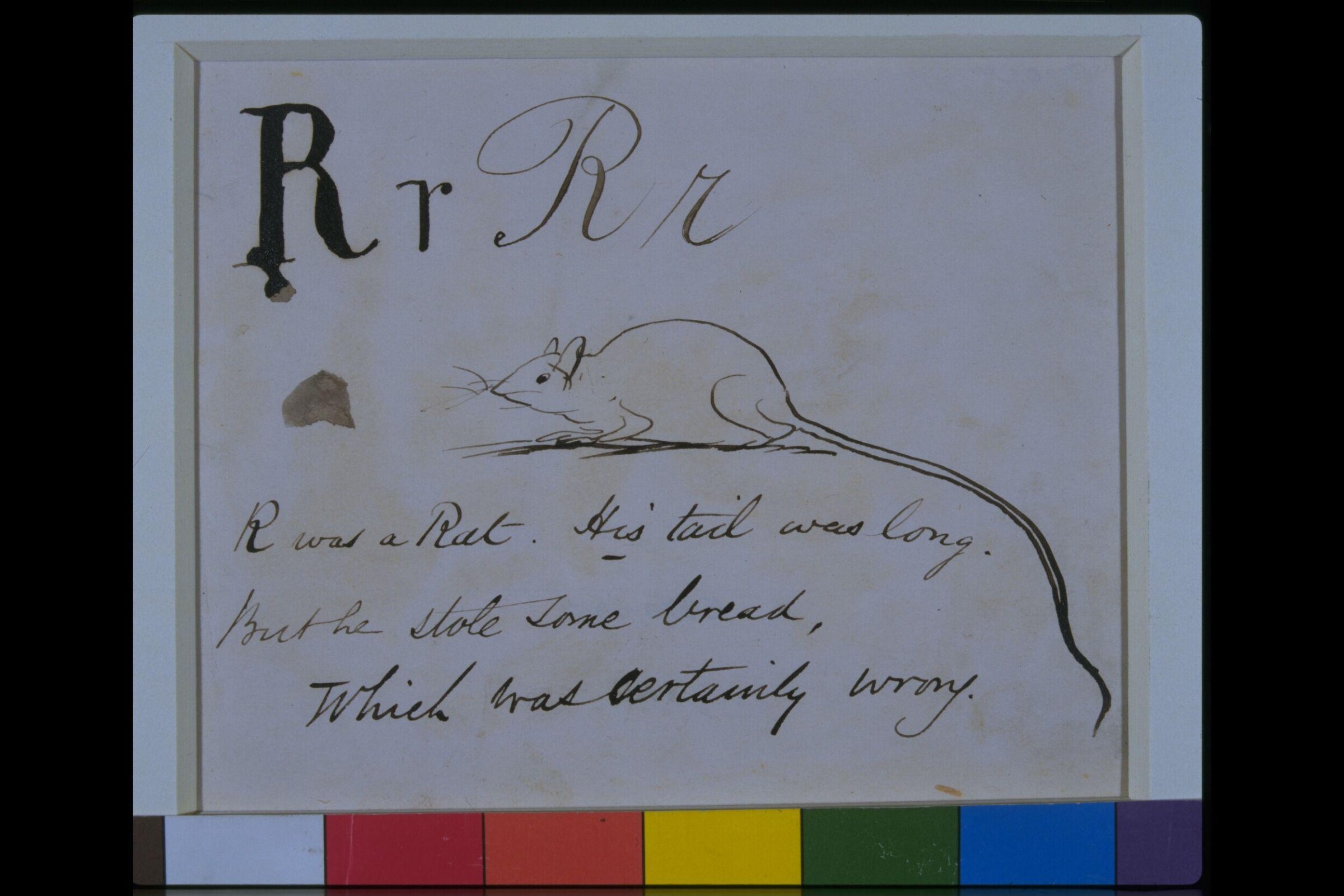
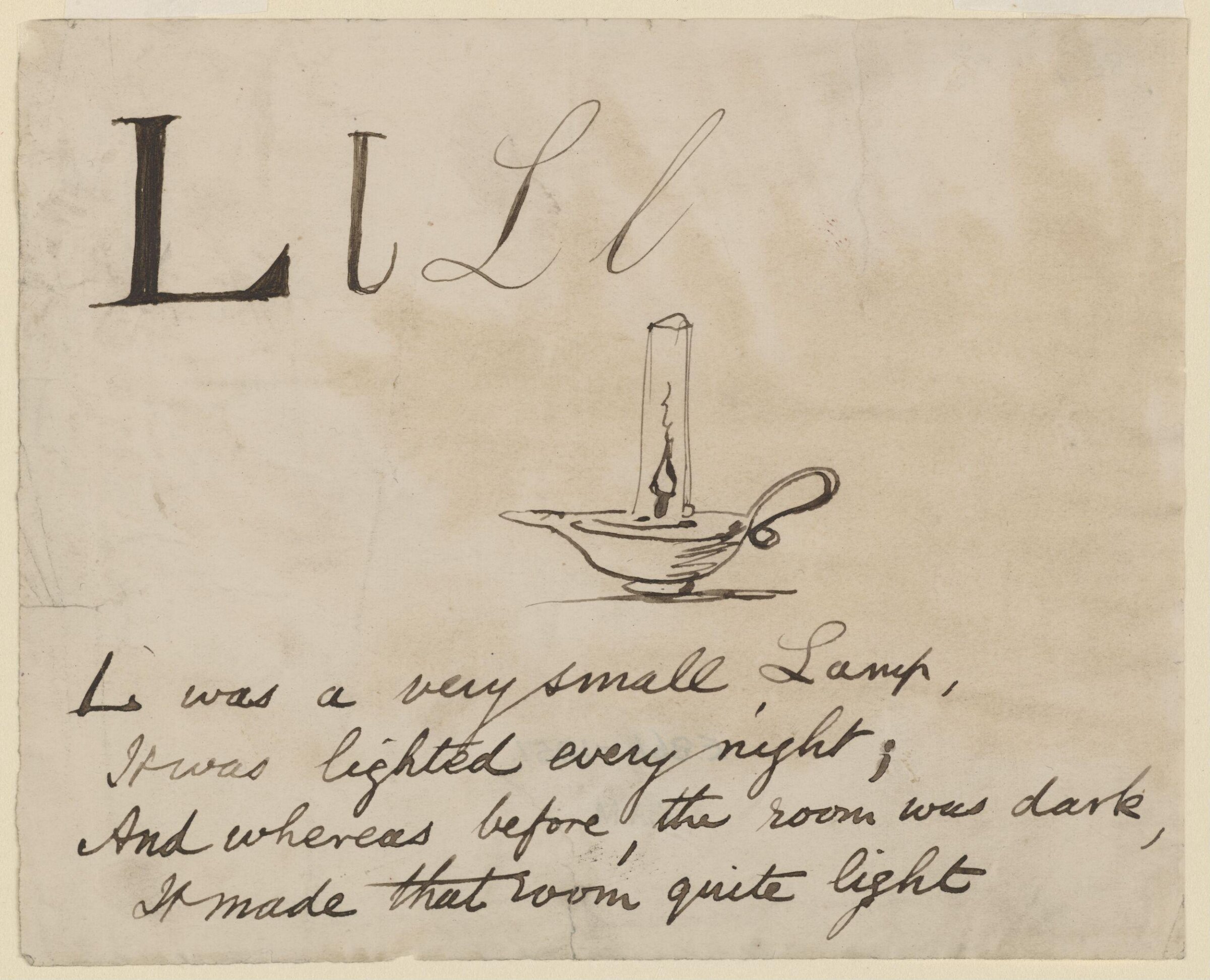
Creates “A Nonsense Alphabet”, published only in 1926
In 1849 Lear made the text and drawings of A Nonsense Alphabet; they were not published until 1926.
Travel journals “Journals of a Landscape Painter in Albania”
In 1851 Lear’s travel journals, Journals of a Landscape Painter in Albania, etc., were published, a book on his journey through Albania.
1852
Udgivelse
Journals of a landscape painter in Southern Calabria
In 1852 Journals of a Landscape Painter in Southern Calabria, etc. was published, in which Lear described his journey of 1847.
1853
Udgivelse · 1853–1860
Music for Tennyson’s poems: twelve settings
Lear published musical settings of Alfred Tennyson’s poems: four in 1853, five in 1859 and three in 1860; they were the only musical settings that Tennyson approved of.
“Journal of a Landscape Painter in Corsica” is published
In 1870 Lear’s travel journal on Corsica, Journal of a Landscape Painter in Corsica, was published.
Helbred · from 1870, at least
The heart disease that would kill him
Lear had heart disease from at least 1870; it was the cause of his death in 1888.
1871
Udgivelse
A collection of nonsense songs, stories and alphabets appears
In 1871 Lear published Nonsense Songs, Stories, Botany and Alphabets, which included the nonsense song “The Owl and the Pussy-Cat”, written for the children of his patron Edward Stanley, 13th Earl of Derby.
1873
Rejse · 1873–1875
A tour of India with a detour to Ceylon
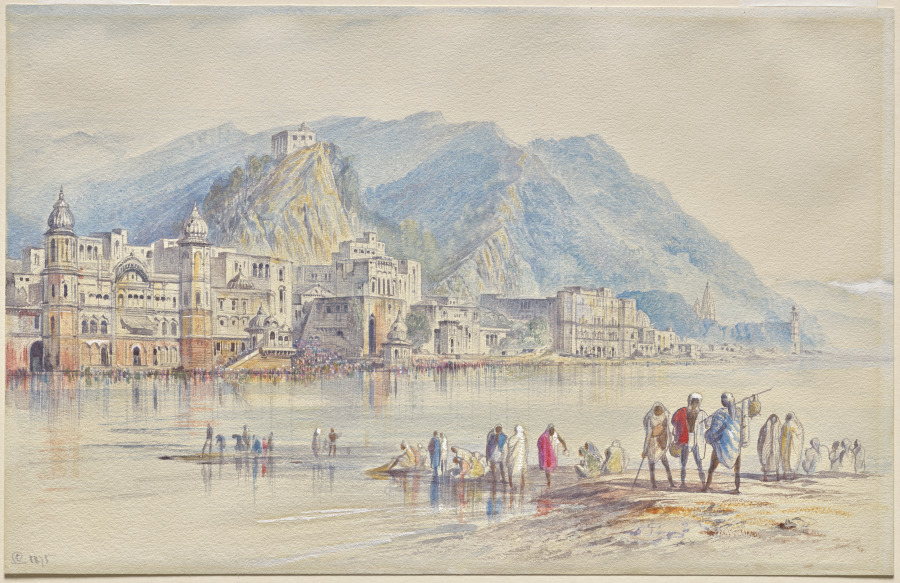
In 1873–75 Lear toured India, with a brief detour to Ceylon.
In 1877 Laughable Lyrics: A Fresh Book of Nonsense Poems, Songs, Botany, etc. was published, containing “The Dong with a Luminous Nose”.
1878
Rejse · 1878–1883
Summers on Monte Generoso
From 1878 to 1883 Lear spent his summers on Monte Generoso, a mountain on the border between the Swiss canton of Ticino and the Italian region of Lombardy; his oil painting The Plains of Lombardy from Monte Generoso is in the Ashmolean Museum in Oxford.
In 1884, four years before his death, Lear made “Argos from Mycenae”, now in the collection of Trinity College, Cambridge.
1887
Begivenhed · Sanremo
Foss the cat, Lear’s faithful companion, dies
In 1887 Lear’s cat Foss, his trusted companion in San Remo, died; he was buried with some ceremony in a garden at the Villa Tennyson.
1888
Begivenhed · Sanremo
A lonely funeral and a headstone with lines by Tennyson
Lear’s funeral was described by the wife of Dr Hassall, his physician, as a sad, lonely affair, none of his many lifelong friends being able to attend. He is buried in the Foce cemetery in San Remo; his headstone is inscribed with lines about Mount Tomohrit in Albania from Tennyson’s poem “To E. L., On His Travels in Greece”.
Helbred · 29 January 1888 · Sanremo
Dies at his villa of heart disease
After a long decline in his health Lear died at his villa in San Remo of heart disease.