 William Henry Fox Talbot英格兰, 1800–1877
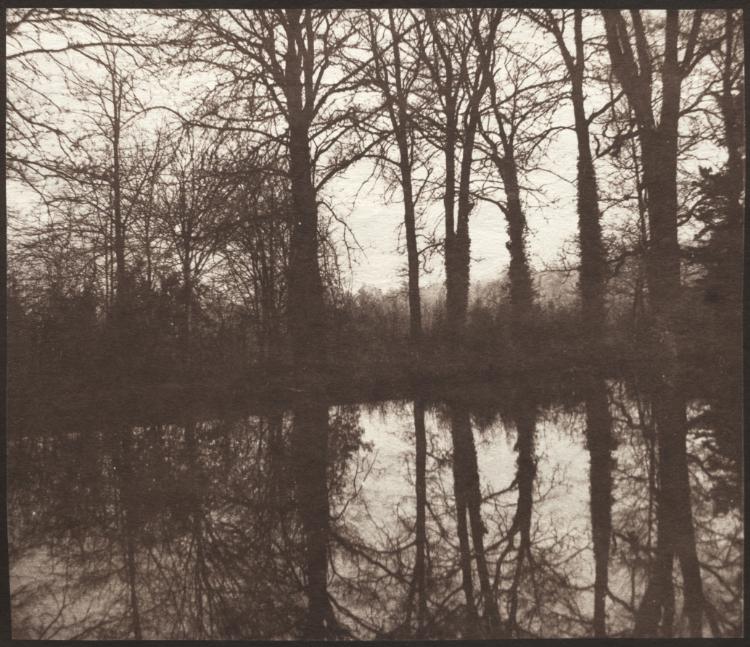
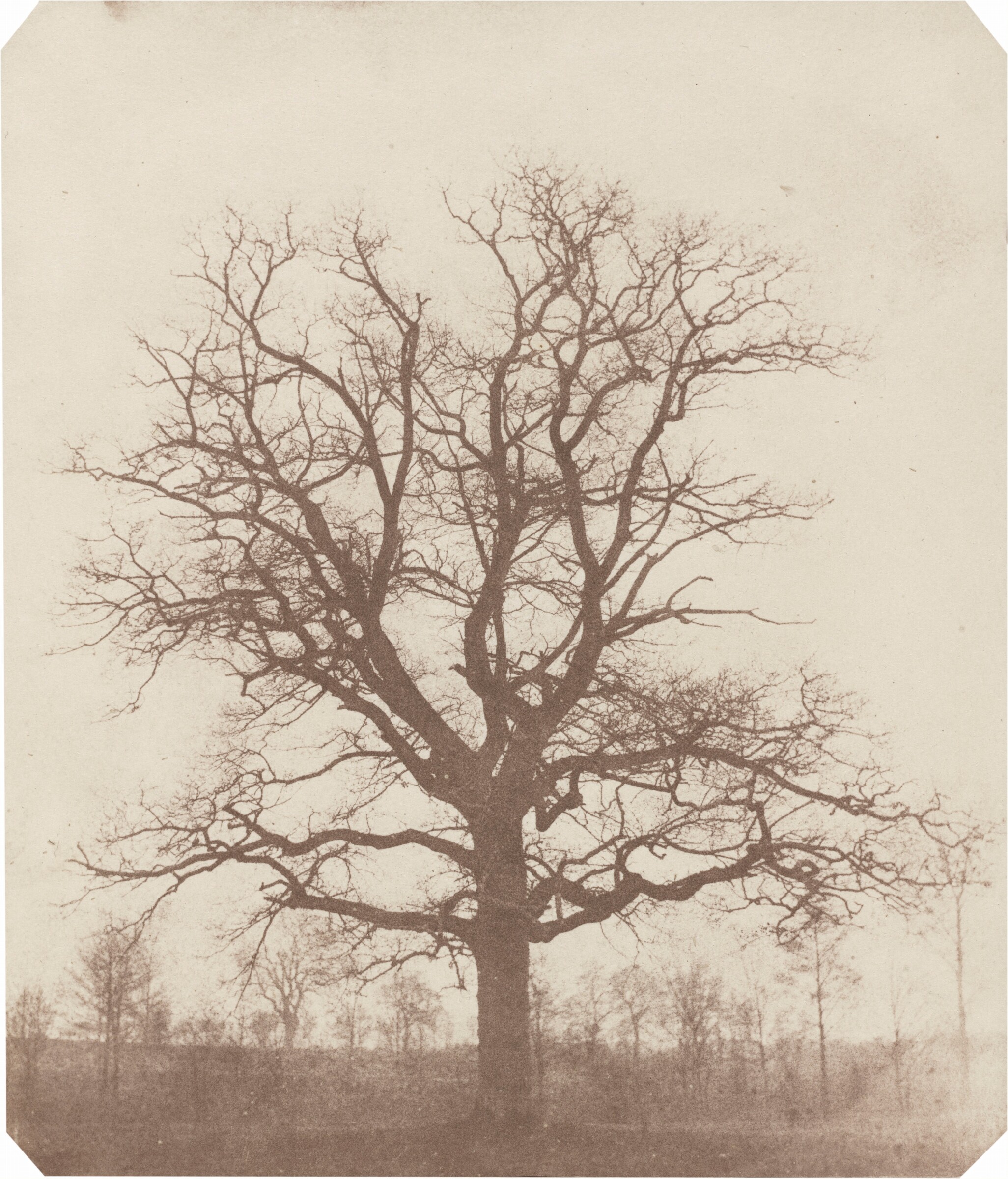
Winter Trees Reflected in a Pond
能看到吗?
目前未展出
《Winter Trees Reflected in a Pond》现在在哪里? 收藏方: 克利夫蘭藝術博物館, 克利夫兰. 目前未展出. 核实 2026年9月29日.

克利夫兰, 美國
仍属馆藏,只是目前没有展出。
- 核实
- 此状态始于
- 出处
- 博物馆
关于作品
Talbot captured tree branches flawlessly mirrored on the glassy surface of the pond at his family seat, the 13th-century Lacock Abbey in Wiltshire. A longer exposure, or a lusher season, would have risked a blurred image. The result was a radically abstract composition for its time—a starkly beautiful landscape, as expressive and personal as any painting.
克利夫蘭藝術博物館
作品信息
- 馆藏编号
- 2006.4
已收入目录
出处
- 克利夫蘭藝術博物館
- 图片: 克利夫蘭藝術博物館 — Museum open access
William Henry Fox Talbot当时的生活
完整生平1839
Daughter born: Matilda Caroline Talbot
25 January 1839
First showing of photographs at the Royal Institution
Shortly after Louis Daguerre’s daguerreotype was announced in early January, Talbot asserted his priority and, at a Friday Evening Discourse at the Royal Institution, exhibited several paper photographs he had made in 1835. Within a fortnight he described the nature of his process to the Royal Society, while Daguerre revealed no useful details of his own until mid-August.
1840
Invents the calotype
Talbot found a way to print any number of positives on salted paper from a paper negative; new chemicals cut the exposure to a minute in bright sunlight. He called the method the “calotype” (from kalos, beautiful), informally the “talbotype”: unlike the daguerreotype with its single positive, it effectively created modern photography.
1840–1841
Post: High Sheriff of Wiltshire
February 1841
Patents the calotype
Talbot obtained an English patent for the calotype process and sold licences at £20 each, later lowering the fee for amateurs to £4 while professionals paid up to £300 a year; scientists saw it as a hindrance to scientific freedom. He justified his rigour by the roughly £5,000 he had spent on photography; for science the method was free, and Talbot himself published the first known photomicrograph of a mineral crystal.
1844–1846
“The Pencil of Nature”, the first photobook, appears
Longman, Brown, Green & Longmans issued the book in separate parts: 24 prints, each pasted in by hand and accompanied by a short text. Talbot is regarded as the author of the first photographic book; scholars see in it the design of a new canon built on biblical rhetoric.



![[Group of Trees from the American Walnut], William Henry Fox Talbot, June 1, 1840](https://media.getty.edu/iiif/image/e2239044-50e4-44d2-be46-db53cdc317f1/full/!1200,1200/0/default.jpg)