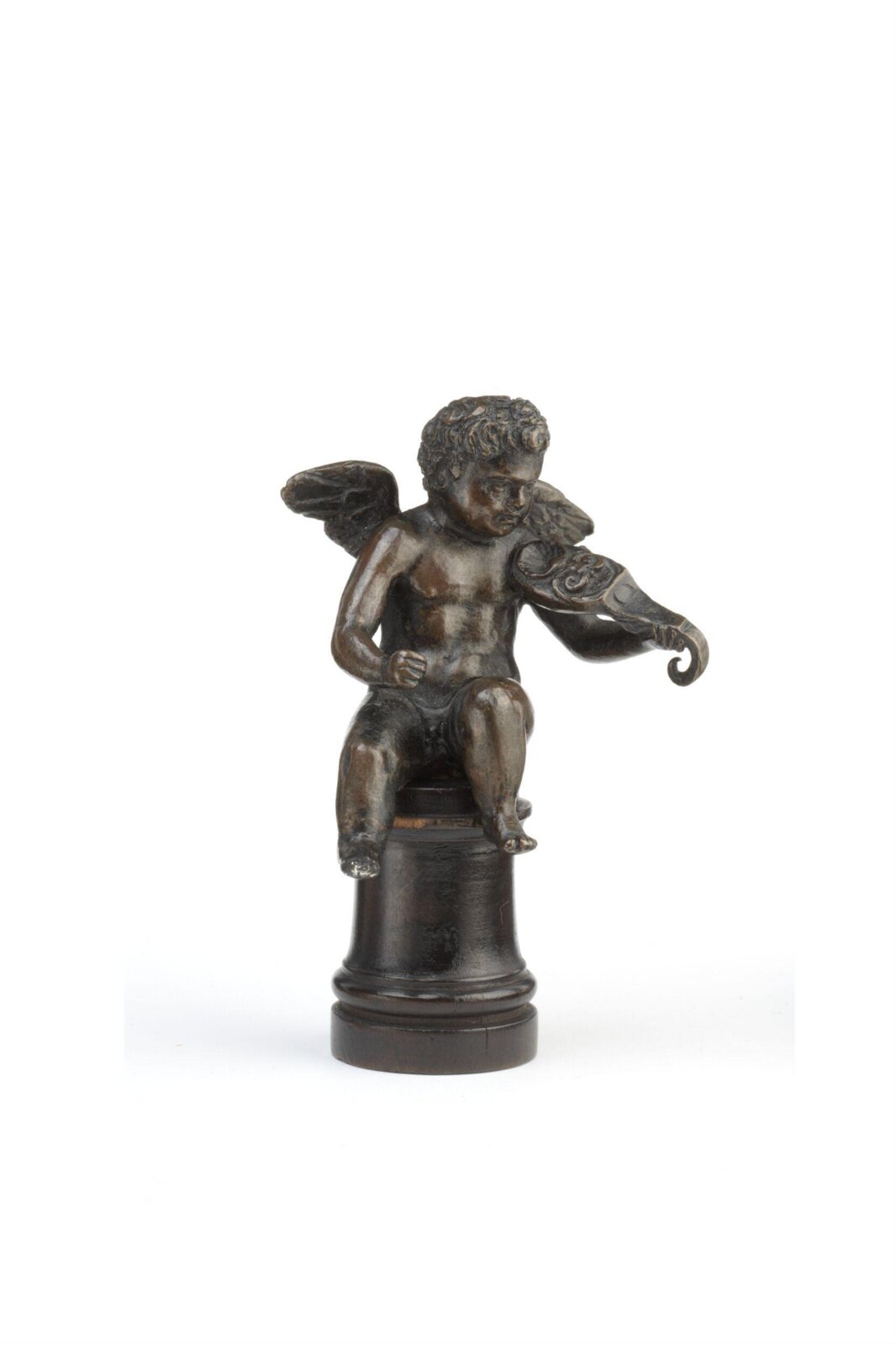
Winged Puto
可否一睹真容?
可以,正在迎客

正对公众展出。
- 核实
- 此状态始于
- 出处
- 博物馆
关于这件雕塑
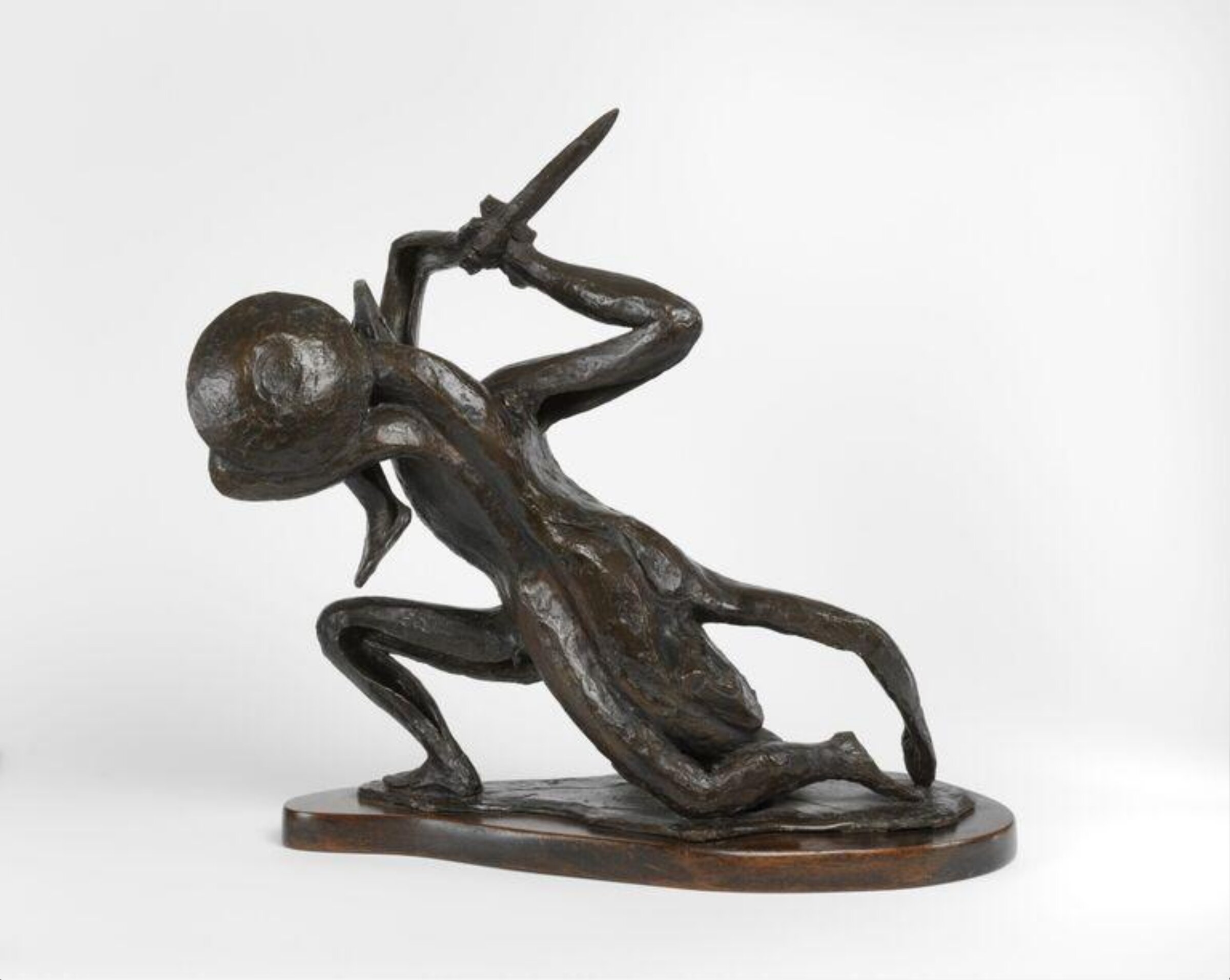
This bronze figure of a winged putto makes ready to play a fantastic type of fiddle, presumably with a now missing bow. The impractical fiddle is loosely related to the rebec, an unfretted instrument that originated in the Middle East and became particularly popular in Europe during the medieval and Renaissance period. Winged putti - also known in the Renaissance as erotes or more often spiritelli - were extremely popular as decorative motifs, and they populated a vast array of objects. Taking a variety of forms and meanings, they sometimes represented different spirits (as their name suggests) and were believed to govern the senses and emotions. This tiny example is deftly modelled to create the impression of vibrant movement. The rebec-style instrument may suggest a rustic setting, perhaps reflecting the owner's interests in Arcadian literature that was popular amongst the scholars of the university at Padua, in whose orbit Riccio worked.
继续阅读
Similar music-playing winged putti are found on a much larger scale on Riccio's masterpiece, the Paschal Candelabrum in the Basilica of St Anthony in Padua, which now stands to the side of the High Altar. The same spirit can be seen in his small-scale works, such as the putto riding a dolphin on the lid of the Cadogan Lamp (V&A: 137-1865), the largest of the known lamps by Riccio. This has led to the suggestion that this putto once decorated such a lamp, which would, however, have to be on a much larger scale to support this figure.
维多利亚和阿尔伯特博物馆
作品信息
- 馆藏编号
- A.3-1972
画面内容
已收入目录
出处
- 维多利亚和阿尔伯特博物馆
- 图片: 维多利亚和阿尔伯特博物馆 — © Victoria and Albert Museum, London



![[Ausschnitt aus dem Fresko der Himmelfahrt Maria], Antonio da Correggio, 1697](https://diglib.hab.de/varia/haum/bonaveri-d-m-ab2-0001/max/000001.jpg)
