 Ivan Aivazovsky1817–1900
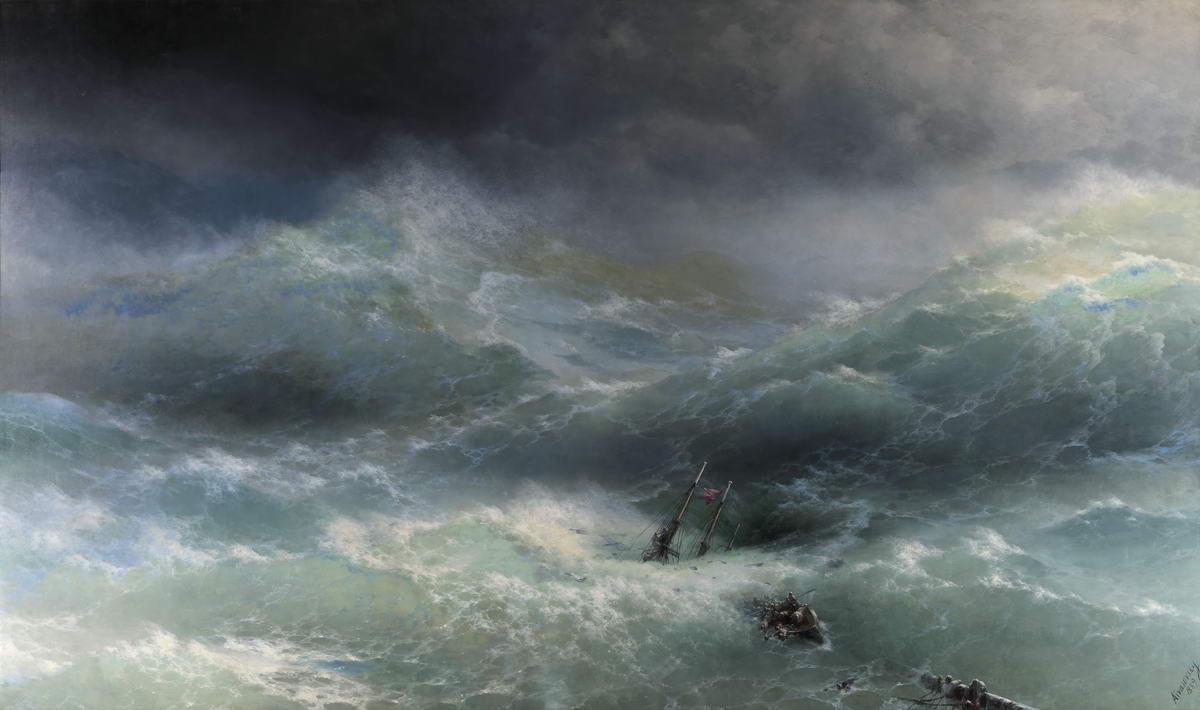
Волна
能看到吗?
是,正在展出
《Волна》现在在哪里? 俄羅斯博物館, Mikhaylovskiy dvorets, Zal 14. Akademicheskiy zal. K. P. Bryullov, I. K. Ayvazovskiy, 聖彼得堡. 是,正在展出. 核实 2026年10月12日.

聖彼得堡, 俄罗斯
展厅Mikhaylovskiy dvorets, Zal 14. Akademicheskiy zal. K. P. Bryullov, I. K. Ayvazovskiy
闭馆· 明天 10:00 开馆
正对公众展出。
- 核实
- 此状态始于
- 出处
- 博物馆
关于这幅画
博物馆的介绍 — 俄语
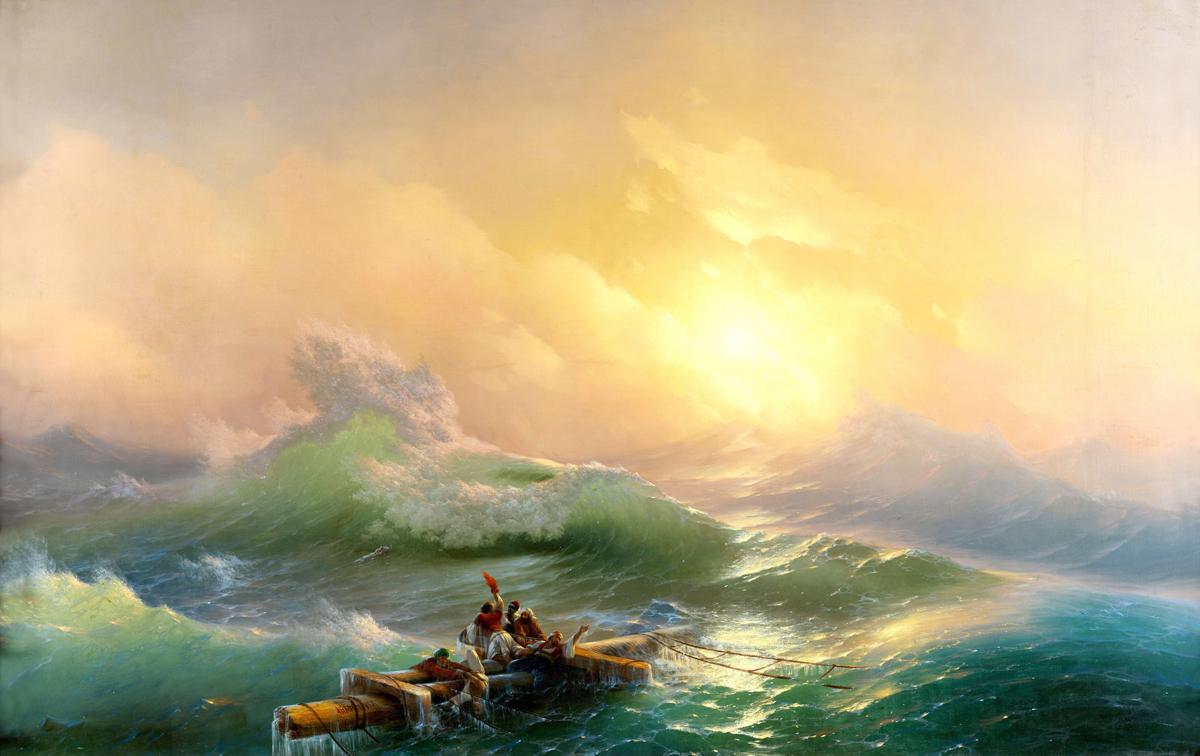
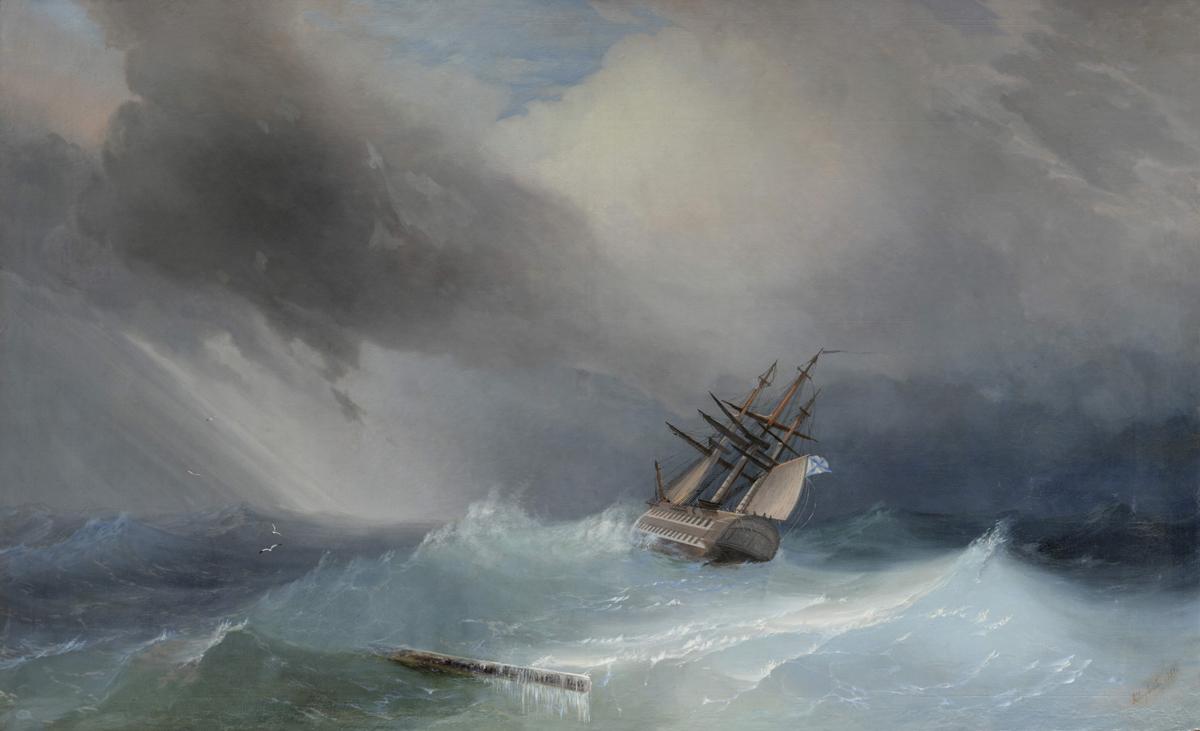
Грандиозный холст «Волна» – яркий образец позднего творчества Айвазовского. Любопытно, что в момент создания картины художнику было уже 72 года. Изображая бурное движение волн, живописец любуется циклопической мощью природы и как будто сравнивает с ней тщету человеческих усилий: низко нависли над волнами тяжелые свинцовые тучи, пучина вот-вот поглотит разбитый корабль, нет надежды и у пытающихся спастись моряков. Колорит картины холоден и мрачен. Живописец отходит здесь от ранней романтической яркости палитры и приближается к реалистическому решению.
俄羅斯博物館
作品信息
- 馆藏编号
- Ж-2200
画面内容
已收入目录
出处
- 俄羅斯博物館
- 图片: 俄羅斯博物館 — © State Russian Museum
Ivan Aivazovsky当时的生活
完整生平1886–1887
Half a century of work: the jubilee
In 1886 the fiftieth anniversary of his creative labours is marked by an exhibition in Saint Petersburg and honorary membership of the Imperial Academy of Fine Arts (other accounts date it to 1887). In 1887 Aivazovsky gives a jubilee dinner for 150 friends: each guest receives a miniature by the master set into a photograph of the artist at work in his studio.
1887
Gives Feodosia the water of the Subash spring
Unable to watch his town suffer from lack of water any longer, Aivazovsky, in an address to the city duma, gives Feodosia in perpetuity 50,000 buckets of clean water a day from his Subash spring. In 1887 work begins on a water pipeline, and in the park by the embankment a fountain is built to his design, from which townspeople draw water free of charge; in 1890 a grateful Feodosia raises a fountain-monument to him.
1888
Chekhov at Shakh-Mamai
In July 1888 Anton Chekhov, visiting Feodosia, spends a whole day at Aivazovsky's Shakh-Mamai estate and dines with its owner. The estate strikes him as luxurious and fairy-tale-like; in a letter he describes Aivazovsky ironically but recognises in him a complex nature worthy of attention.