

与此同时,在Mikhail Nesterov的生活中
完整生平1890s
Studies Byzantine art
To master monumental painting, new to him, Nesterov travelled to Rome, Palermo, Constantinople and Ravenna, where he could study the traditions of Byzantine art (other accounts name Rome and Istanbul).
1893, 1908, 1911
Returns to Italy
Nesterov went abroad repeatedly, visiting Italy in 1893, 1908 and 1911, but unlike Henryk Siemiradzki, who shone in Europe, he always longed to go “home, to Russia”: of all foreign lands, only Italy left a mark on his art.
1896
Elected to the Peredvizhniki Association
“Under the Church Bells” (1895; its real title is “Monks”) was warmly received at the Peredvizhniki exhibition, which became the occasion for electing Nesterov a member of the Association; he remained a member until 1901.
1898
Made Academician for “The Great Tonsure”
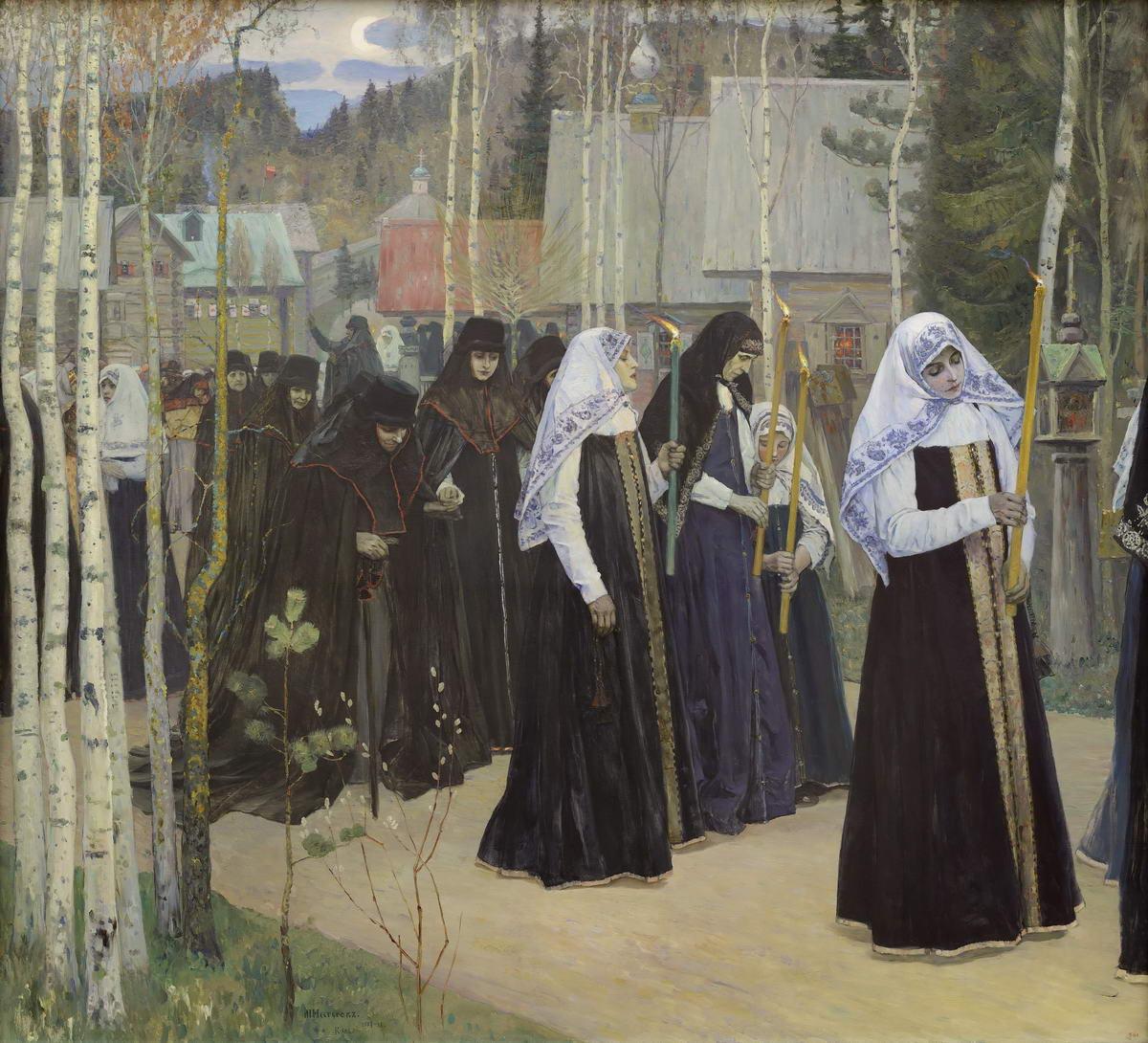
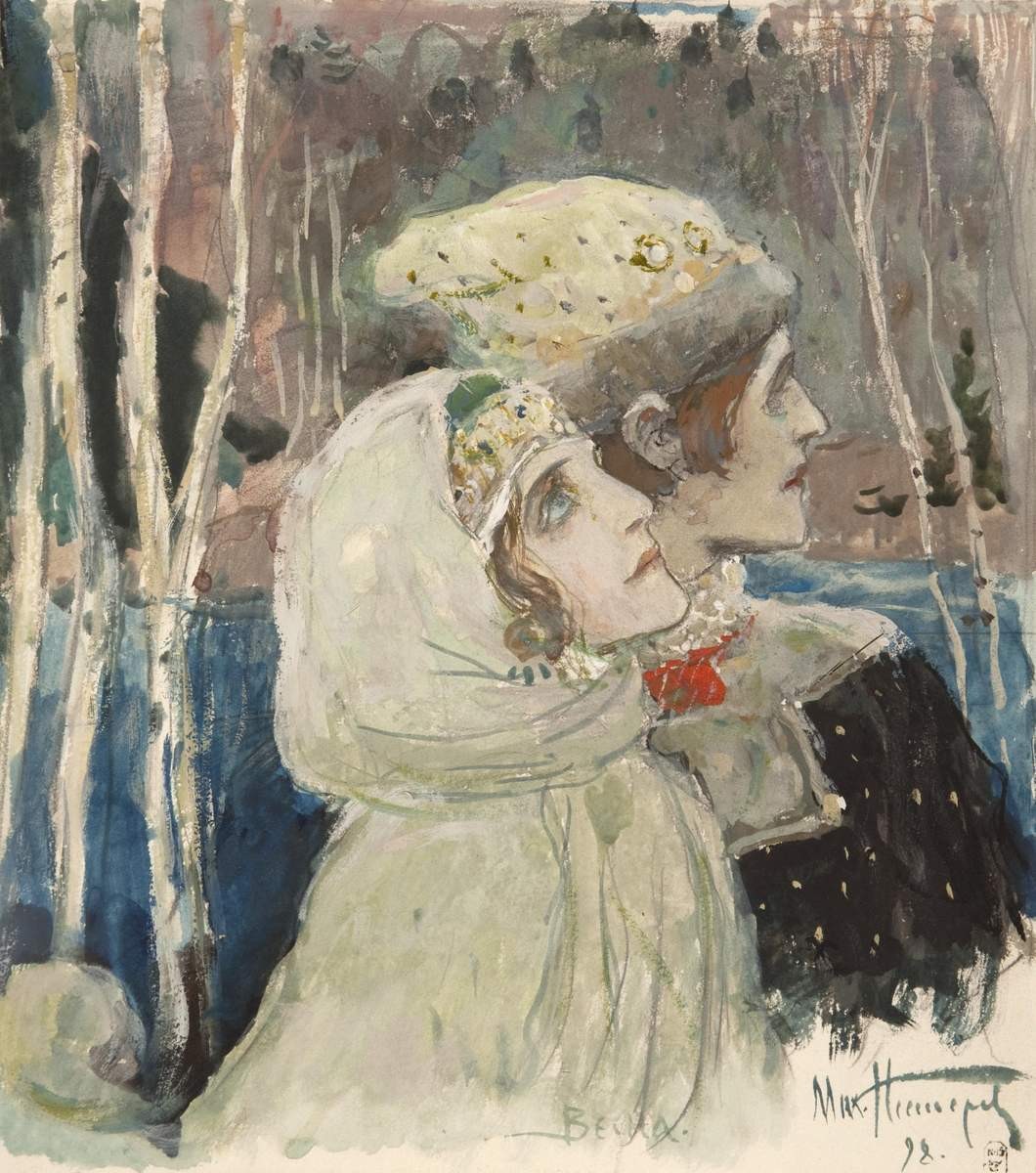
“The Great Tonsure” (1897–1898), a young girl led by nuns to take the veil at a forest Old Believer hermitage, was warmly received by the public, and for it Nesterov was made an Academician of painting; in 1910 he became a Full Member of the Academy of Arts.
1898–1902
Life with Yulia Urusman
From 1898 until his second marriage in 1902 Nesterov was together with Yulia Nikolaevna Urusman (1877–1962). In these years the artist's daughter Vera (1899–1998) and sons Mikhail (1901–1921) and Fyodor, who lived from 23 February to 7 July 1902, were born.
1898–1904
Decorates the church at Abastumani
At the invitation of Tsesarevich George Alexandrovich, younger brother of Nicholas II, Nesterov decorated the palace church of St Alexander Nevsky at Abastumani, personally executing more than 50 compositions on the walls and iconostasis, yet he was dissatisfied with the result. By contrast, he refused to paint the Orthodox cathedral in Warsaw, unwilling to serve as “propaganda” for Russification in a Polish city.