 Berthe Morisot法国, 1841–1895
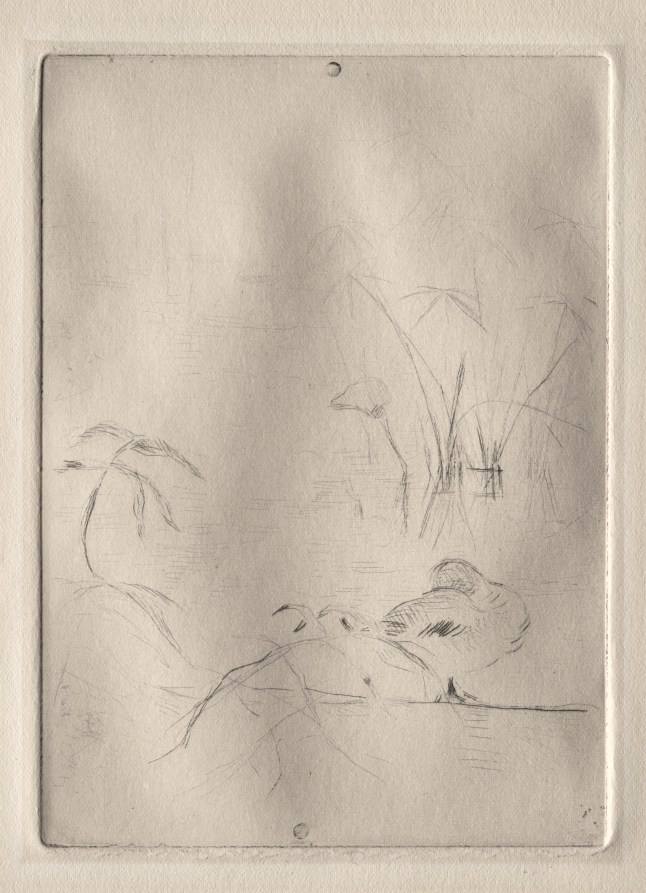
The Duck

作品信息
- 馆藏编号
- 1998.377
已收入目录
出处
- 克利夫蘭藝術博物館
- 图片: 克利夫蘭藝術博物館 — Museum open access
与此同时,在Berthe Morisot的生活中
完整生平1885–1887
A turn to drawing: line and form
After 1885 drawing begins to dominate Morisot's work: she experiments with charcoal and coloured pencils and clarifies form and line, influenced by photography and Japonism. Like the Japanese prints of the time, she places objects away from the centre of the composition.
1887–1895
Squaring and tracing paper: the synthesis of her last years
Morisot starts to use squaring and tracing paper to transcribe her drawings exactly onto the canvas, which lets her build compositions with more complicated interaction between figures. Her late works are distinctive for their synthesis of the Impressionist touch with broad strokes and light reflections and the graphic approach of clear lines.
1888–1889
From short strokes to long, sinuous ones
In 1888–89 Morisot's brushstrokes change from short, rapid ones to long, sinuous ones that define form; the outer edges of her paintings are often left unfinished, so that the canvas shows through and increases the sense of spontaneity.
1890
“No man has ever treated a woman as an equal”
In 1890 Morisot writes in a notebook about her struggle to be taken seriously as an artist: she does not think there has ever been a man who treated a woman as an equal, and that is all she would have asked for, since she knows she is worth as much as they are.
1892
The first solo exhibition
In 1892, after almost two decades of showing in group exhibitions, Morisot's first solo exhibition is held.
1892
Her husband Eugène Manet dies
In 1892 Morisot's husband, the painter Eugène Manet (1833–1892), dies.