 Edgar Degas法国, 1834–1917
The Dance Class

About the painting
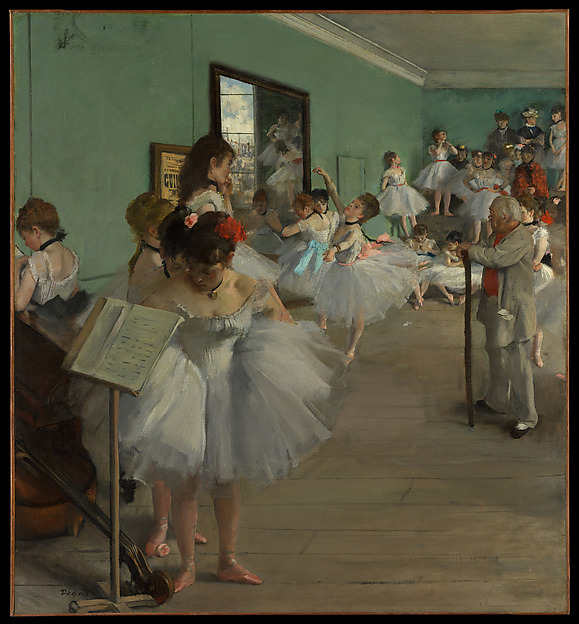
《舞蹈课》是埃德加·德加于1874年创作的一幅油画。 现收藏于大都会艺术博物馆。
此画及其在巴黎奥赛博物馆的姊妹作品是德加以芭蕾舞为主题的最雄心勃勃的作品之一。此画描绘了著名芭蕾舞大师朱尔斯·佩罗在旧巴黎歌剧院指导授课的假想场景;该剧院实际上已于创作前一年失火被毁。剧院墙上张贴有罗西尼歌剧威廉·退尔的海报,是为了向委约创作该作品的歌剧演唱者让-巴蒂斯特·福尔致敬。
本作现于大都会博物馆的815号展厅展出。
作品信息
- 馆藏编号
- 1987.47.1
What it shows
已收入目录
出处
- 大都會藝術博物館: the museum's own open data · 7天前获取
- 图片: 大都會藝術博物館 — Open Access (CC0)
与此同时,在Edgar Degas的生活中
完整生平early 1870s
Meets Durand-Ruel
Degas met the dealer Durand-Ruel, later the most prominent of the trusted dealers with whom he planned his strategy at auctions.
1870s
From “de Gas” back to plain “Degas”
The archives disproved the legend of an ancient noble line: the artist's paternal ancestors were bakers, and the name “de Gas” was invented by his father, who commissioned a false genealogy. In the 1870s Edgar returned to the plain spelling, Degas.
1872年10月–1873年3月 · 居住
New Orleans
1873–1874
His brother's debts: he sells his house and collection
After his father's death Degas learned that his brother René had run up enormous business debts. To save the family's reputation he sold his house and an inherited art collection and for the first time in his life depended on sales of his own work.
1874
The first Impressionist exhibition
Disenchanted with the Salon, Degas joined a group of young artists organizing an independent exhibiting society. He took a leading role in organizing the eight shows of 1874–1886 and exhibited in all but one, despite constant conflicts with the group.
13 February 1874
Goncourt notes Degas's laundresses and dancers
Edmond de Goncourt wrote in his diary that Degas had chosen laundresses and dancers as his chief modern subjects, finding in their fabrics an occasion for light and delicate tones. After visiting the studio he called Degas the man who best caught the soul of modern life.