Raphael意大利, 1483–1520
The Annunciation
能看到吗?
不明
《The Annunciation》现在在哪里? 收藏方: 梵蒂冈博物馆, Vatican City. 今日是否在展,尚不得而知.
Vatican City, 梵蒂岡城國
所有者已知,目前是否展出尚不清楚。
- 此状态始于
- 出处
- 博物馆
关于这幅画
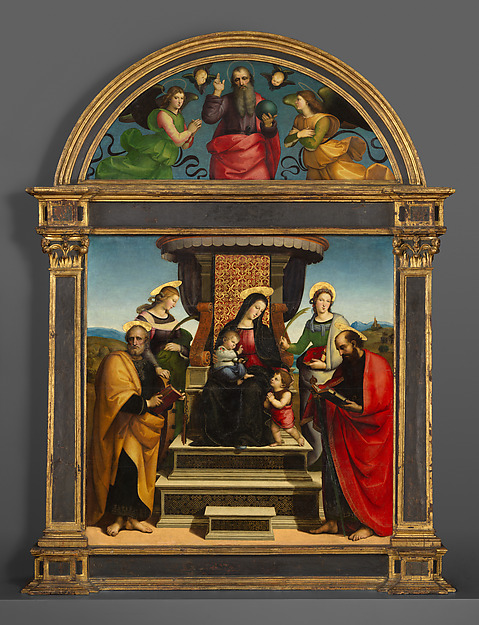
The Vatican Museums in Vatican City hold Raphael's Annunciation, painted in the 1500s for the Oddi Altarpiece. Measuring 27 by 50 cm, it is one of three small scenes in the predella beneath the main image. The other two show the Magi's adoration and Christ's presentation in the Temple. The altarpiece originally stood in the Oddi family chapel in Perugia's San Francesco al Prato.
作品信息
已收入目录
出处
- 维基数据
- 图片: 梵蒂冈博物馆 — Raphael · Public domain · Wikimedia Commons
Raphael当时的生活
完整生平1500
Called a master at seventeen
In December 1500 Raphael is first described as a “master”, that is, fully trained. His first documented work was the Baronci Altarpiece for the church of Saint Nicholas of Tolentino in Città di Castello, commissioned in 1500 and finished in 1501; only fragments survive.
1501
In Perugino's workshop
From 1501 Raphael studied and worked in Pietro Perugino's workshop in Perugia; according to Vasari, his early works cannot be told apart from his master's. He often travelled home to Urbino, to Città di Castello and, with Pinturicchio, to Siena.
late 1504
Meets Leonardo and Michelangelo
Having moved to Florence, Raphael met Leonardo da Vinci, Michelangelo and Bartolomeo della Porta and closely studied Leonardo's sfumato. His first Florentine commission, portraits of Agnolo Doni and his wife, was painted under the clear impression of the “Mona Lisa”.
1504
Friendship with Baldassare Castiglione
In Urbino Raphael met the philosopher, writer and patron Count Baldassare Castiglione; they formed a firm friendship and correspondence, including the famous letters about the fresco “The Triumph of Galatea”.
1504
To Florence, to study
The mother of the next Duke of Urbino gave Raphael a letter of recommendation to the Gonfaloniere of Florence: “The bearer of this will be found to be Raphael, painter of Urbino, who, being greatly gifted in his profession has determined to spend some time in Florence to study.” She called him “a sensible and well-mannered young man”.
1508
Moves to Rome at the invitation of Julius II
The new pope, Julius II, invited Raphael to Rome, perhaps at the suggestion of his architect Bramante, a distant relative of the artist. Unlike Michelangelo, kept waiting for months after his summons, Raphael was immediately commissioned to fresco what was to become the pope's private library, a far larger commission than any he had had before.