
 Winslow Homer美国, 1836–1910
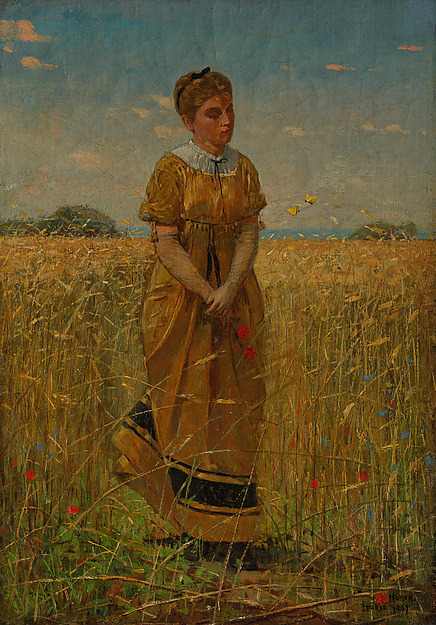
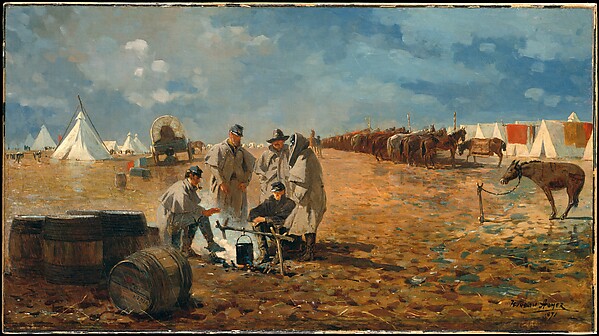
Sunset

作品信息
- 馆藏编号
- 1964.4.1
What it shows
已收入目录
出处
- 国家美术馆: the museum's own open data · 5天前获取
- 图片: 国家美术馆 — Museum open access
与此同时,在Winslow Homer的生活中
完整生平summer 1873
Summer in Gloucester: watercolour begins
In the summer of 1873 in Gloucester Homer began painting in watercolour regularly, naturally and confidently from the start; critics were puzzled at first (“A child with an ink bottle could not have done worse”), but the watercolours sold more readily and considerably improved his finances. From then on he seldom travelled without paper, brushes and water-based paints.
1875
Gives up illustration for painting
In 1875 Homer, after nearly twenty years as an illustrator, quit commercial illustration and vowed to live on his paintings and watercolours alone. Despite his excellent critical reputation, his finances remained precarious.
1876
The Centennial Exposition in Philadelphia
“Snap the Whip” and “Breezing Up” were shown at the Centennial Exposition; the New York Tribune wrote that it could not remember a picture in any exhibition that could be named alongside “Breezing Up”. Henry James confessed that he detested Homer's subjects of the time, yet “to reward his audacity, he has incontestably succeeded”.
c. 1876
Visits to Virginia
Around 1876 Homer visited Petersburg, Virginia (apparently to see what had become of the lives of former slaves), and painted rural African American life, the most unaffected views of it at the time, such as “Dressing for the Carnival” (1877).
1877
First show at the Boston Art Club
In 1877 Homer exhibited at the Boston Art Club for the first time, with the oil painting “An Afternoon Sun”; from then until 1909 he showed there often.
late 1870s
A recluse in Gloucester
In the late 1870s, whether from disappointments with women or some other emotional turmoil, Homer became reclusive, abandoned urban social life and lived instead in Gloucester, for a while even in the secluded Eastern Point Lighthouse with the keeper's family. Watching the fishermen, the sea and the marine weather, he rediscovered his love of the sea and found a rich source of themes in it.


![Ginevra de' Benci [obverse], Leonardo da Vinci, c. 1474/1478](https://api.nga.gov/iiif/8f29e3c9-a289-4d53-abf0-31a66e9e98fa/full/!2400,2400/0/default.jpg)
![Wreath of Laurel, Palm, and Juniper with a Scroll inscribed Virtutem Forma Decorat [reverse], Leonardo da Vinci, c. 1474/1478](https://api.nga.gov/iiif/ff62e8d0-45c4-498f-ad36-6358de827e04/full/!2400,2400/0/default.jpg)


