Paul Cézanne法国, 1839–1906
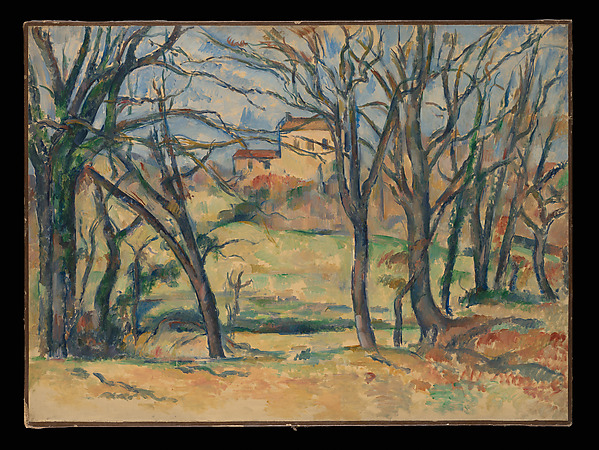
Study of Trees
可否一睹真容?
可以,正在迎客

正对公众展出。
- 核实
- 此状态始于
- 出处
- 博物馆
关于这幅画
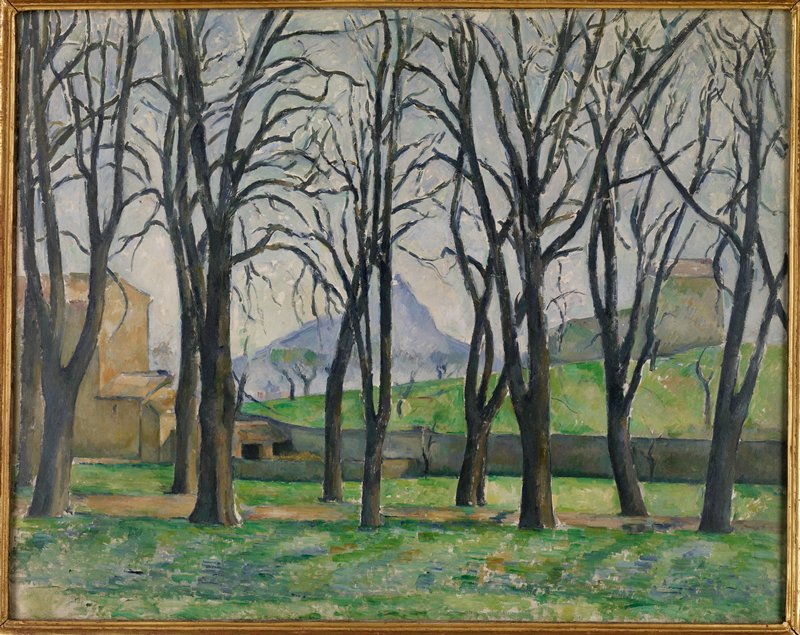
Cézanne’s fascination with the complexities of human perception and his desire to transcribe the abstract properties of vision established him as the central figure linking nineteenth-century impressionism with early twentieth-century cubism. Study of Trees exemplifies the problem of dynamically depicting depth on the flat space of a canvas, which occupied the artist for most of his career. Energetically applied diagonal brushstrokes slice the space of the picture, producing the suggestion of movement in and out of depth, and dashed lines define the tree trunks on either side of a winding country road. Remarkably, the rough, unpainted areas of the canvas seem as animated as the daubs of paint flickering across the picture’s surface like leaves in shifting sunlight. At the time of its making, Study of Trees was at the vanguard of intellectualized, abstract painting.
哈佛藝術博物館
作品信息
- 馆藏编号
- 1998.305
已收入目录
出处
- 哈佛藝術博物館
- 图片: 哈佛藝術博物館 — © President and Fellows of Harvard College
与此同时,在Paul Cézanne的生活中
完整生平1901–1903
The Studio on the Chemin des Lauves
In 1901 he bought a plot of land north of Aix, in 1902 built a studio there to his own specifications (now the Atelier de Cézanne), and moved in in 1903; a long narrow slot was cut into the wall to admit natural light for the large "Bathers."
29 September 1902
Death of Émile Zola
Zola's death plunged Cézanne into mourning, despite their long estrangement.
1903
Debut at the Salon d'Automne
He exhibited for the first time at the newly founded Salon d'Automne in Paris.
15 October – 15 November 1904
A Cézanne Room at the Salon d'Automne: First Triumph
An entire room of the Salon d'Automne in Paris was devoted to Cézanne's works; this retrospective became the artist's first real success — indeed, a triumph.
15 October 1906
Caught in a Storm and Fatal Pneumonia
While painting in the fields he was caught in a thunderstorm and lost consciousness on the way home; the exposure led to severe pneumonia. The next day he still worked in the garden on the "Portrait of the Gardener Vallier," then took to his bed and never rose again.
1906年10月22日
Died