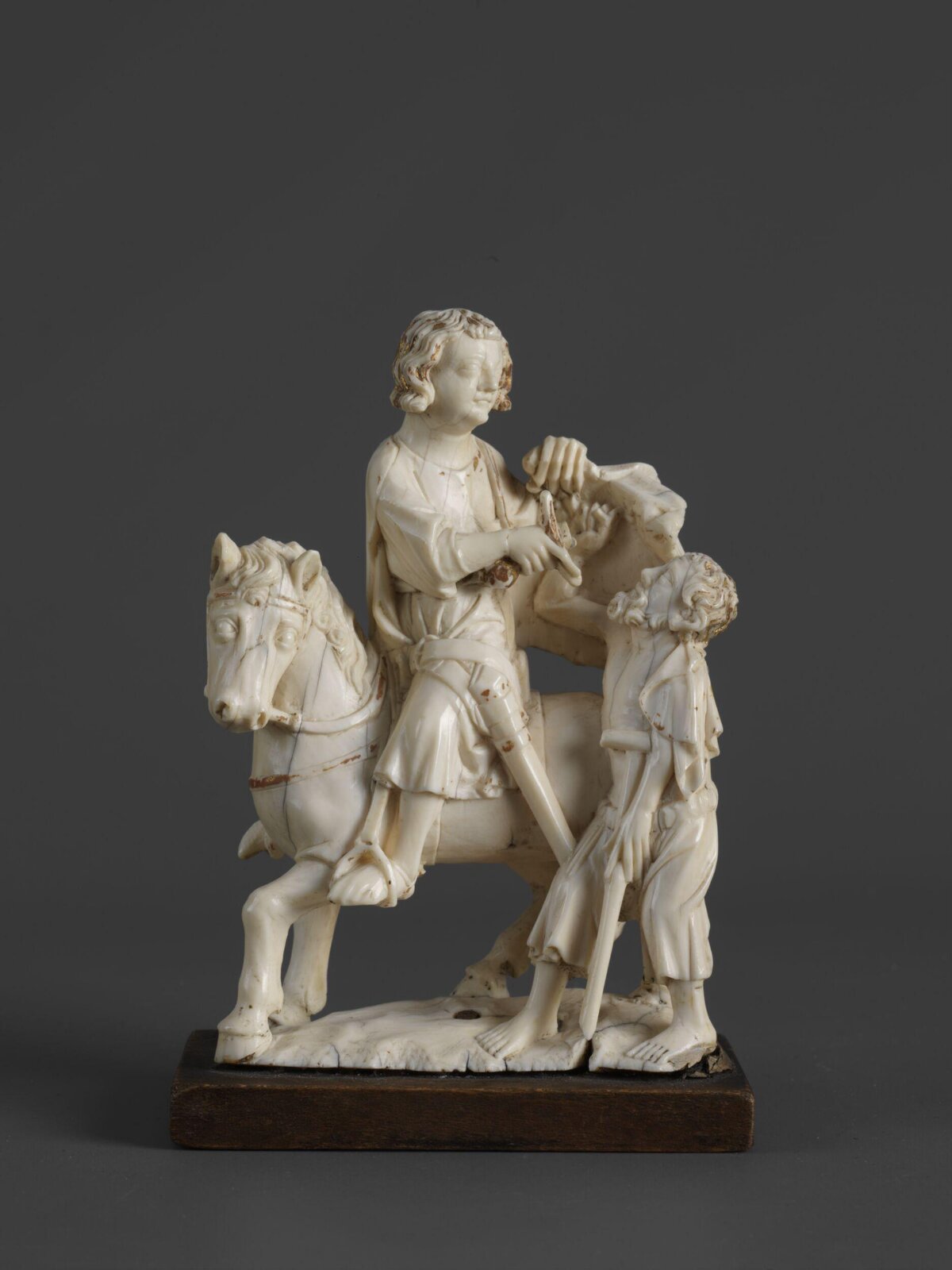
St. Martin and the Beggar
可否一睹真容?
可以,正在迎客

正对公众展出。
- 核实
- 此状态始于
- 出处
- 博物馆
关于这件雕塑
Ivory was used all over Europe for religious works of art. It was often combined with precious metals and usually took the form of relief panels, for book covers, portable altars and caskets. An almost unbroken tradition of ivory carving extends from the Roman and Byzantine empires until the end of the 14th century. From about 1250, Paris became the centre of production for figures and reliefs intended for private devotion.
继续阅读
This statuette representing Saint Martin and the Beggar was made in Germany (Cologne or Mainz), in about 1320. The episode represented here is narrated in the 13th-century Golden Legend of Jacobus de Voragine. The scene was translated into visual form by the eleventh century, becoming one of the most common individual images of the Middle Ages. Groups of Saint Martin and the beggar were especially popular in sculpture on a larger scale, and numerous examples survive from the 13th to the 15th centuries. Despite the scene's ubiquity in wood and stone, no other ivory figures of St. Martin and the beggar appear to survive. The style of the ivory points towards a Lower or Middle Rhenish origin. Apart from that, St Martin was the patron saint of Mainz Cathedral, at the heart of the biggest and most powerful archbishopric in the Holy Roman Empire, and it is to be expected that devotional sculptures of the saint would have enjoyed an especially strong local popularity. He was also venerated in Cologne.
维多利亚和阿尔伯特博物馆
作品信息
- 馆藏编号
- A.28-1939
画面内容
已收入目录
出处
- 维多利亚和阿尔伯特博物馆
- 图片: 维多利亚和阿尔伯特博物馆 — © Victoria and Albert Museum, London