 André Masson法国, 1896–1987
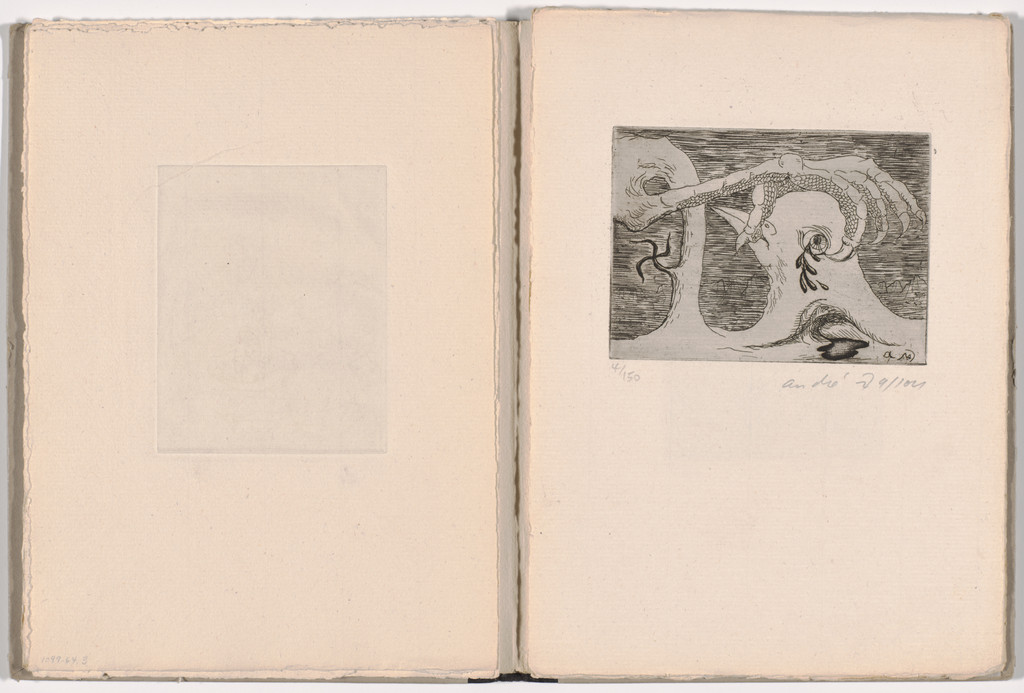
Spain Assassinated (Plate 4) from Solidarité (Solidarity)
能看到吗?
目前未展出
《Spain Assassinated (Plate 4) from Solidarité (Solidarity)》现在在哪里? 收藏方: 現代藝術博物館, 纽约. 目前未展出. 核实 2026年9月22日.

纽约, 美國
仍属馆藏,只是目前没有展出。
- 核实
- 出处
- 博物馆
作品信息
- 馆藏编号
- 1099.1964.4
已收入目录
出处
- 現代藝術博物館
- 图片: 現代藝術博物館 — © the artist or rights holder
André Masson当时的生活
完整生平1934–1936
Leaves for Spain to escape the unrest in Paris
The Massons leave Paris to escape the violence that culminated in the riots of 6 February 1934 and settle in Tossa de Mar, a small fishing village on the Costa Brava, where their two sons, Diego and Luis, are born.
1934–1936
A night on Montserrat revives wartime memories
A hike in Catalonia that leaves the couple stranded on the mountain of Montserrat overnight prompts in Masson a flashback to his wartime experience of being shelled and wounded; he goes on to produce a number of paintings inspired by it.
1936
Returns to France on the eve of the Spanish Civil War
The family returns to France just before the outbreak of the Spanish Civil War, which is reflected in a number of Masson's paintings and anti-fascist drawings.
1936–1939
Draws the cover and images for “Acéphale”
Masson draws the cover of the first issue of Georges Bataille's review “Acéphale” in 1936 and produces the images for all its issues until 1939.
c. 1940
Escapes the Nazis with Varian Fry's help
The Nazis condemned Masson's work as degenerate; with the assistance of Varian Fry in Marseille he escapes on a ship to the island of Martinique and from there to the United States. On arrival in New York customs officials find a cache of his erotic drawings in his luggage.
1940–1945
Years in the United States: New Preston, Connecticut
Masson lives in New Preston, Connecticut; in exile he influences the development of the New York School and Abstract Expressionism, most notably Jackson Pollock and Arshile Gorky.