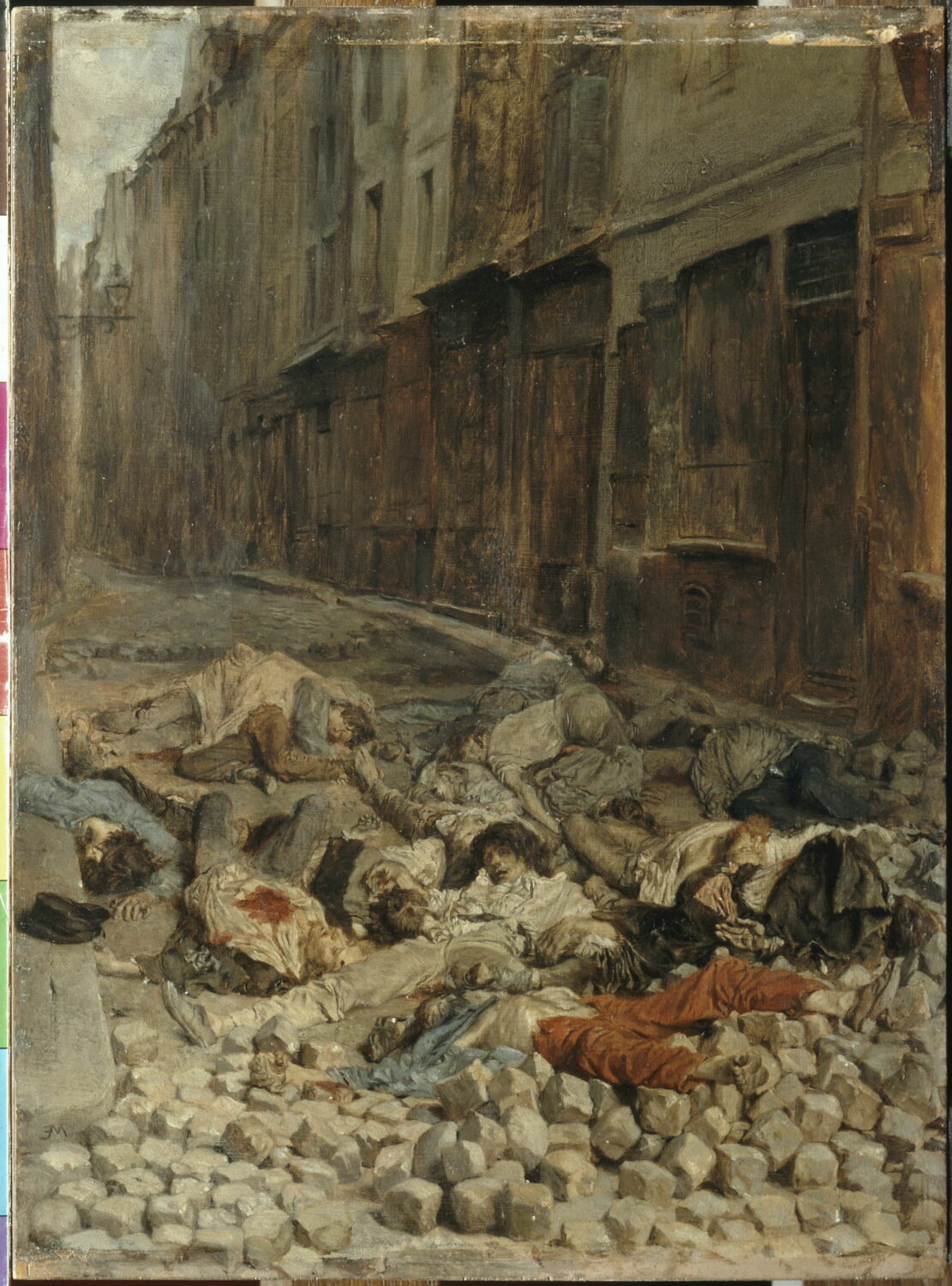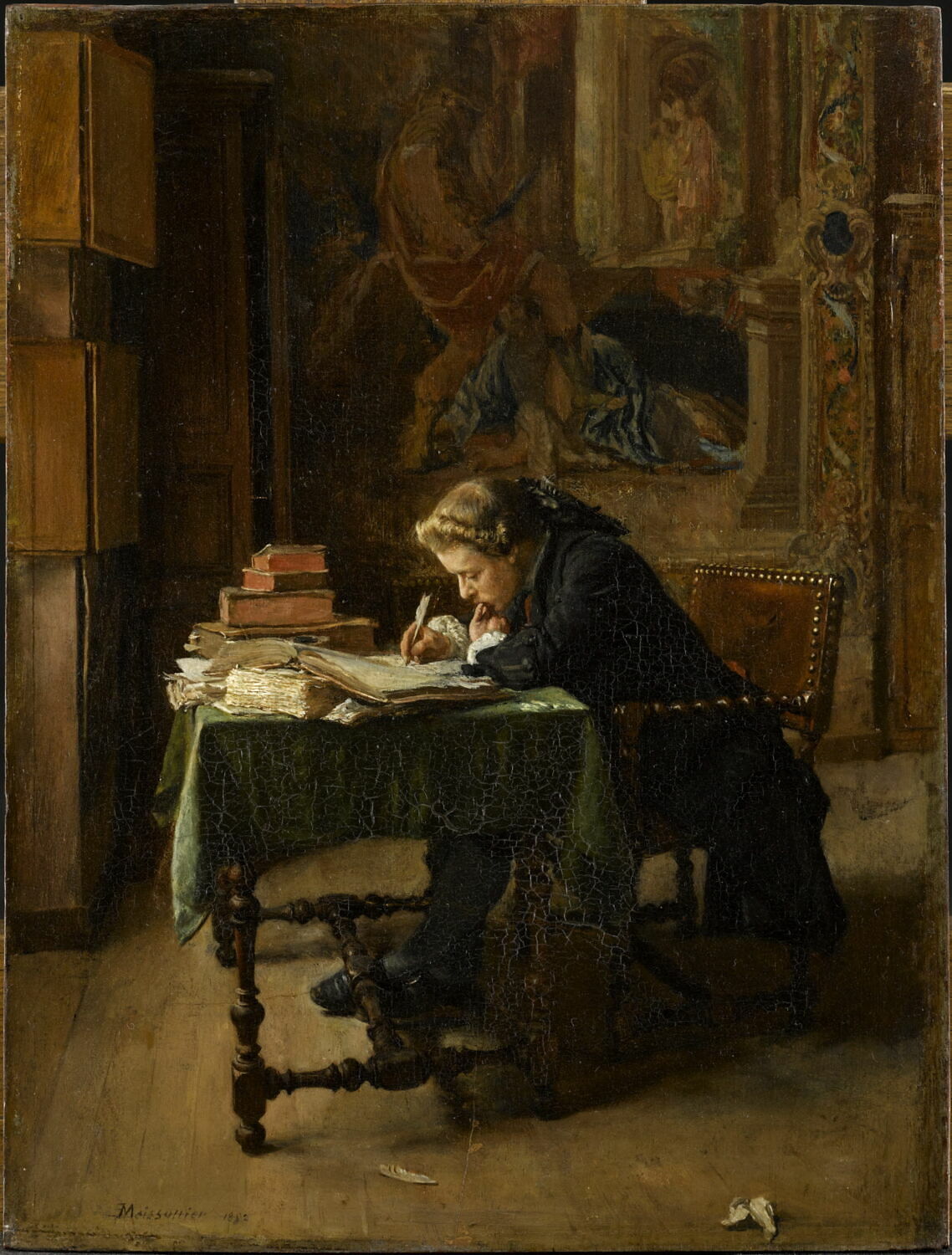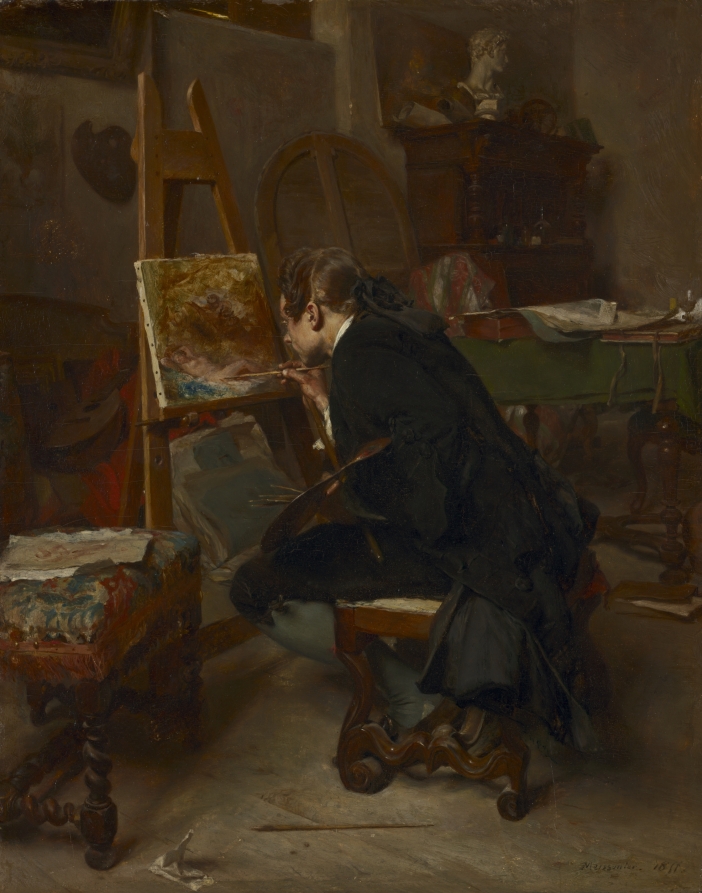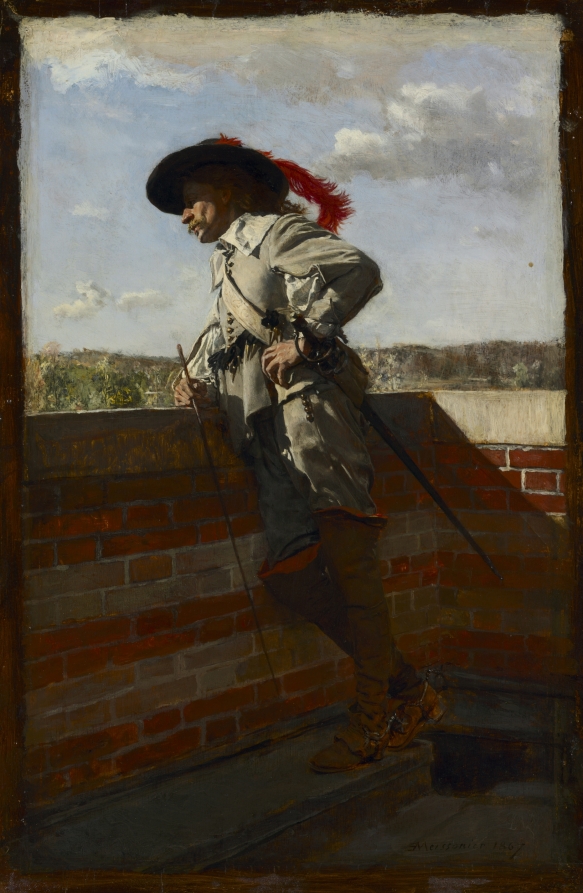
 Jean-Louis-Ernest Meissonier法国, 1815–1891
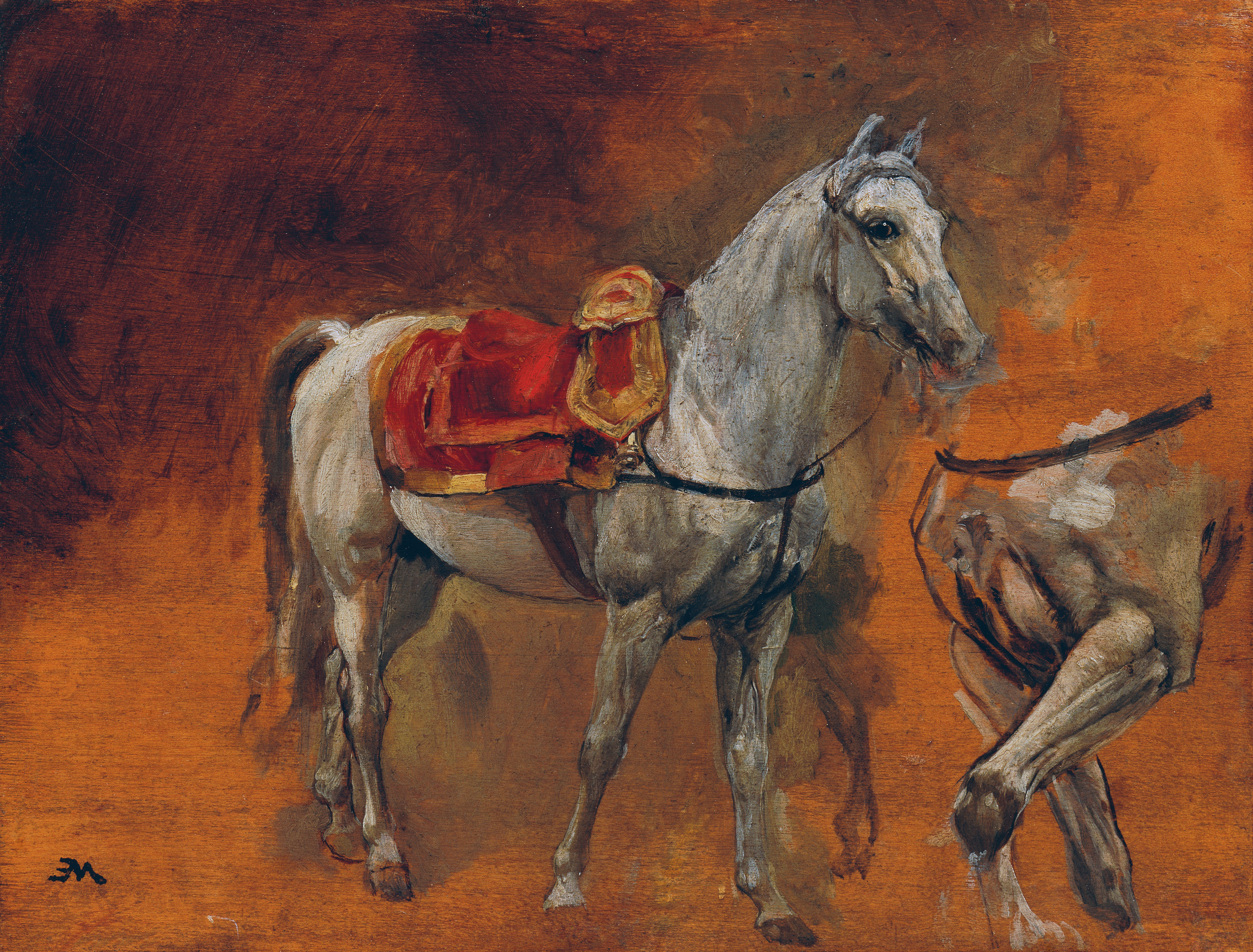
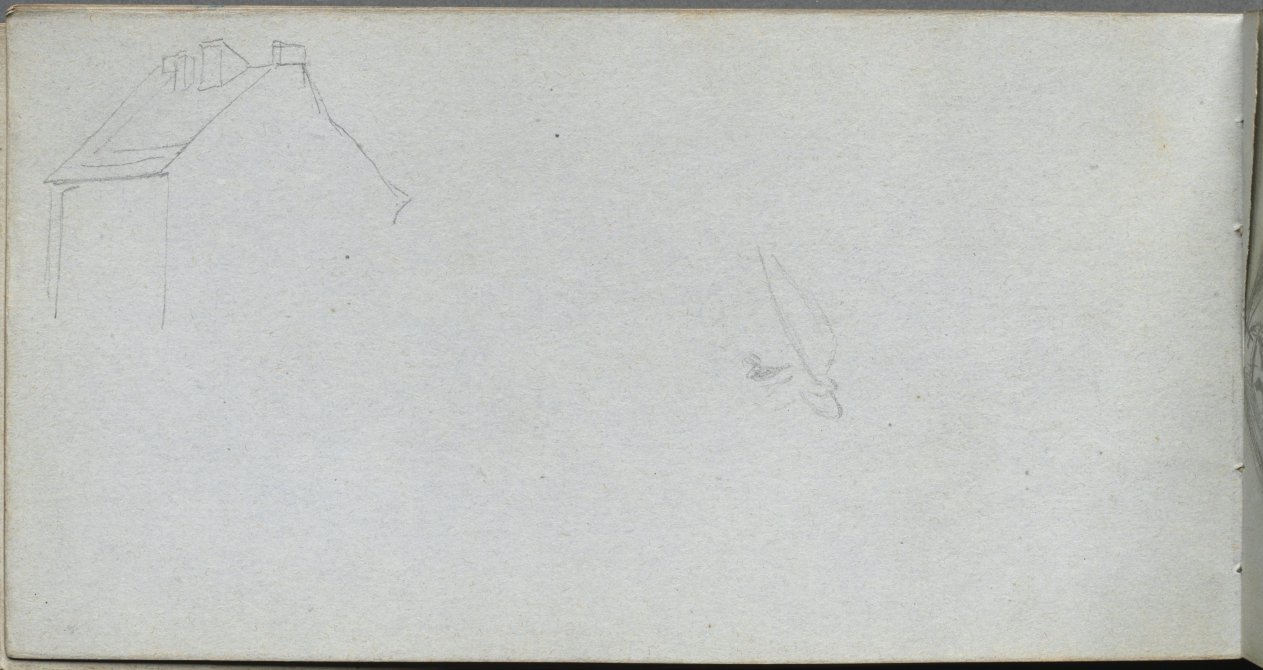
Sketchbook, page 54: Architecture Study
能看到吗?
目前未展出
《Sketchbook, page 54: Architecture Study》现在在哪里? 收藏方: 克利夫蘭藝術博物館, 克利夫兰. 目前未展出. 核实 2026年10月12日.

克利夫兰, 美國
仍属馆藏,只是目前没有展出。
- 核实
- 此状态始于
- 出处
- 博物馆
作品信息
- 馆藏编号
- 1992.344.bbb
已收入目录
出处
- 克利夫蘭藝術博物館
- 图片: 克利夫蘭藝術博物館 — Museum open access
Jean-Louis-Ernest Meissonier当时的生活
完整生平summer 1859
A government commission for scenes of the Italian campaign
In the summer of 1859, when Napoleon III and Victor Emmanuel II set out to oust the Habsburgs from northern Italy, Meissonier receives a government commission to illustrate scenes from the campaign. Napoleon III attached him to the imperial staff, and the painter accompanied the emperor in Italy.
1860s
A turn to battle subjects and high prices
In the 1860s he begins to paint historical and battle scenes from the time of the French Revolution, the Napoleonic Wars and the conflicts of Emperor Napoleon III; his contemporaries valued them even more than his earlier genre works. In time he received 300,000 francs each for The Charge of the Cuirassiers and Napoleon I in 1814, and 200,000 for Napoleon III at Solferino, which its first owner later resold for 850,000.
autumn 1861
Elected to the Institut de France
In autumn 1861 the members of the Académie des Beaux-Arts vote him into their number: he takes the chair of Abel de Pujol.
1864
Salon of 1864: “Solferino” and “1814”
At the Salon Meissonier shows The Emperor at Solferino, which took him more than three years to complete, and 1814.
1868
Travels to Antibes with easel, family and horses
In June 1868 Meissonier travels to Antibes with canvas and easel, his wife, son and daughter, and two of his horses, Bachelier and Lady Coningham. The light of the south attracted him: in the Antibes landscapes he, possibly under the influence of plein-air landscapists, abandoned for a while his obsession with historical authenticity in favour of something more spontaneous.
1870–1871
A colonel in besieged Paris
At the beginning of the war in 1870 he accompanies Napoleon III as an attaché of the imperial staff, and during the Siege of Paris he commands a regiment of the National Guard (other accounts call it a regiment de marche, one of the improvised units thrown up in the chaos of the war).