 Mikhail Vrubel1856–1910
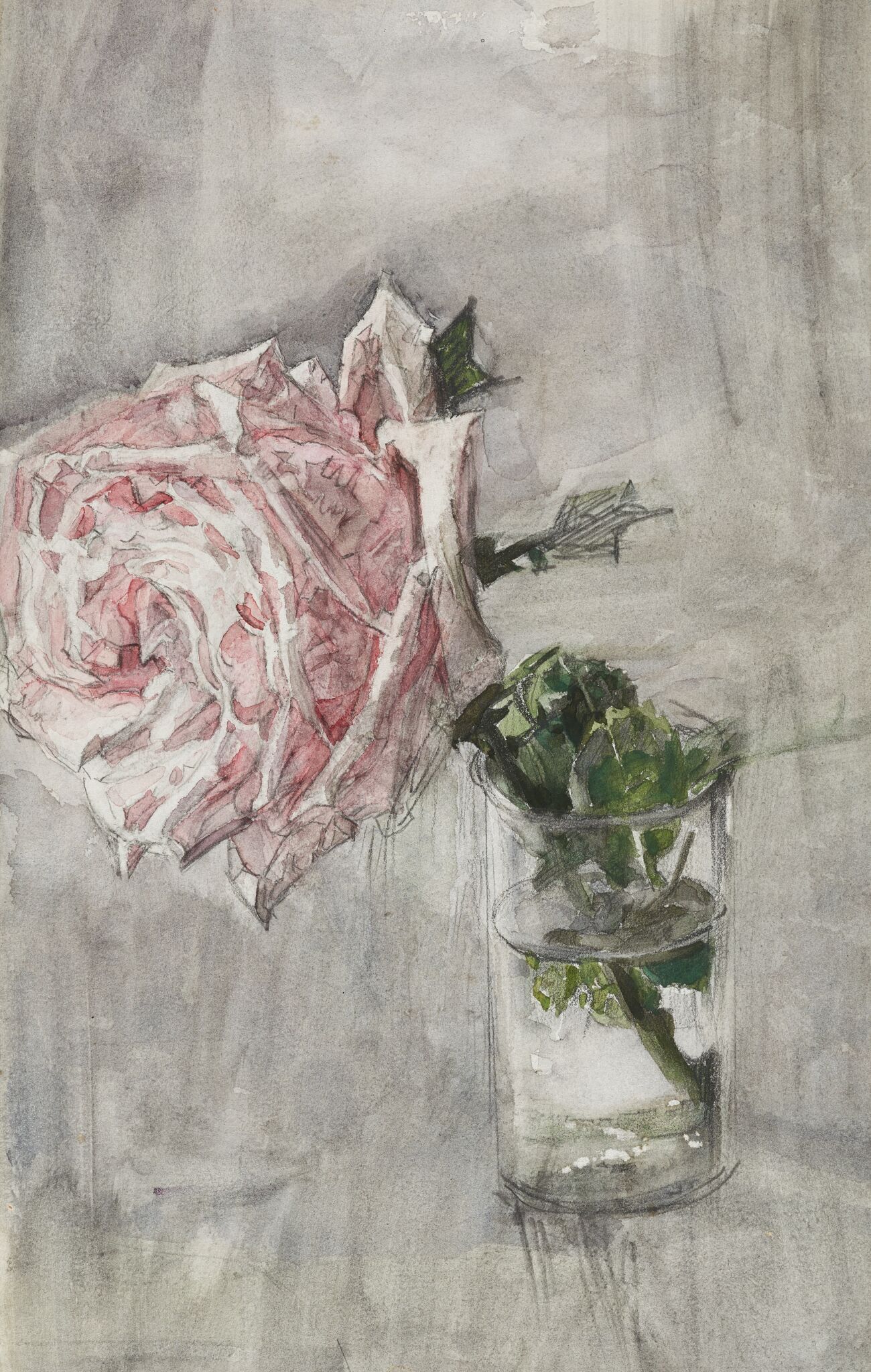
Роза

关于作品
In the museum's own words — the original
«Роза» была написана в клинике Усольцева, по-видимому, в связи с работой над «Портретом Забелы-Врубель на фоне березок». Используя карандаш и акварель, художник не только создает «портрет» конкретного цветка, коротко срезанного и поставленного в стакан; внимательно изображая каждый изгиб формы этих серебрящихся розовых лепестков, он открывает зрителю маленькую вселенную, заставляет следовать взглядом за ним в этот микрокосм, постепенно увлекая в ее затягивающие бездонные глубины.
Read on
Цветы как объект творчества сопровождали Врубеля на протяжении всей его жизни. В киевский период в многочисленных акварельных и карандашных этюдах цветов он оттачивал свой колористический дар и технику построения формы. Гимном красоте этих совершенных творений природы стал плафон для особняка Дункеров. Изображения цветов встречаются во многих произведениях Врубеля как неотъемлемая, органическая часть создаваемых им художественных образов.
特列季亚科夫画廊
作品信息
- 馆藏编号
- 5747
出处
- 特列季亚科夫画廊: the museum's own open data · 5天前获取
- 图片: 特列季亚科夫画廊 — © State Tretyakov Gallery
与此同时,在Mikhail Vrubel的生活中
完整生平1902
Bekhterev’s diagnosis
In St Petersburg Vrubel went on repainting the “Demon” without pause, ruining it in his friends’ view, and his family took him to the psychiatrist Vladimir Bekhterev, who diagnosed “incurable progressive paralysis” — tertiary syphilis; the artist himself was told nothing. In Moscow, although the collector Vladimir von Meck bought the painting for 3,000 roubles, he grew worse still: he drank and squandered money, and his wife and son tried to take refuge from him with relatives in Ryazan.
2 February 1902
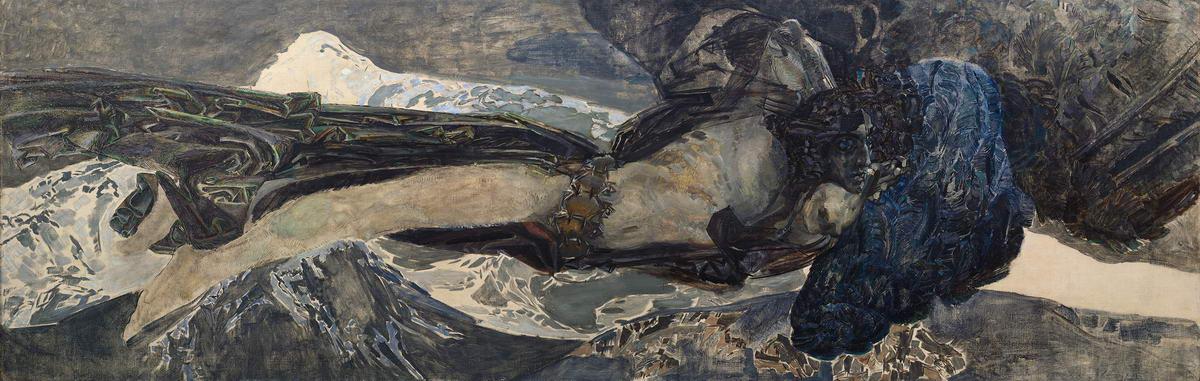
“The Demon Downcast” fails in Moscow
The painting went on show in Moscow a day before the “Group of 36” exhibition closed; Vrubel hoped it would be bought for the Tretyakov Gallery. The failure coincided with news of the suicide of Alexander Rizzoni after unfair criticism in the journal Mir iskusstva.
April 1902
First hospitalisation
In early April, with symptoms of acute mental disorder, Vrubel was admitted to F. A. Savey-Mogilevich’s private clinic; until August his condition was so grave that even his wife and sister were not allowed to see him. In September he was moved to Vladimir Serbsky’s clinic at Moscow University, and Serbsky confirmed the diagnosis, establishing that the infection dated back to 1892.
November 1902
An exhibition of 36 works turns the tide
The papers greeted Vrubel’s illness with articles such as “Mentally Ill Decadents” in Russky Listok, so Benois and Diaghilev, set on proving the artist’s sanity to the public, mounted an exhibition of thirty-six of his works, including all three painted “Demons”. It marked a turning point in how critics and the public saw Vrubel, though few believed he would recover, and Mir iskusstva wrote of him in the past tense.
3 May 1903
Death of his son Savva
Vrubel had been discharged from the clinic in February, and von Meck invited the family to spend the summer on his estate in Kiev province, but on the eve of departure two-year-old Savva fell ill, and in Kiev the child died. Vrubel at once shook off his apathy, busied himself with the funeral and supported his wife, who would not say a word; their son was buried on Baikove Hill.
February 1906
Total blindness
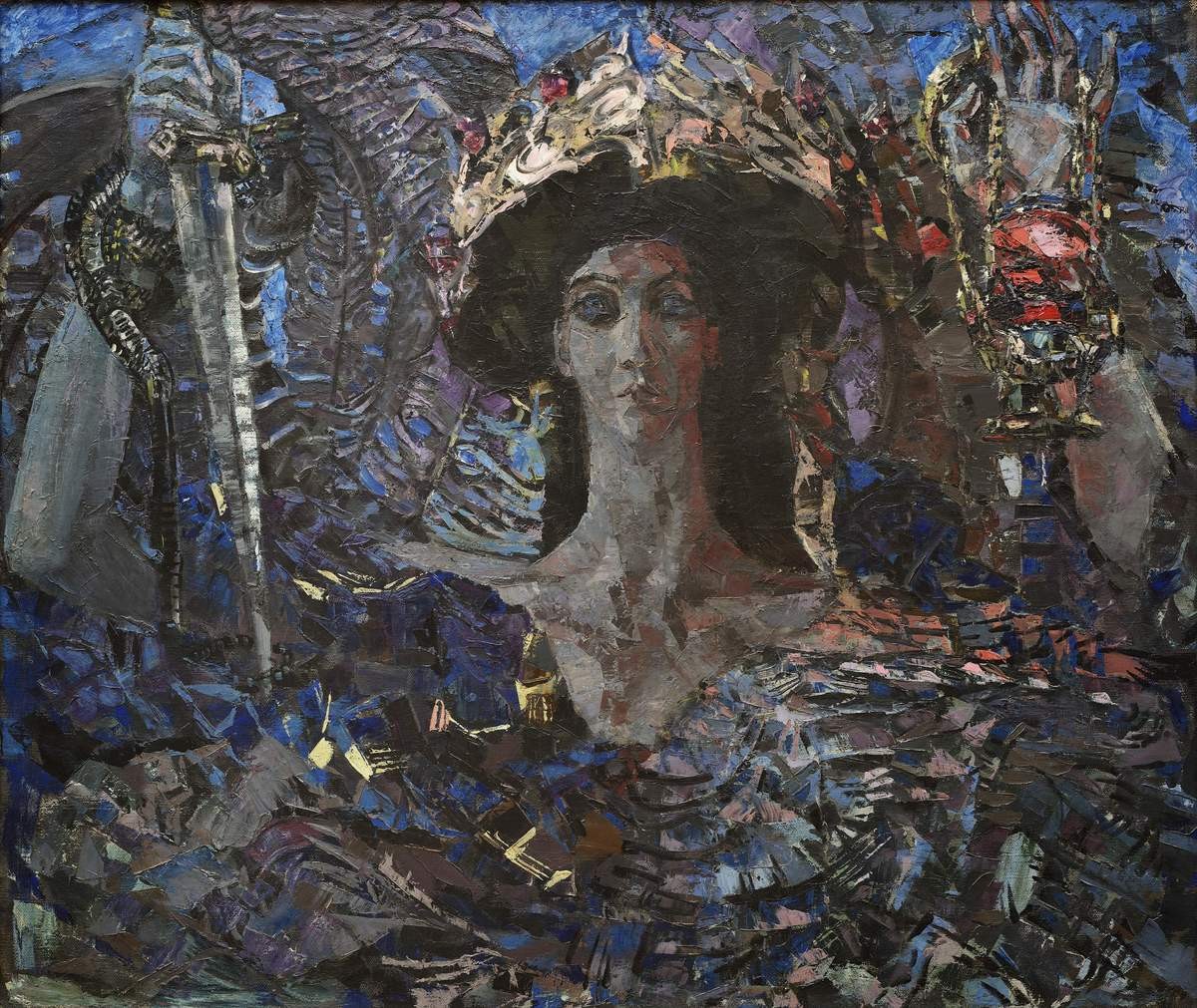
Despite the “voices” that tormented him, Vrubel returned to the theme of the Prophet — he began painting a six-winged seraph and took up the visions of Ezekiel — but the picture was never finished: his sight began to fail catastrophically, and atrophy of the optic nerve set in. On 12 February 1906 he complained in a letter to his wife that he could neither read nor draw, and a few days later he was completely blind.