Jackson Pollock美国, 1912–1956
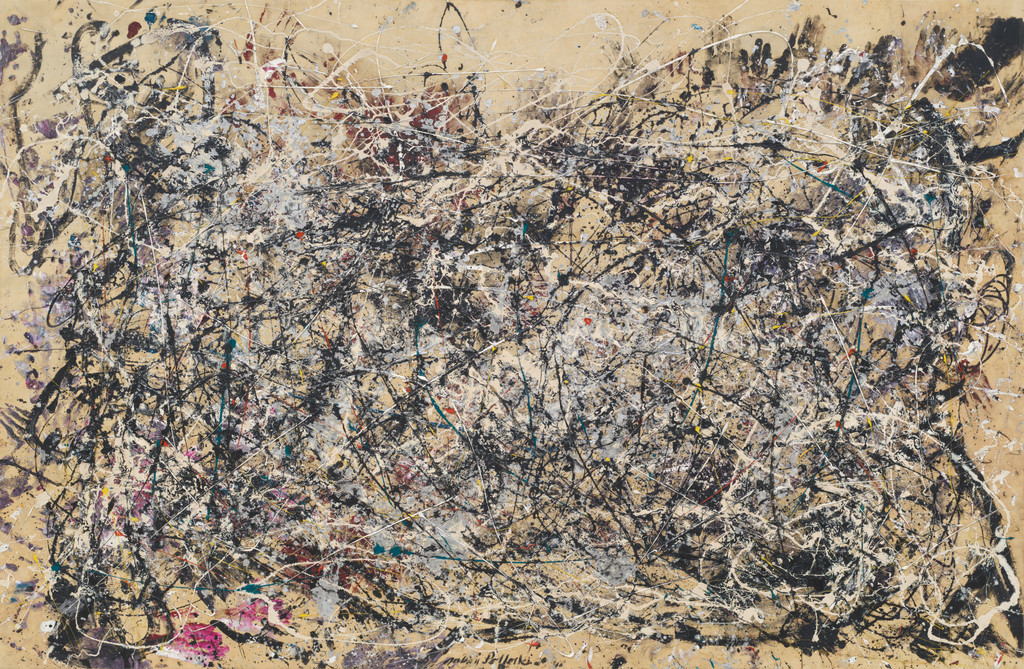
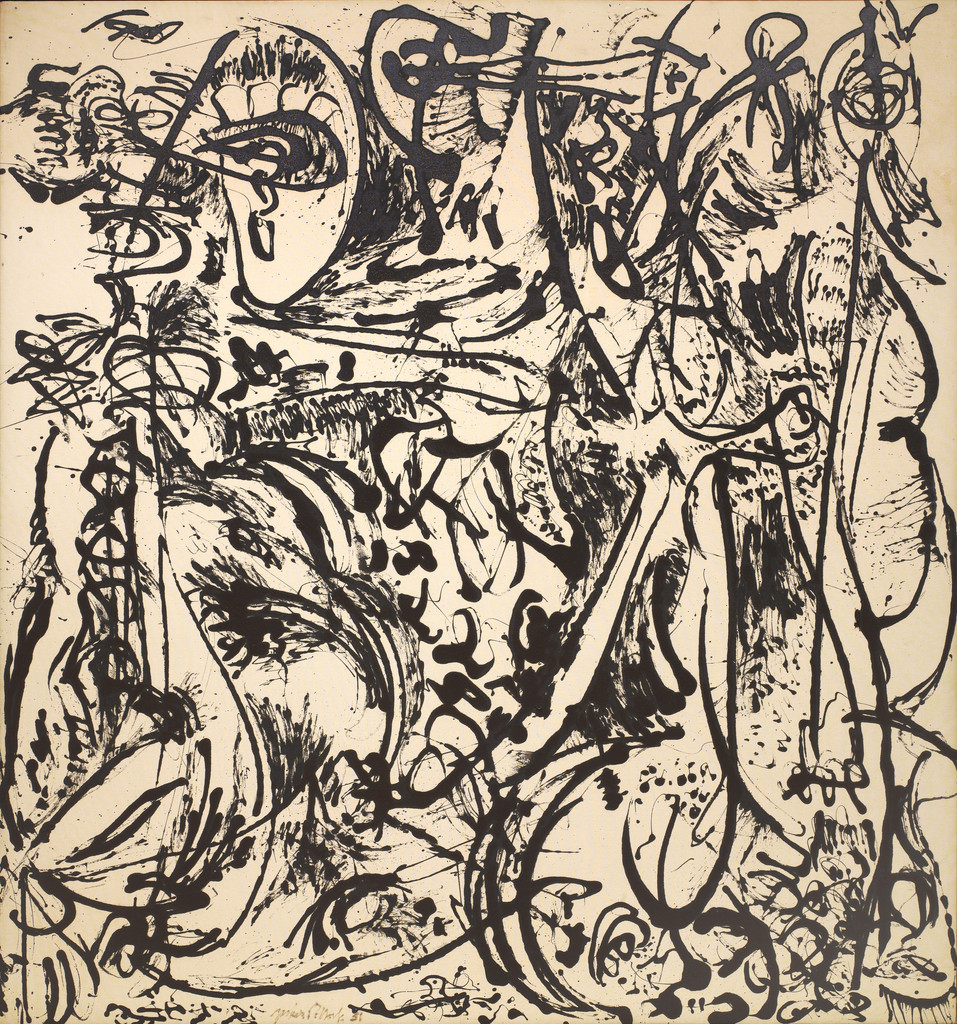
Number 13A: Arabesque
能看到吗?
目前未展出
《Number 13A: Arabesque》现在在哪里? 收藏方: 耶鲁大学美术馆, 纽黑文. 目前未展出. 核实 2026年10月19日.
纽黑文, 美國
仍属馆藏,只是目前没有展出。
- 核实
- 此状态始于
- 出处
- 博物馆
关于这幅画
Jackson Pollock was a pivotal member of the New York avant-garde after the Second World War. His notoriety stemmed from his novel manner of applying paint. Inspired by Navajo sand painting, Pollock abandoned the tradition of easel painting, which he considered "a dying form," choosing instead to work on unstretched canvas laid on the ground onto which he would drip, fling, and scratch paint using dried brushes, sticks, and pigment hurled directly from the can. Moving beyond pictorial representation or premeditated design, this technique, which became known as "action painting," gave each work an expressive immediacy related to the artist's subconscious.
继续阅读
Number 13 was one of a series of large, horizontal murals that Pollock made in the late 1940s. Its looping skeins of paint poured onto the henna-brown stained canvas possess an airy spatiality that distinguishes the painting from some of Pollock’s other, more densely-painted works. Although "Arabesque" is most likely a name given to the mural by Pollock’s friends, the evocation of dance is fitting for its rhythmically repeating passages, which inscribe the gestures the artist made as he moved around the canvas. The composition of curling layers of black, gray, and white enamel seems to obey the limits of the canvas, giving the painting a sense of unity that may have been what led poet and MoMA curator Frank O’Hara to call the work "classic."
The artist’s dealers from the 1950s recall that Pollock had a special affinity for Number 13, and the artist kept it displayed in a prominent spot in his living room for several years.
耶鲁大学美术馆
作品信息
- 馆藏编号
- 1995.32.1
已收入目录
出处
- 耶鲁大学美术馆
- 图片: 耶鲁大学美术馆 — Image: Yale University Art Gallery · In Copyright
Jackson Pollock当时的生活
完整生平1946
Sees the work of Janet Sobel
In 1946 Pollock and the critic Clement Greenberg saw Janet Sobel's paintings at Guggenheim's gallery Art of This Century. Greenberg later wrote that Pollock admitted these pictures had made an impression on him.
1947
The start of “drip painting”
In 1947 Pollock began working on huge canvases laid out on the floor, splashing paint from brushes without touching the surface. He himself preferred the term “pouring technique”.
1948
A sensational show at Betty Parsons
Pollock's 1948 exhibition at the Betty Parsons Gallery was a sensation and a financial success. He was then able to get a larger studio.
8 August 1949
Life asks if he is the greatest living US painter
On 8 August 1949 Life published an article on Pollock under a headline asking whether he was the greatest living painter in the United States.
1950
Hans Namuth photographs and films Pollock at work
In 1950 the young photographer Hans Namuth photographed and filmed Pollock at work. Pollock had promised to start a new painting for the session but said it was already finished — then, as if realising it was not, he flung paint onto the canvas for about half an hour in an almost dancelike movement.
1950
“No. 12, 1949” at the Venice Biennale
Pollock's “No. 12, 1949”, a medium-sized drip painting, was shown in the United States Pavilion at the 1950 Venice Biennale.