Peter Paul Rubens佛兰德, 1577–1640
Neptune Calming the Tempest
能看到吗?
是,正在展出
《Neptune Calming the Tempest》现在在哪里? 哈佛藝術博物館, Gallery 2300, floor 2, European Art, 17th–19th century, 剑桥. 是,正在展出. 核实 2026年9月29日.

正对公众展出。
- 核实
- 此状态始于
- 出处
- 博物馆
关于这幅画
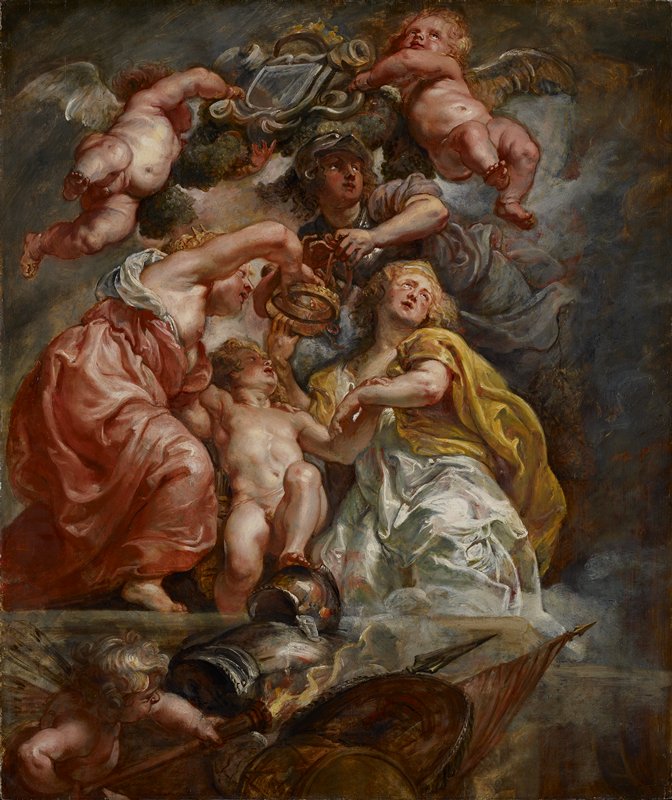
This elaborate oil sketch, or modello, was created for the “triumphal entry” of Cardinal Infante Ferdinand into Antwerp, a spectacular procession featuring music, theater, and enormous painted tableaus enlarged from Rubens’s sketches. Cities in the Netherlands traditionally staged these events as a formal welcome for a new ruler. Ferdinand, Archbishop of Toledo and brother of King Philip IV of Spain, succeeded his late aunt, the Archduchess Isabella, as governor of the southern Netherlands. The Antwerp magistrates turned to Rubens to plan the elaborate pageant that welcomed Ferdinand into their city in January 1635. His protracted journey from Spain was delayed by storms when his fleet attempted to sail from Barcelona to Genoa. Rubens’s modello celebrates Ferdinand’s safe crossing by drawing a flattering comparison between this incident and a passage in Virgil’s Aeneid, in which Neptune rises from the sea to calm the winds threatening Aeneas’s fleet.
哈佛藝術博物館
作品信息
- 馆藏编号
- 1942.174
已收入目录
出处
- 哈佛藝術博物館
- 图片: 哈佛藝術博物館 — © President and Fellows of Harvard College
Peter Paul Rubens当时的生活
完整生平1635
Purchase of the Castle at Elewijt, Title of Lord
With the acquisition in 1635 of the castle at Elewijt (the Het Steen estate near Antwerp), Rubens received the title of lord of the manor; he spent much time there, and his late landscapes are associated with the place.
1635
Decorations for the Entry of the Cardinal-Infante Ferdinand
Rubens directed the creation of the ephemeral decorations for the ceremonial entry into Antwerp of the new governor, the Cardinal-Infante Ferdinand of Austria.
1637年3月1日
Son born: Peter Paul Rubens III