Takashi Murakami日本, 1962
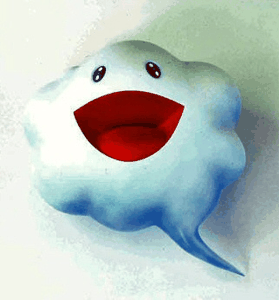
Mr. Pointy

关于这幅画
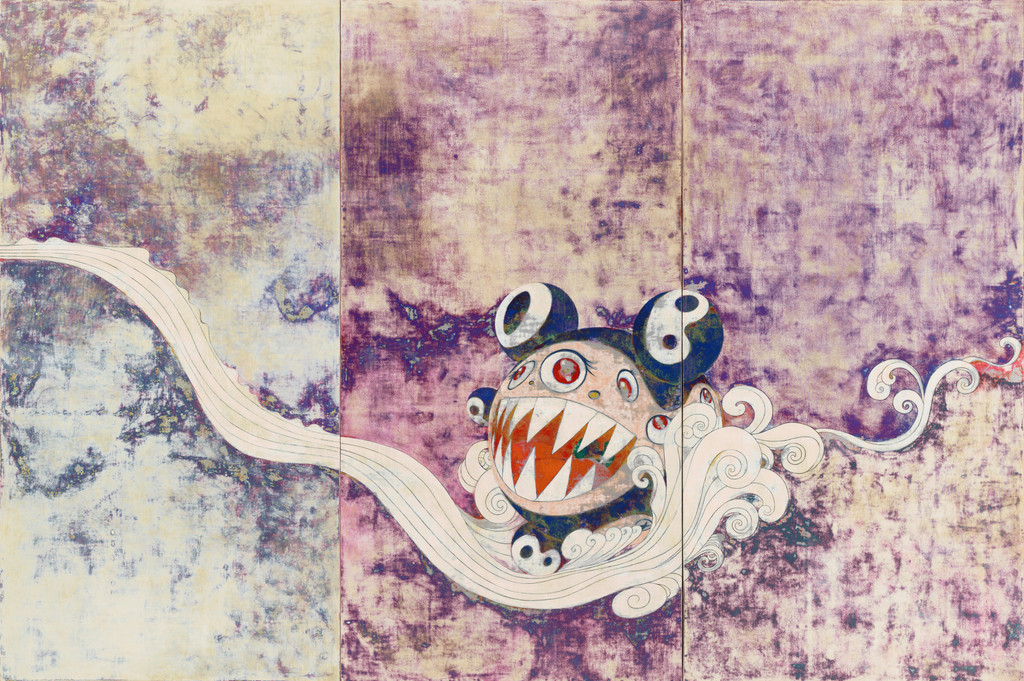
Rising to prominence in the 1990s, Takashi Murakami skillfully mixes Japanese pop culture, animé, and cartoon aesthetics into a new form of global pop art. At once an artist and a businessman, his large-scale paintings and sculptures are as well known as his mass-produced trinkets and collaborations with Louis Vuitton. However, both practices disclose his persistent and tempered engagement with art-historical precedents set by Pop Art. In 2000 Murakami coined the term “superflat” to describe not only his art practice and that of his Japanese contemporaries but also a larger cultural shift toward the “extremely two-dimensional.” While this sensibility is most present in Japanese animé, Murakami asserts it is a worldwide phenomenon.
继续阅读
According to Murakami’s own “Superflat Manifesto,” the phrase accounts for the way in which different layers of culture, especially high and low, “fuse into one.” Mr. Pointy embodies the concept of superflat. The character combines religious iconography taken from sources as diverse as Mayan culture, Tibetan Buddhism, and the Thousand-Armed Buddha (Kannon in Japanese) with a cartoon style. Mr. Pointy was devised by Murakami in 2003 and has since been repeatedly rendered in paintings, mass-market prints, and sculptures.
芝加哥藝術博物館CC BY 4.0
作品信息
- 馆藏编号
- 2015.147
已收入目录
行踪录
在展 · 展厅 295
芝加哥藝術博物館 · 2026年9月28日 — 现在 · 已核实
当时曾展出 · 展厅 292
芝加哥藝術博物館 · 2026年8月19日 — 2026年9月28日 · 已核实
出处
- 芝加哥藝術博物館
- 图片: 芝加哥藝術博物館 — © the artist or rights holder