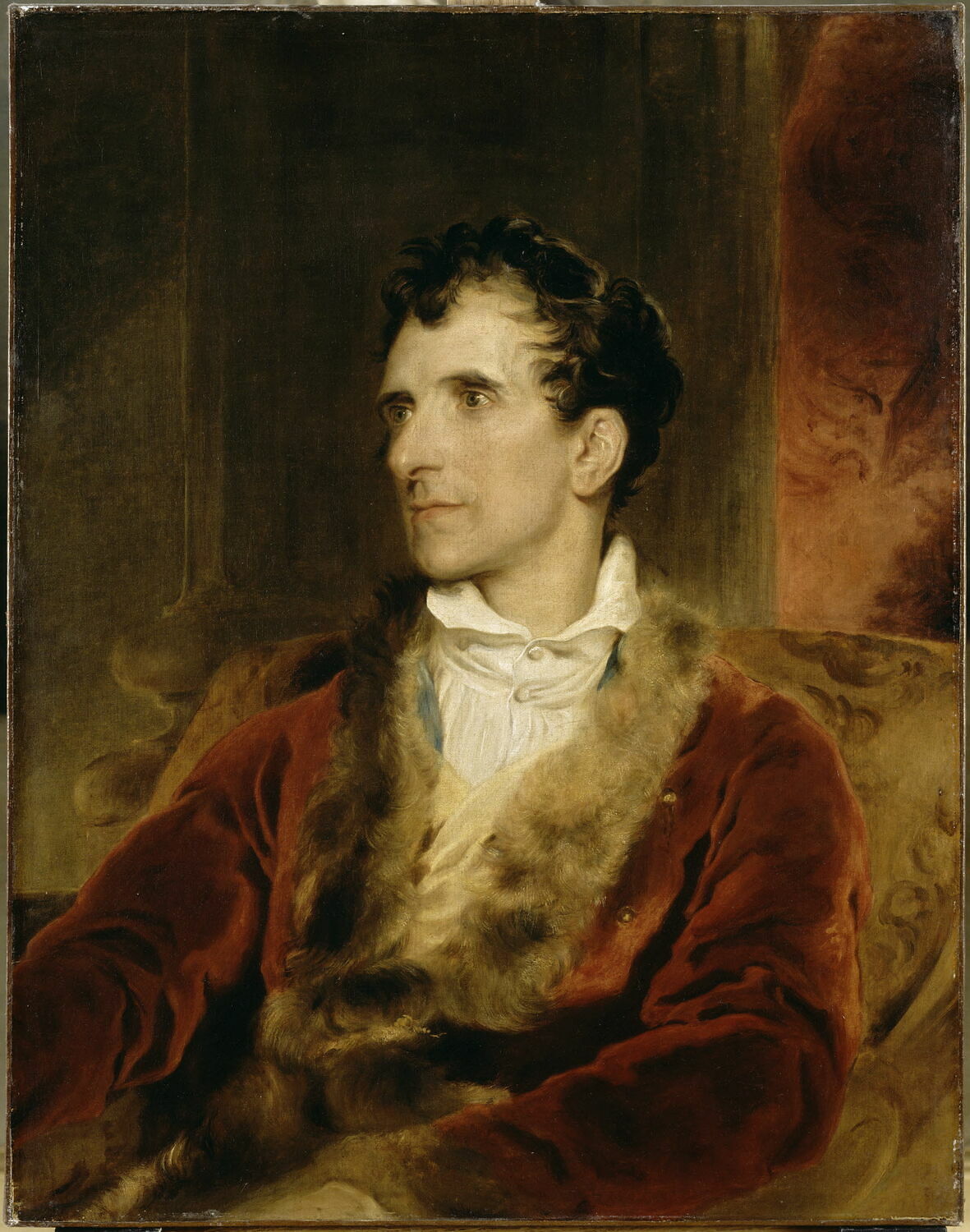
Thomas Lawrence英国, 1769–1830
Mirza Abu'l Hassan Khan
能看到吗?
是,正在展出
《Mirza Abu'l Hassan Khan》现在在哪里? 哈佛藝術博物館, Gallery 2120, floor 2, European and American Art, 17th–19th century, 剑桥. 是,正在展出. 核实 2026年10月12日.

正对公众展出。
- 核实
- 此状态始于
- 出处
- 博物馆
关于这幅画
Mirza Abu’l Hassan (1776–1845) was the ambassador of the shah of Persia to the court of King George III in London, sent in 1809 to help negotiate a treaty of alliance to counter growing French influence. Although he stayed in England for less than a year, he became a figure of fascination — the subject of portraits, popular prints, and even poetry. A contemporary noted that “the Persian ambassador is the principal thing talked of now.” His official host was Gore Ouseley, a diplomat and linguist who had lived and worked in India. Ouseley commissioned this portrait from Thomas Lawrence, one of the leading British portraitists of the day. Abu’l Hassan, who kept a journal during his time in London, reported that Lawrence painted the portrait in four sittings. Ouseley accompanied Abu’l Hassan on his return to Persia to finalize the treaty, bringing the painting with him.
哈佛藝術博物館
作品信息
- 馆藏编号
- 1964.100
已收入目录
出处
- 哈佛藝術博物館
- 图片: 哈佛藝術博物館 — © President and Fellows of Harvard College
Thomas Lawrence当时的生活
完整生平1800s
A witness in the “Delicate Investigation” into the Princess
The King commissions portraits of his daughter-in-law Caroline, the estranged wife of the Prince of Wales, and of his granddaughter Charlotte; while painting them Lawrence stays at Montagu House, the princess’s residence in Blackheath, and becomes implicated in the “delicate investigation” into Caroline’s morals. He swears an affidavit that although he had sometimes been alone with her the door was never locked or bolted, and, expertly defended by Spencer Perceval, he is exonerated.
1809
A boycott of the Academy exhibition of 1809
Protesting at the way his paintings have been hung, Lawrence skips the Academy exhibition — one of only two he missed between 1787 and 1830; the other, in 1819, he will miss because he is abroad.
1810
The patronage of the Prince Regent
Acquires the generous patronage of the Prince Regent: they met through a sitter, Lord Charles Stewart, whom Lawrence painted in Hussar uniform. The prince commissions portraits of himself and of the allied leaders — Wellington, Blücher and Count Platov, who sit for Lawrence at his new house at 65 Russell Square — and by 1811, when the prince became regent, Lawrence is acknowledged as the country’s foremost portrait painter.