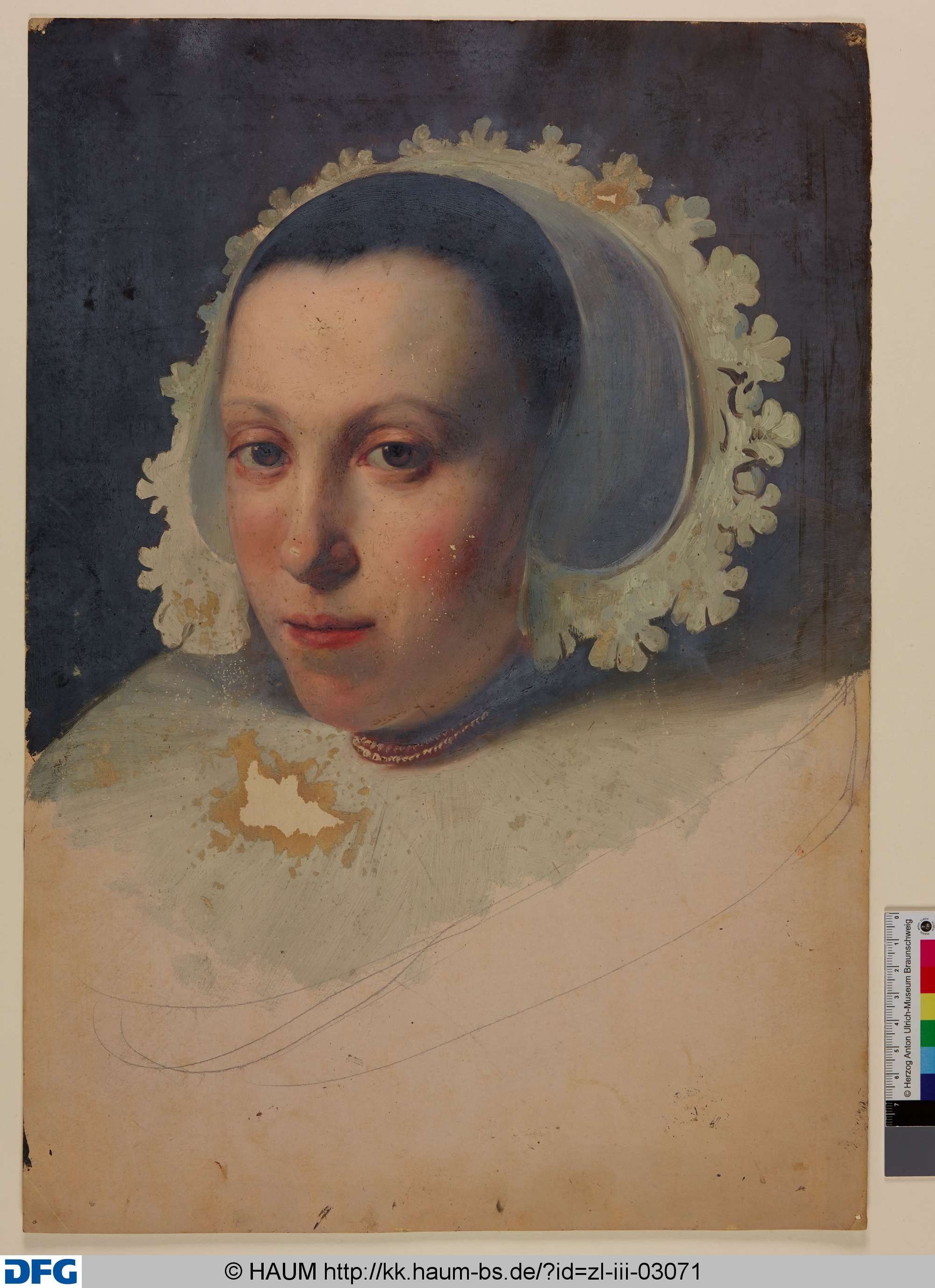
![[Levi; Gen. 49, 5-7], Karel van Mander the Elder, 1588–1591](https://diglib.hab.de/varia/haum/gheyn-j-d-ii-wb3-0016/max/000001.jpg)
 Karel van Mander the Elder历史上的尼德兰, 1548–1606
[Levi; Gen. 49, 5-7]
能看到吗?
不明
《[Levi; Gen. 49, 5-7]》现在在哪里? 收藏方: 安東·烏爾里希公爵美術館, 不伦瑞克. 不明.

不伦瑞克, 德國
所有者已知,目前是否展出尚不清楚。
- 此状态始于
- 出处
- 博物馆
作品信息
画面内容
已收入目录
出处
- 安東·烏爾里希公爵美術館
- 图片: 安東·烏爾里希公爵美術館 — CC BY-NC-SA 4.0
Karel van Mander the Elder当时的生活
完整生平1583–1603
Inventory of Haarlem's art collection
While translating Vasari's “Lives” into Dutch, van Mander is offered a commission by the Haarlem city fathers to inventory “their” art collection — the city had confiscated all Catholic religious art after the Satisfaction of Haarlem, which gave Catholics equal rights with Protestants, was overturned in 1578. The work lasts twenty years and yields the chapters of his future “Schilder-Boeck” on Early Netherlandish painters.
1583–1603
Evenings of drawing and pupils in his home
After the Calvinist iconoclasm religious themes have gone out of fashion and mythology has become popular, but few painters could afford a trip to Italy, so van Mander receives budding artists in his home for evenings of communal drawing and study of classical mythology, to educate them in the proper techniques. A firm believer in the hierarchy of genres, and in the idea that true-to-life historical allegories can be achieved only through proper study of existing works, he counts Frans Hals and Hendrick Gerritsz Pot among his Haarlem pupils.
1587
Founding of the Haarlem academy
Together with Cornelis van Haarlem and Hendrick Goltzius van Mander founds an “academy to study after life”, later known as the Haarlem Academy of Mannerists. What it actually did is not entirely clear: by one account, modelled on the Italian pattern, it studied anatomy and drew from nude models, including women, which was forbidden in the North at the time; by another, it was an informal discussion group, and by a third it was literary in nature.