Henri Edmond Cross法国, 1856–1910
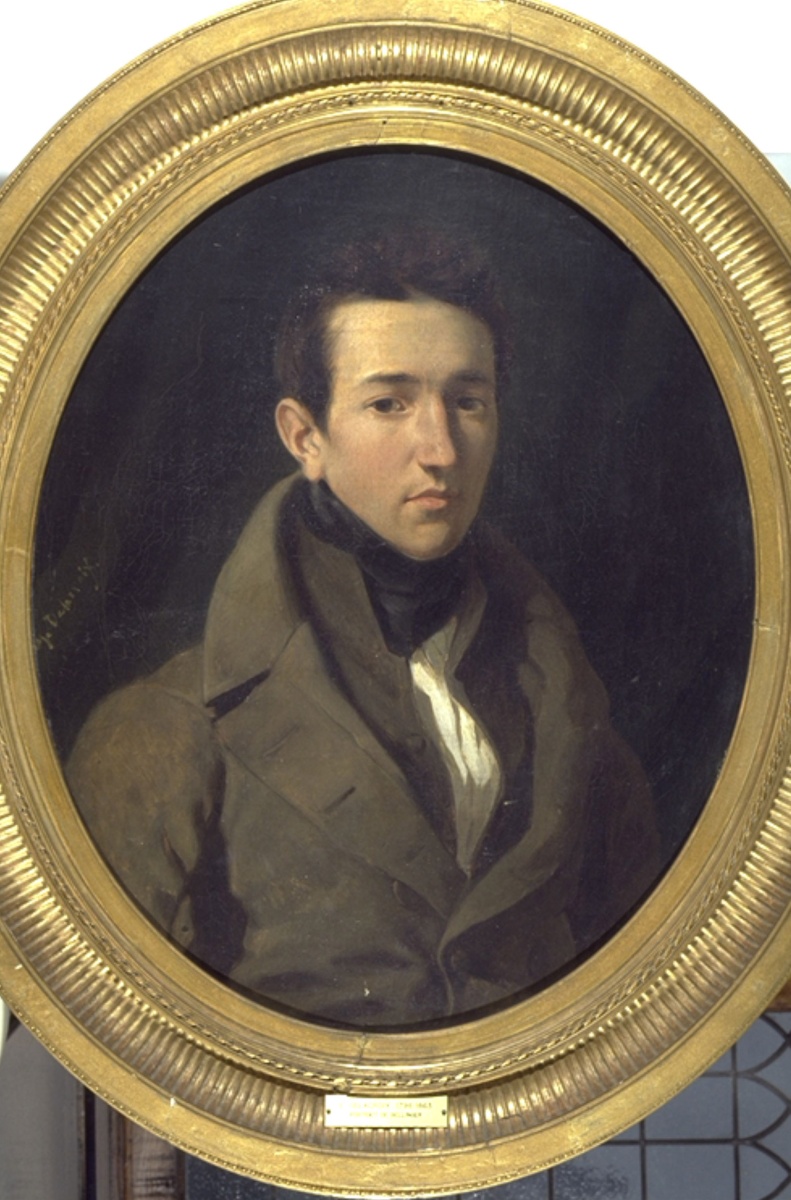
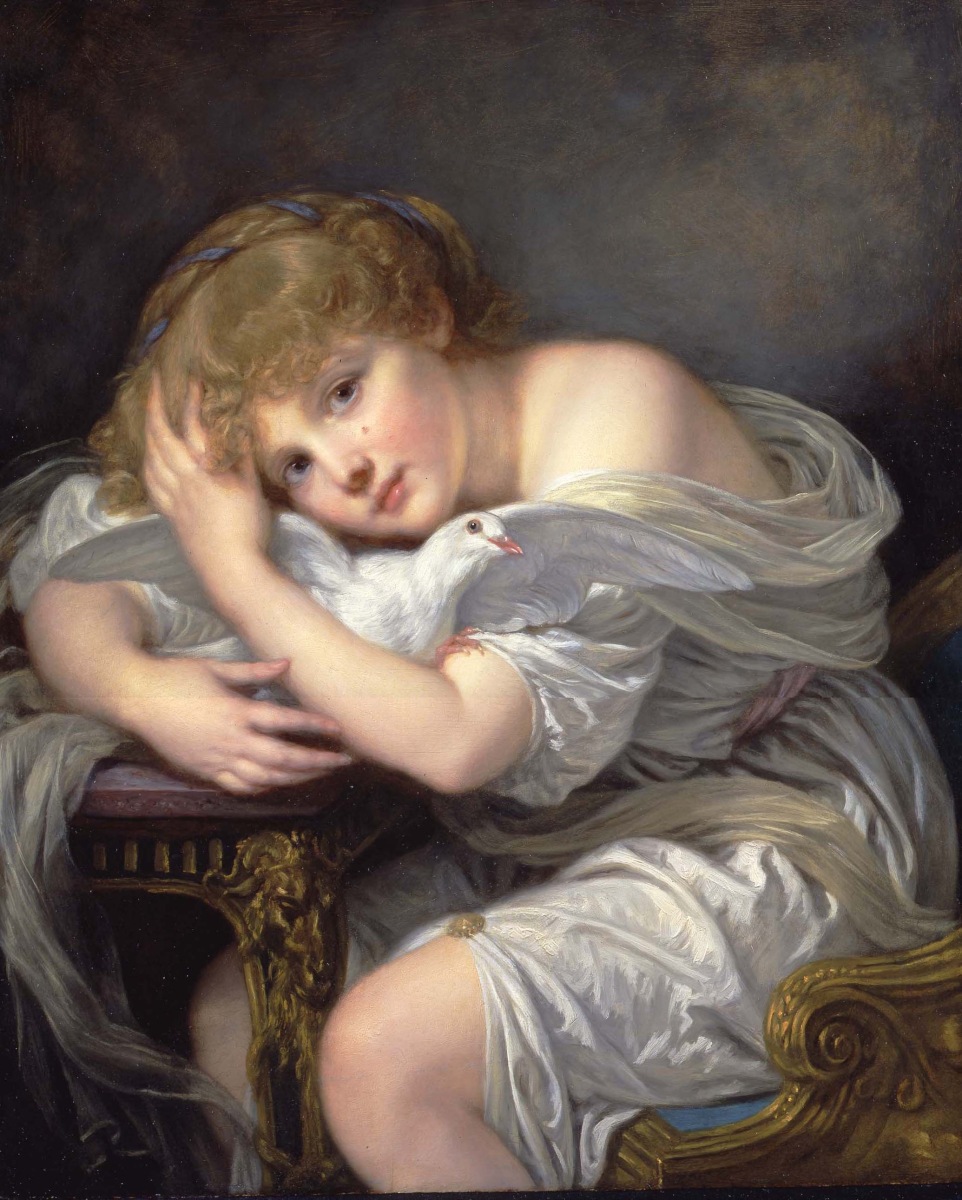
Le Convalescent
能看到吗?
不明
《Le Convalescent》现在在哪里? 收藏方: Musée de la Chartreuse, 杜埃. 不明.
杜埃, 法國
所有者已知,目前是否展出尚不清楚。
- 此状态始于
- 出处
- 博物馆
作品信息
- 馆藏编号
- 2689 ; 960.1 (Ancien numéro d'inventaire)
画面内容
已收入目录
出处
- Musée de la Chartreuse
- 图片: Musée de la Chartreuse — © Musée de la Chartreuse ; © Service des musées de France, 2026; Ministère de la Culture (France), base Joconde
Henri Edmond Cross当时的生活
完整生平1881
First exhibition at the Salon des Artistes Français
In 1881 he shows work at the Salon des Artistes Français for the first time; in these years he painted portraits and still lifes in the dark colors of Realism.
1881
Changes his surname from Delacroix to Cross
To avoid living in the shadow of the painter Eugène Delacroix, he shortens and Anglicizes his surname to “Henri Cross” — the French word croix means “cross”.
1884
Co-founder of the Society of Independent Artists
He is among the founders of a society of artists displeased with the practices of the official Salon; its exhibitions were held without a jury and without prizes. There he meets and befriends the Neo-Impressionists Georges Seurat, Albert Dubois-Pillet and Charles Angrand.
1891
Turns to Neo-Impressionism
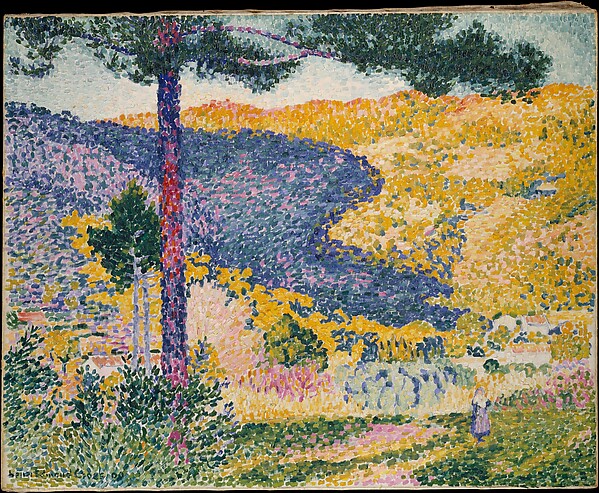
In 1891 he begins painting in the Neo-Impressionist style and shows his first large piece in this technique at an Indépendants exhibition — a divisionist portrait of Madame Hector France, née Irma Clare.
1891
Moves to the south of France because of rheumatism
Having wintered in the south for years, he moves there for good in 1891 because of rheumatism. He lives first in Cabasson near Le Lavandou, then settles nearby in the small hamlet of Saint-Clair, where he stays for the rest of his life, leaving only for Italy and for the annual Indépendants exhibitions in Paris.
c. 1895
Moves from Pointillism to a mosaic-like brushstroke
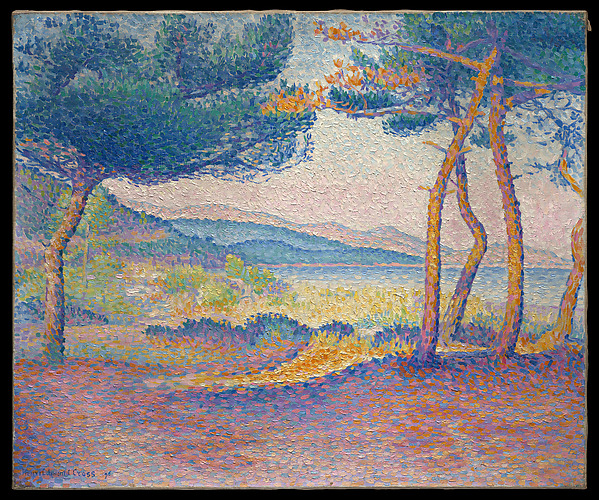
From about 1895 he gradually changes his technique: instead of tiny dots, broad blocky brushstrokes with small areas of bare canvas left between them. The surfaces resemble mosaics, and such paintings are seen as precursors of Fauvism and Cubism.