 Antonio Canova意大利, 1757–1822
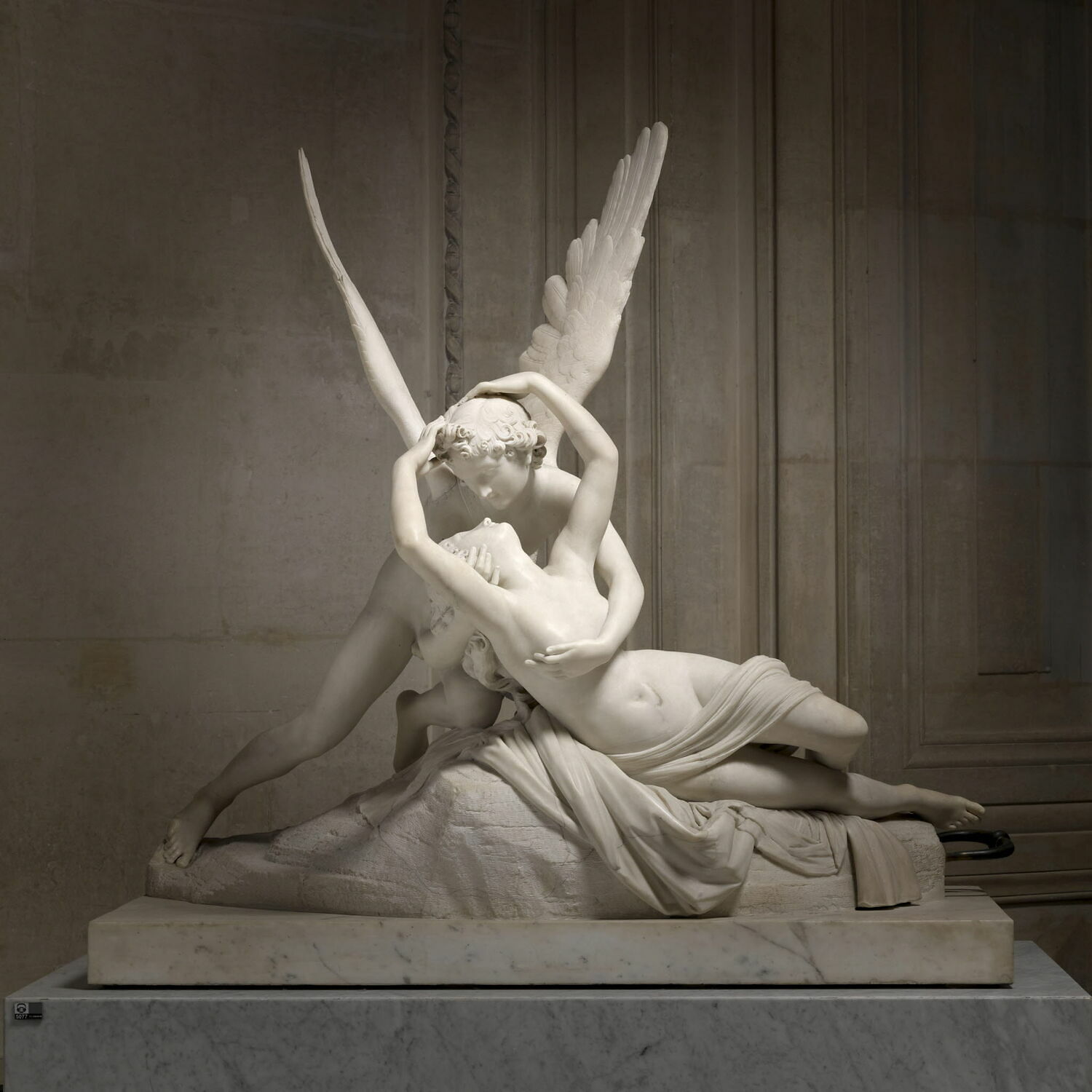
普西莎与爱神
L'Amour et Psyché à demi couchée
能看到吗?
是,正在展出
《普西莎与爱神》现在在哪里? 卢浮宫博物馆, Salle 403, Aile Denon, Niveau 0, 巴黎. 是,正在展出. 核实 2026年9月26日.

闭馆· 明天 9:00 开馆
正对公众展出。
- 核实
- 此状态始于
- 出处
- 博物馆
关于这件雕塑
普西莎与爱神(Psyche Revived by Cupid's Kiss;義大利語:Amore e Psiche;法語:Psyché ranimée par le baiser de l'Amour:俄語:Амур и Психея)是安东尼奥·卡诺瓦于1787年受命为上校约翰·坎贝尔创作的雕塑。它刻画出神话中爱人情动的瞬间,被视为新古典主义的杰出作品,同时也带有新兴浪漫主义运动的特点。爱神丘比特以一吻唤醒了已逝去的普西莎,这一雕塑正展现出爱神的爱与温柔。丘比特与普西莎的故事出自阿普列尤斯的《金驴记》,已成为许多艺术创作的素材。
若阿尚·缪拉于1800年获得了图中的原始版本(英语:Prime version)雕塑。在他去世之后,这件雕塑于1824年被巴黎卢浮宫收藏。 第二个版本由俄罗斯贵族尤苏波夫王子(英语:Prince Yusupov)1796年在罗马自卡诺瓦手中获得,随后被圣彼得堡埃尔米塔日博物馆收藏。
作品信息
- 馆藏编号
- MR 1777
已收入目录
出处
- 卢浮宫博物馆
- 图片: 卢浮宫博物馆 — © 2011 GrandPalaisRmn (musée du Louvre) / René-Gabriel Ojéda
Antonio Canova当时的生活
完整生平1775–1800
Shows his statues by candlelight
In the last quarter of the eighteenth century it became fashionable to view galleries at night by torchlight, and Canova seized on the fad: he displayed his works in his studio by candlelight and finished the statues by candlelight with special tools, softening the transitions between the parts of the nude. He then rubbed the marble with pumice, sometimes for weeks or months, and if need be with tripoli and lead.
1790–1795
The monument to Titian is never built
In 1790 he began work on a pyramid-shaped tomb for Titian in the church of the Frari, but by 1795 the project was abandoned for lack of funds. Canova reused the idea for the tomb of Archduchess Maria Christina in the Augustinian church in Vienna.
1790s
Declines Catherine the Great’s invitation
News of Canova’s work reached Russia, and Empress Catherine II tried to summon the sculptor to her court; he politely declined the honourable invitation and, in thanks, made a second version of “Cupid and Psyche”, now in the Hermitage in St Petersburg.
1791–1818
Honorary member of many academies in Europe and America
Canova was elected an honorary member of many academies: Florence (1791), Stockholm (1796), Verona (1803), Venice (1804), Siena (1805), Lucca (1806), St Petersburg (1804), Geneva (1804), Denmark (1805), Graz (1812), Marseille (1813), Monaco (1814), New York (1817), Antwerp and Vilnius (1818), and also Philadelphia.
1792
Returns to Possagno to recover his health
Strenuous work had weakened his health, and in May 1792 Canova decided to visit his family in Possagno; on his way back to Rome he stopped in Padua, Vicenza, Verona, Mantua, Parma, Modena and Bologna, winning general acclaim in every one of them.
1794
Makes an exception: restores sculptures for Zulian
Canova disliked restoring ancient statues, but in 1794 he made an exception for his friend and early patron Zulian, restoring several sculptures that Zulian had moved from Rome to Venice.