ART WIKI32,963 件在展
地图藏品艺术家博物馆展览专栏
登录

ART WIKI

名作悬于何处,几时开门迎客。

馆藏:阿姆斯特丹国家博物馆、埃尔米塔日博物馆、大都會藝術博物館、丹麥國立美術館、俄羅斯博物館、蓋蒂別墅、国家美术馆、哈佛藝術博物館、赫尚博物馆和雕塑园、惠特尼美国艺术博物馆、克利夫蘭藝術博物館、卢浮宫博物馆、美国国立亚洲艺术博物馆、美國國家肖像畫廊、明尼阿波利斯美術館、普希金造型藝術博物館、史密森尼美國藝術博物館、特列季亚科夫画廊、维多利亚和阿尔伯特博物馆、現代藝術博物館、芝加哥藝術博物館、J·保羅·蓋蒂博物館、俄罗斯博物馆藏品国家目录(274 家博物馆)、Europeana(19 家博物馆)、维基数据(6 家博物馆)、Paris Musées(12 家博物馆)和Joconde(法国文化部博物馆数据库)(495 家博物馆)。图片版权归各权利人所有。

栏目

  • 地图
  • 搜索
  • 藏品
  • 名作
  • 此刻在展
  • 艺术家

更多

  • 博物馆与画廊
  • 展览
  • 专栏
  • 数据从何而来
  • 隐私与 Cookie
首页地图目录
  1. 藏品/
  2. 芝加哥藝術博物館/
  3. Kitchen Scene
Kitchen Scene, Diego Velázquez, 1618/20

Kitchen Scene

1618/20 · Painting

关于这幅画

The Kitchen Maid (in Spanish La mulata, La cocinera or Escena de cocina (Kitchen Scene)) and Kitchen Maid with the Supper at Emmaus are two paired domestic paintings by Diego Rodríguez de Silva y Velázquez from his early Seville period. A wide range of dates has been suggested for its completion, although most place it between 1620 and 1622. The first version is kept in the Art Institute of Chicago; the second version is held at the National Gallery of Ireland.

继续阅读

José López-Rey suggests that this picture could be related to a lost Velázquez painting described by Antonio Palomino "... where a board is seen, that serves as a table, with a charcoal burner, and a pot boiling on top, and covered with a bowl, and the fire is visible, the flames, and the sparks are clearly visible, a small tin saucepan, an alcarraza, some plates, and some basins, a glazed jug, a mortar with its pestle and a head of garlic next to it; and on the wall there is small basket and a cloth hanging from a hook, and other trinkets; and guarding this is a boy holding a jug, wearing a coif, who with his humble clothes represents a subject that is very ridiculous and amusing". The Dublin version was bequeathed by Alfred Beit in 1987. A 1933 cleaning revealed a depiction of Jesus’ supper at Emmaus on the wall behind the main figure.

The Chicago painting was bought from the Goudstikker gallery in Amsterdam by August L. Mayer and presented to the Institute in 1927. It was at the time thought to be the Velázquez original, relegating the Beit painting to the status of a copy. A number of art experts agreed with this opinion, including Bernardino Pantorba and José Gudiol, however, López-Rey recognized that the painting in Dublin came from the hand of Velázquez, casting doubt on the originality of the painting in Chicago due to its poor state of conservation. The Velázquez expert Jonathan Brown agreed with this reasoning, suggesting that the Chicago painting was “possibly” painted by Velázquez. He also suggested that the picture might be a copy produced by an artist who "wanted to draw on the success of genre paintings by Velázquez and who might have produced a large number of replicas and versions of the originals".

The Chicago painting was restored in 1999 by Frank Zuccari. Despite paint losses, the best conserved parts show a similar quality, and in some aspects a superior quality, to the Dublin version. No trace has been found suggesting that the painting might have at any time had any religious significance or that it is anything other than a painting of a mulatto maid working in a kitchen. The painting contains a number of features that confirm its technical superiority over the Dublin version. In the Chicago version there are a greater number of folds on the upper part of the girl’s coif and the treatment of the associated light and shadows is more meticulous, this is also seen in the crumpled cloth in the foreground.

作品信息

1618/20 · 19岁
15991660
馆藏编号
1935.380

与此同时,在Diego Velázquez的生活中

完整生平
  1. 1611–1617

    Friendship with Alonso Cano and Francisco de Zurbarán

    In the school of Pacheco — a man of broad culture and censor of religious painting for the Inquisition in Seville — Velázquez befriended the future sculptor and painter Alonso Cano and Francisco de Zurbarán.

  2. 1611–1622 · 工作地

    Seville

  3. 14 March 1617

    Qualifies as a master painter

    Velázquez passed his examination and, with Pacheco's backing, was admitted to the painters' guild of Seville, with the right “to practise his art in the kingdom, keep a workshop and hire apprentices”.

  4. 23 April 1618

    Marries Juana, his teacher's daughter

    The nineteen-year-old Velázquez married Pacheco's fifteen-year-old daughter Juana. Such marriages between painters' families were common, as they eased the search for work and commissions.

  5. 1618年4月23日

    Married: Juana Pacheco

  6. 1619–1621

    Births of his daughters Francisca and Ignacia

    His elder daughter Francisca was born in 1619, and Ignacia in 1621; Ignacia died in infancy.

Diego Velázquez的更多作品

全部作品

同一展厅 · Gallery 211, 芝加哥藝術博物館

博物馆页面

同一主题 · Slavery

该主题的全部作品

Superior technique is also seen in the depiction of light on the objects, particularly on the glazed ceramic jug that the maid is holding in her hand, in which it is possible to see the shine of the crackle glaze and marks left when the jug was formed on a potter’s wheel. A possible explanation for this improvement in technique is that Velázquez returned to a previous theme in order to improve on it, concentrating on the tactile qualities of the painting, which were his main interest at the time, and disregarding the religious motif.

Suggested influences for the painting include Flemish engravings by Jacob Matham. The appearance of the Supper at Emmaus in the Dublin version has led some authors to suggest a possible influence by Caravaggio, although this is uncertain as it is difficult to establish whether works by the Italian painter or by his contemporaries could have reached Seville and for Velázquez to have been familiar with them.

In 2018 the Museum of Fine Arts, Houston, announced the discovery of a third version: this one is similar to the Chicago version but 'cropped' at left and right to an almost square format.

维基百科 · CC BY-SA

博物馆的介绍

In this modest kitchen scene, a type known as a bodegón (from the Spanish for pantry), Diego Velázquez depicted a young African woman at work, surrounded by exquisitely rendered pots, jugs, a mortar and pestle, and a crumpled paper wrapper for spices. Slavery was widespread in the young artist’s hometown of Seville: Velázquez, his father, and his teacher, Francisco Pacheco, were all enslavers. In creating this painting, Velázquez may have used an enslaved woman from one of these households as a model.

芝加哥藝術博物館 · CC BY 4.0

Diego Velázquez肖像Diego Velázquez西班牙, 1599–1660

可否一睹真容?

可以,正在迎客

芝加哥藝術博物館

芝加哥, 美國

展厅展厅 211

正对公众展出。由谁担保,见下文。

核实
3天前
此状态始于
2026年9月28日
出处
博物馆
在地图上看博物馆页面

画面内容

Slavery静物画AfricanDomesticDomestic scenesFemaleInteriorJugKitchenPortraits: African subjectServingwareUtensilVase女人

已收入目录

绘画油画西班牙绘画巴洛克17 世纪17世纪巴洛克艺术西班牙

行踪录

  1. 在展 · 展厅 211

    芝加哥藝術博物館 · 2026年9月28日 — 现在 · 已核实

  2. 在展 · 展厅 212

    芝加哥藝術博物館 · 2026年8月19日 — 2026年9月28日 · 已核实

出处

  • 芝加哥藝術博物館
  • 图片: 芝加哥藝術博物館 — CC0
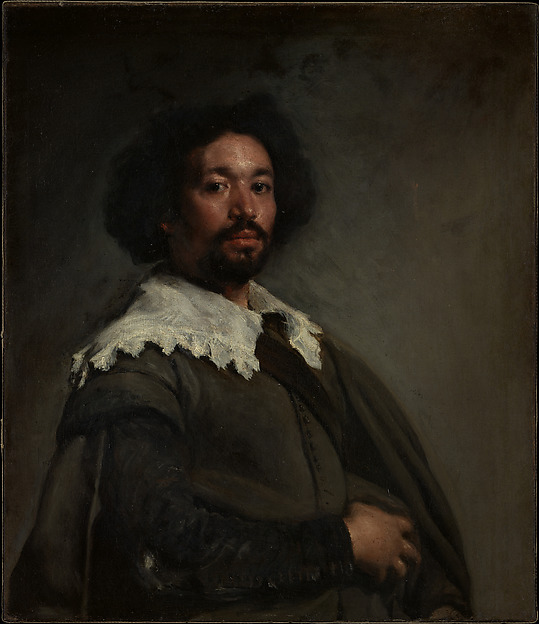
Juan de Pareja (ca. 1608–1670), Velázquez, 1650

胡安·帕雷哈的肖像

1650 · 大都會藝術博物館

午餐, Diego Velázquez, 1617

午餐

1617 · 埃尔米塔日博物馆

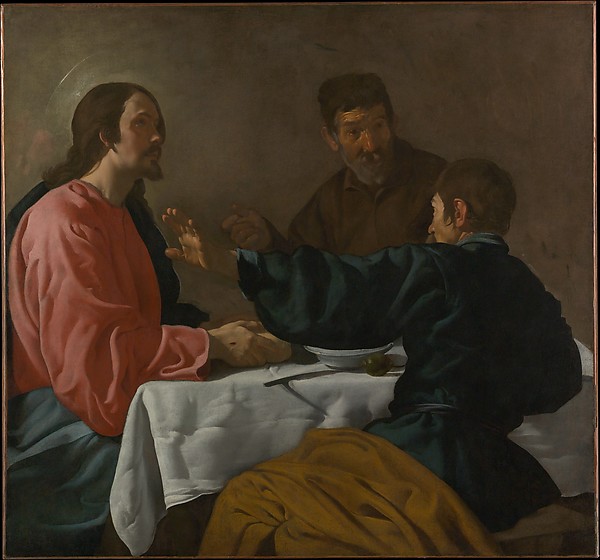
The Supper at Emmaus, Velázquez, 1622–23

The Supper at Emmaus

1622–23 · 大都會藝術博物館

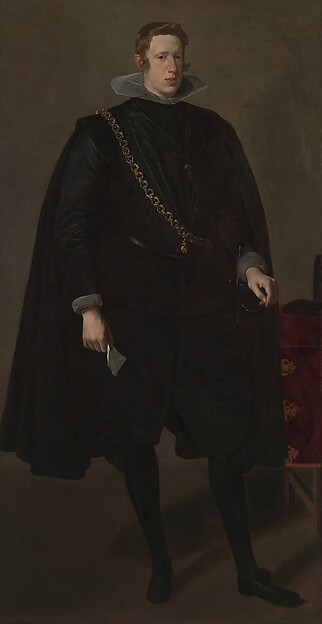
Philip IV (1605–1665), King of Spain, Velázquez, probably 1624

Philip IV (1605–1665), King of Spain

probably 1624 · 大都會藝術博物館

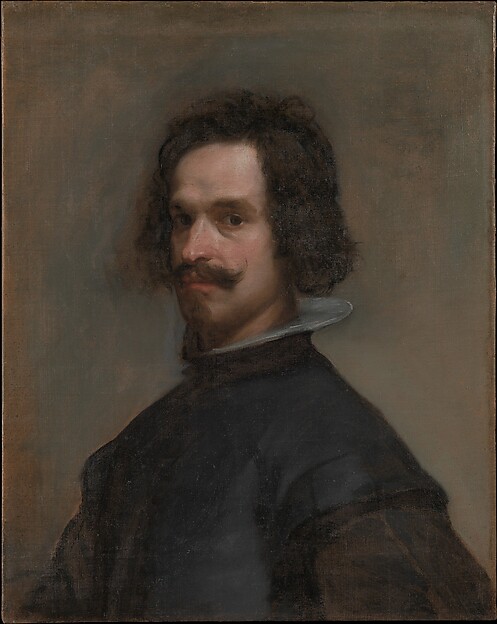
Portrait of a Man, Possibly a Self-Portrait, Velázquez, ca. 1635

Portrait of a Man, Possibly a Self-Portrait

ca. 1635 · 大都會藝術博物館

Portrait of the Count-Duke of Olivares, Diego Velázquez, c. 1638

Portrait of the Count-Duke of Olivares

c. 1638 · 埃尔米塔日博物馆

The Needlewoman, Diego Velázquez, c. 1640/1650

縫紉女工

c. 1640/1650 · 国家美术馆

Portrait of Philip IV, King of Spain, Diego Velázquez, c. 1640

Portrait of Philip IV, King of Spain

c. 1640 · 埃尔米塔日博物馆

The Assumption of the Virgin, Domenico Theotokópoulos, called El Greco, 1577–79

Domenico Theotokópoulos, called El Greco

The Assumption of the Virgin, 1577–79

The Resurrection, Cecco del Caravaggio, c. 1619-20

Cecco del Caravaggio

The Resurrection, c. 1619-20

Cupid Chastised, Bartolomeo Manfredi, 1613

Bartolomeo Manfredi

Cupid Chastised, 1613

Saint John the Baptist in the Wilderness, Diego Velázquez, c. 1622

Diego Velázquez

Saint John the Baptist in the Wilderness, c. 1622

Penitent Saint Peter, Jusepe de Ribera, 1628/32

Jusepe de Ribera

Penitent Saint Peter, 1628/32

The Abduction of the Sabine Women, Luca Giordano, c. 1675

Luca Giordano

The Abduction of the Sabine Women, c. 1675

Salome with the Head of Saint John the Baptist, Guido Reni, c. 1639–42

Guido Reni

Salome with the Head of Saint John the Baptist, c. 1639–42

Bust of a Youth (Saint John the Baptist?), Francesco Mochi, 1630/40

Francesco Mochi

Bust of a Youth (Saint John the Baptist?), 1630/40

Formerly enslaved woman, Alabama, Dorothea Lange, 1938, printed c. 1955

Dorothea Lange

Formerly enslaved woman, Alabama, 1938, printed c. 1955

未展出 · 国家美术馆

Formerly enslaved woman, Alabama, Dorothea Lange, 1938, printed 1950s

Dorothea Lange

Formerly enslaved woman, Alabama, 1938, printed 1950s

未展出 · 国家美术馆

Inscripties uit de graftombe van de vrijgelatenen en slaafgemaakten van de familie van Augustus, Giovanni Battista Piranesi, c. 1756 - c. 1757

Giovanni Battista Piranesi

Inscripties uit de graftombe van de vrijgelatenen en slaafgemaakten van de familie van Augustus, c. 1756 - c. 1757

阿姆斯特丹国家博物馆

Inscripties uit de graftombe van de vrijgelatenen en slaafgemaakten van de familie van Augustus, Giovanni Battista Piranesi, c. 1756 - c. 1757

Giovanni Battista Piranesi

Inscripties uit de graftombe van de vrijgelatenen en slaafgemaakten van de familie van Augustus, c. 1756 - c. 1757

阿姆斯特丹国家博物馆

Inscripties en sarcofagen uit de graftombe van de vrijgelatenen en slaafgemaakten van de familie van Augustus, Giovanni Battista Piranesi, c. 1756 - c. 1757

Giovanni Battista Piranesi

Inscripties en sarcofagen uit de graftombe van de vrijgelatenen en slaafgemaakten van de familie van Augustus, c. 1756 - c. 1757

阿姆斯特丹国家博物馆

Inscripties uit de graftombe van de vrijgelatenen en slaafgemaakten van de familie van Augustus, Giovanni Battista Piranesi, c. 1756 - c. 1757

Giovanni Battista Piranesi

Inscripties uit de graftombe van de vrijgelatenen en slaafgemaakten van de familie van Augustus, c. 1756 - c. 1757

阿姆斯特丹国家博物馆

Plattegrond met grafkamers van de vrijgelatenen en slaafgemaakten van Augustus, Giovanni Battista Piranesi, c. 1756 - c. 1757

Giovanni Battista Piranesi

Plattegrond met grafkamers van de vrijgelatenen en slaafgemaakten van Augustus, c. 1756 - c. 1757

阿姆斯特丹国家博物馆

Inscripties uit de graftombe van de vrijgelatenen en slaafgemaakten van de familie van Augustus, Giovanni Battista Piranesi, c. 1756 - c. 1757

Giovanni Battista Piranesi

Inscripties uit de graftombe van de vrijgelatenen en slaafgemaakten van de familie van Augustus, c. 1756 - c. 1757

阿姆斯特丹国家博物馆