 John Constable英国, 1776–1837
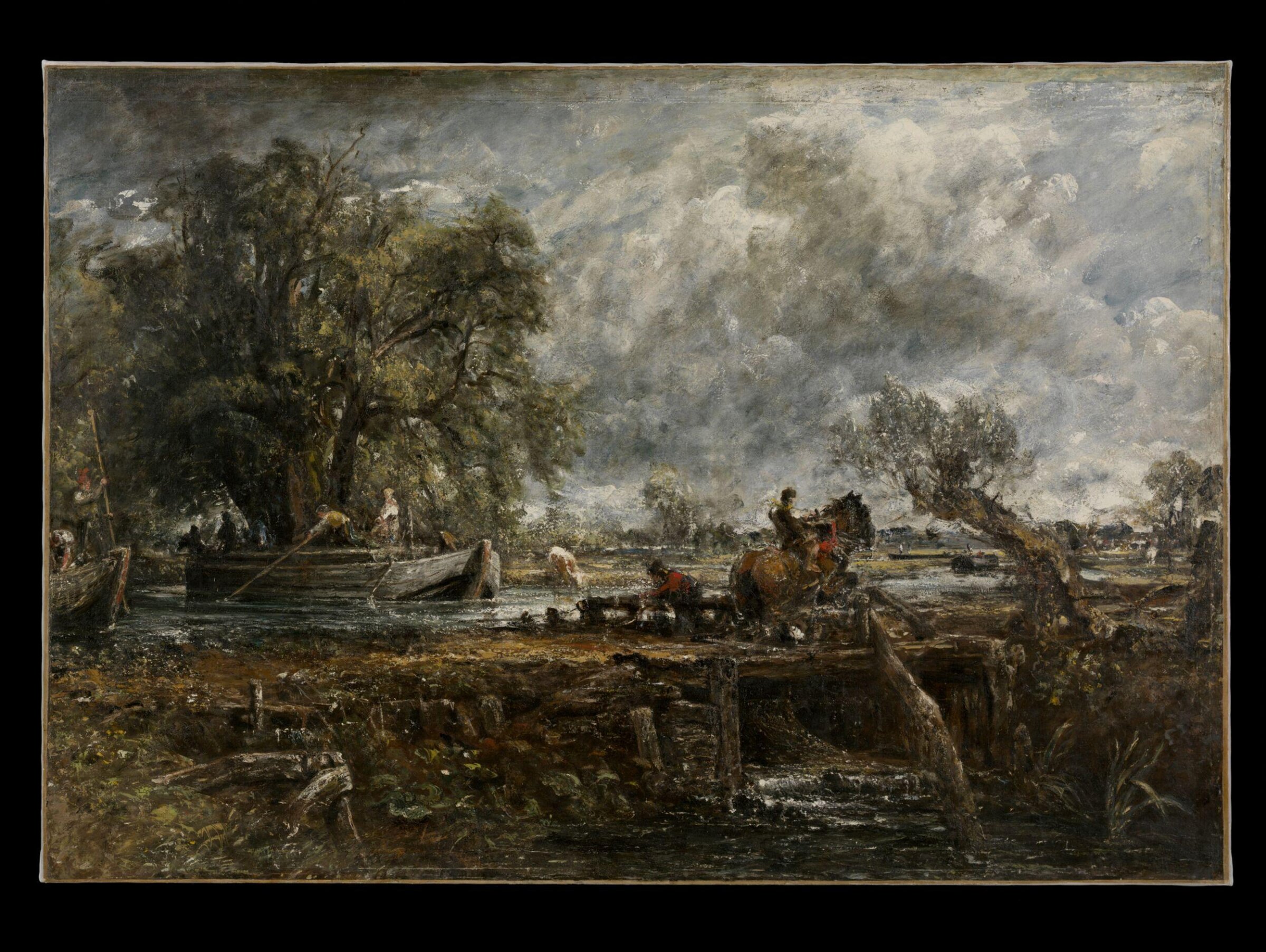
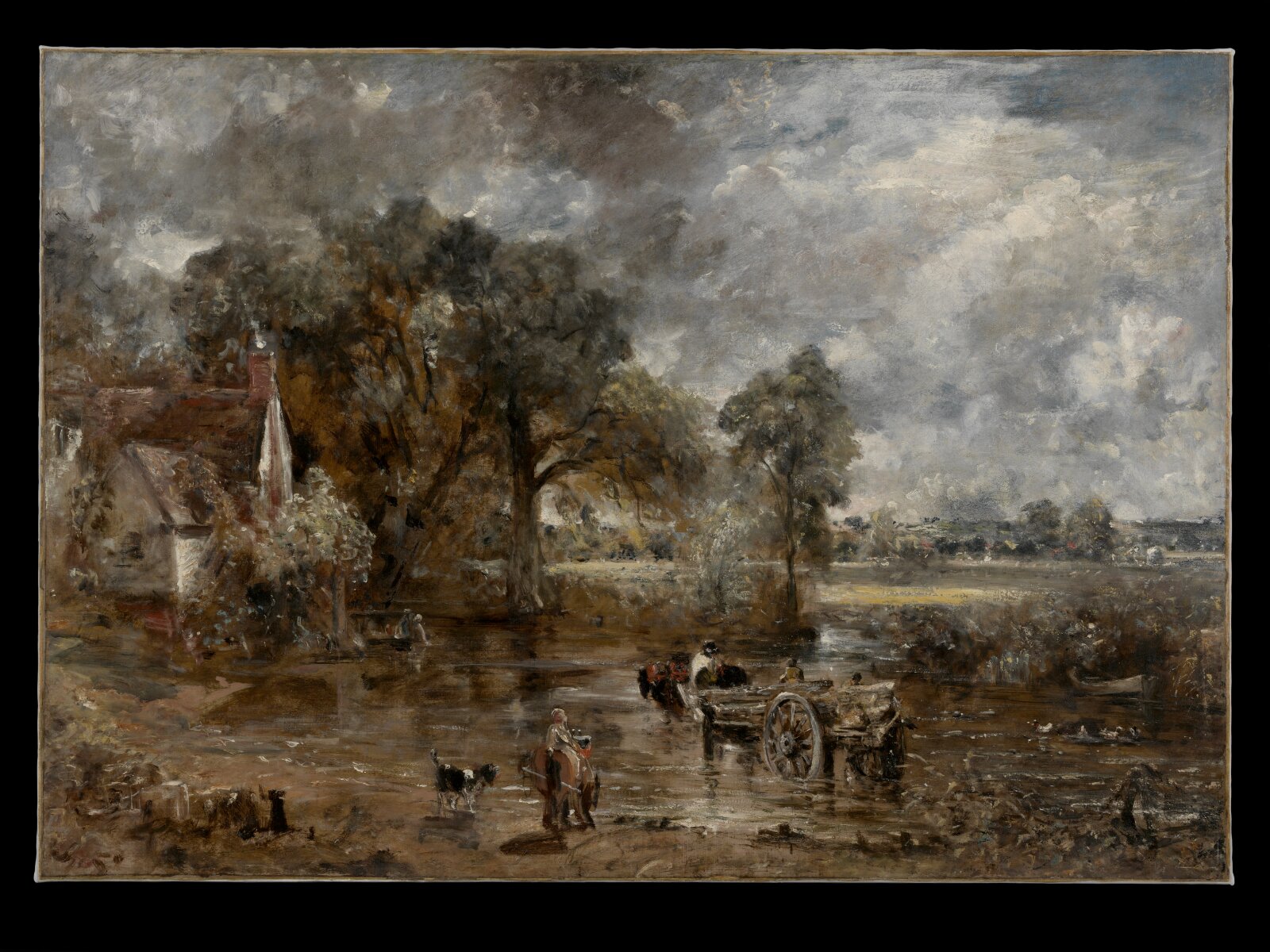
Full-Scale Study for <i>The Hay Wain</i>
可否一睹真容?
可以,正在迎客

正对公众展出。
- 核实
- 此状态始于
- 出处
- 博物馆
关于这幅画
Constable often made full-scale studies for large exhibition paintings. He used a broad painting style to establish the general balance of the composition and its colours. This study is for his most famous work, The Hay Wain, exhibited at the Royal Academy in 1821. The painting is now in the National Gallery. The scene is near Flatford Mill.
维多利亚和阿尔伯特博物馆
作品信息
- 馆藏编号
- 987-1900
画面内容
已收入目录
出处
- 维多利亚和阿尔伯特博物馆
- 图片: 维多利亚和阿尔伯特博物馆 — © Victoria and Albert Museum, London
与此同时,在John Constable的生活中
完整生平1821
“The Hay Wain” at the Royal Academy
The picture, shown as “Landscape: Noon”, found no buyer, but it was seen by the painter Théodore Géricault and the writer Charles Nodier. According to Delacroix, Géricault went back to France quite stunned and invited Constable to Paris, while Nodier urged French artists to look to nature rather than to trips to Rome.
1821
“I should paint my own places best”
In a letter to his friend John Fisher in 1821 Constable wrote that he should paint his own places best, and that painting is but another word for feeling. The Dedham Vale around his home came to be known as “Constable Country”.
1821
Son born: Charles Golding Constable
23 October 1821
To Fisher: “I have done a good deal of skying”
Constable wrote to Fisher that he had done a good deal of skying and was determined to conquer all the difficulties that remained. He made cloud studies, noting the weather, direction of light and time of day on the back, and held the sky to be the key note of a landscape, drawing on the meteorologist Luke Howard’s classification of clouds.
1822/1823
Daughter born: Isabel Constable



![Vallon à Helmingham [Helmingham Dell], Constable, John, 1e quart du XIXe siècle (peint à l'été 1823 (selon Beckett)) (1823)](https://collections.louvre.fr/media/cache/large/0000000021/0000065616/0000312650_OG.JPG)