 Alison Saar美国, 1956
Citizen Cane

About the sculpture
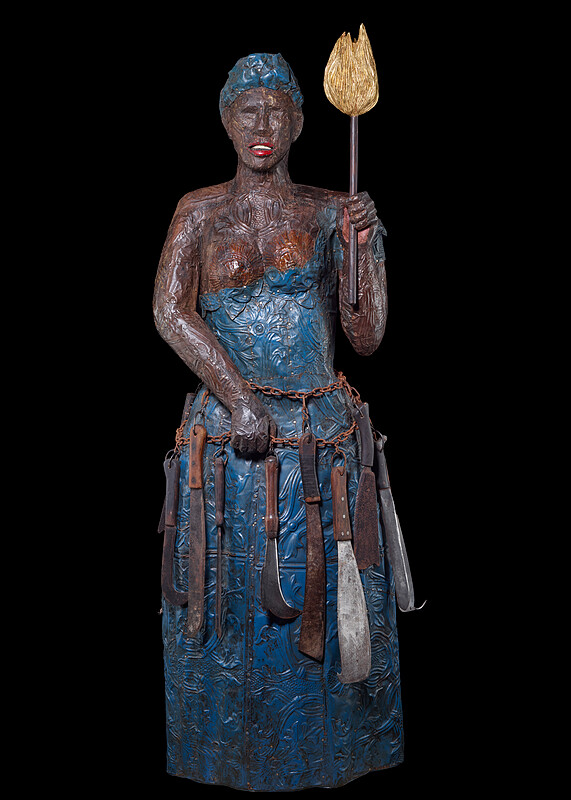
Alison Saar’s larger than life-size figural sculpture, Citizen Cane, is a visual allegory of strength, resolve, and self-empowerment. Made from found and repurposed materials, Saar's figure of an enslaved African woman wearing a belt of machetes and holding a burning torch aloft recalls other personifcations of freedom such as the Statue of Liberty or France's national symbol of Marianne.
Here, Saar highlights the system of human enslavement, exploitation, and abuse perpetrated by France and other European colonizers under a system known as "triangular trade, " part of the global slave trade that transported between 10 million and 12 million enslaved Africans across the Atlantic Ociean to the Americas from the 16th to the 19th century.
Read on
French, Dutch, Spanish and Portuguese merchants shipped arms, textiles, and other commodities from Europe to Africa, enslaved people from Africa to the Americas, and sugar and coffee from the Americas to Europe.
Saar's figure wears a conspicuous belt of machetes, the essential agricultural tool of sugarcane plantations and a powerful symbol of resistance and rebellion among indigenous populations fighting colonizing forces. According to Saar, Citizen Cane's belt of machetes also alludes to the Greek mythological figure Hippolyta, Queen of the Amazons, whose golden girdle was the source and emblem of her power and position.
Though allegorical, Citizen Cane is foremost an agitator and insurgent, a change agent whose persona of defiance and determination reveals a sub-textual narrative of social and cultural enlightenment. Infused with a spiritual and emotional intensity, she stands as a powerful symbol of liberation and self-determination.
明尼阿波利斯美術館
作品信息
- 馆藏编号
- 2026.40
已收入目录
出处
- 明尼阿波利斯美術館: the museum's own open data · 6天前获取
- 图片: 明尼阿波利斯美術館 — © Minneapolis Institute of Art