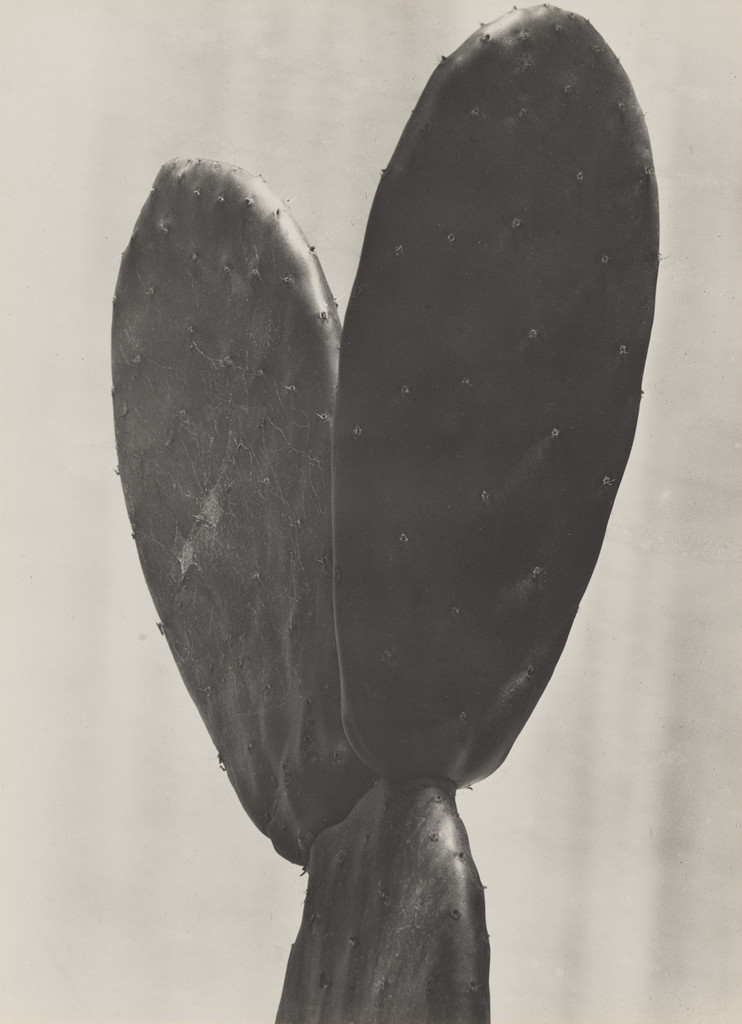
 Tina Modotti美国, 1896–1942
Cactus

作品信息
- 馆藏编号
- 335.1965
出处
- 現代藝術博物館: the museum's own open data · 12天前获取
- 图片: 現代藝術博物館 — © the artist or rights holder
与此同时,在Tina Modotti的生活中
完整生平1923
Returns to Mexico City with Weston
Modotti returns to Mexico City with Weston and his son Chandler, leaving behind Weston's wife Flora and their three youngest children; she agrees to run his studio free of charge in return for his mentoring in photography. Other accounts say she set out for Mexico with Weston as early as 1922.
1923–1926
Studio with Weston and Mexico City's bohemia
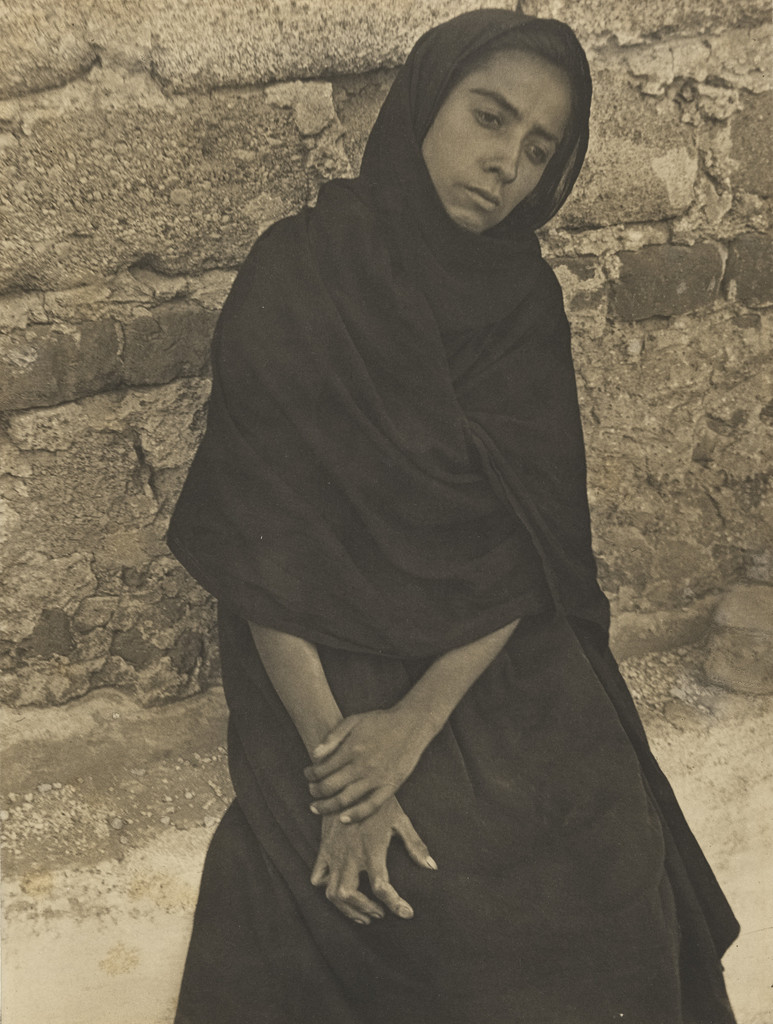
With Weston, Modotti opens a portrait studio in Mexico City and quickly gravitates toward the capital's bohemian scene, and through it into a community of cultural and political avant-gardists — Frida Kahlo, Lupe Marín, Diego Rivera, Jean Charlot; she also befriends Siqueiros. Weston, moved by the landscape and folk art of Mexico, creates abstract works, while Modotti is captivated by the country's people and blends this human interest with a modernist aesthetic.
1924
Joint exhibition with Weston
A joint exhibition of Modotti's and Weston's work is held in Mexico and attracts enormous attention.
1924–1928
Photographer of the murals of Rivera and Orozco
Modotti becomes the photographer of choice for the blossoming Mexican mural movement: between 1924 and 1928 she takes hundreds of photographs of Rivera's murals at the Secretariat of Public Education and also documents the work of José Clemente Orozco.
November 1926
Weston leaves Mexico; meeting the Communists
Weston leaves Mexico and returns to California. During this time Modotti meets political radicals and Communists, among them three Mexican Communist Party leaders — Xavier Guerrero, Julio Antonio Mella and Vittorio Vidali — who would all eventually become romantically linked with her.
1927
Joins the Mexican Communist Party
Modotti joins the Mexican Communist Party and becomes far more politically active: her focus shifts, and more and more of her work becomes politically motivated. The Mexican photographer Manuel Álvarez Bravo divided her photographic career into two categories, “Romantic” and “Revolutionary”.