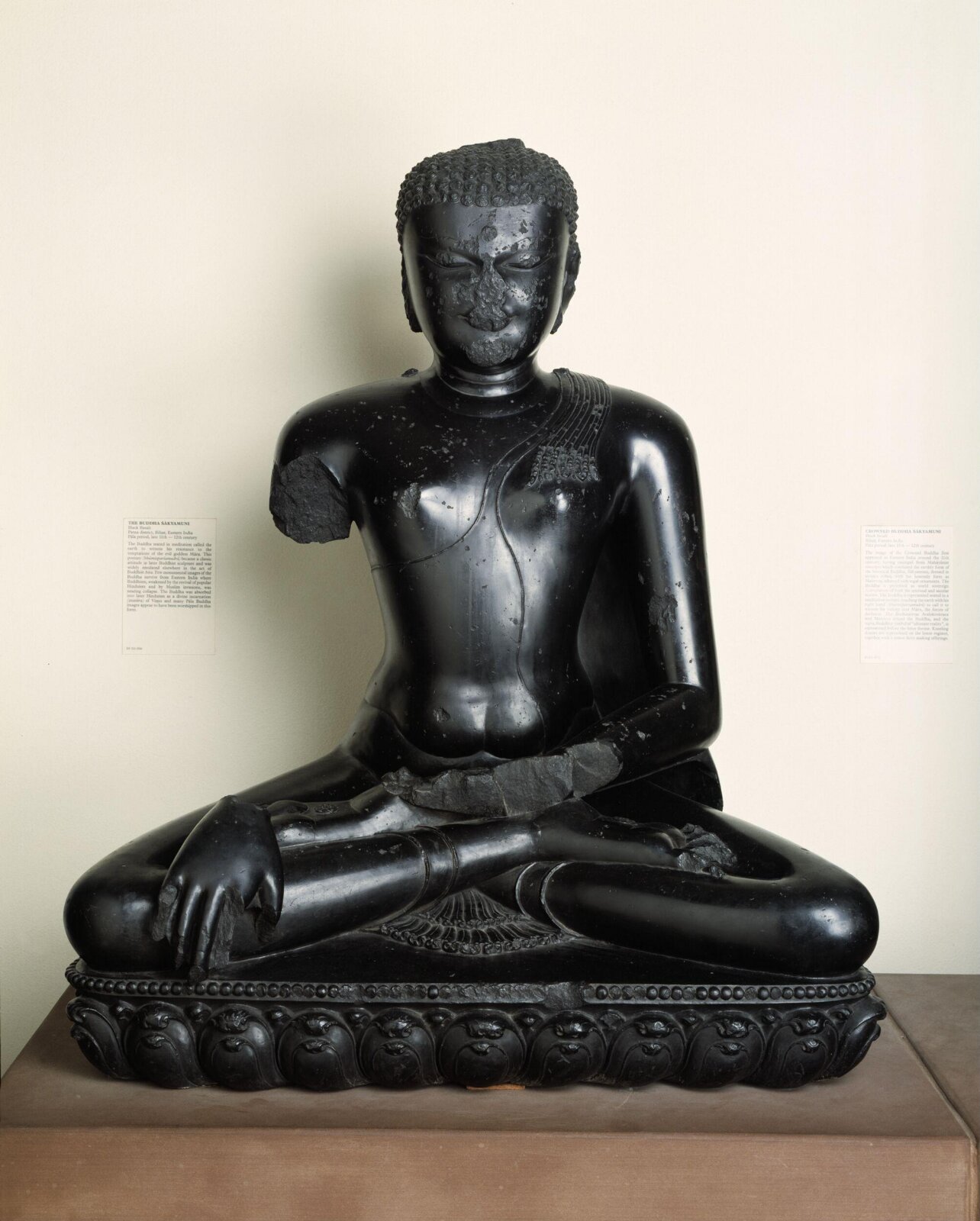
Buddha Shakyamuni
能看到吗?
是,正在展出
《Buddha Shakyamuni》现在在哪里? 维多利亚和阿尔伯特博物馆, South-East Asia, Room 47c, 倫敦. 是,正在展出. 核实 2026年9月25日.

开放中· 17:45 闭馆
正对公众展出。
- 核实
- 此状态始于
- 出处
- 博物馆
关于这件雕塑
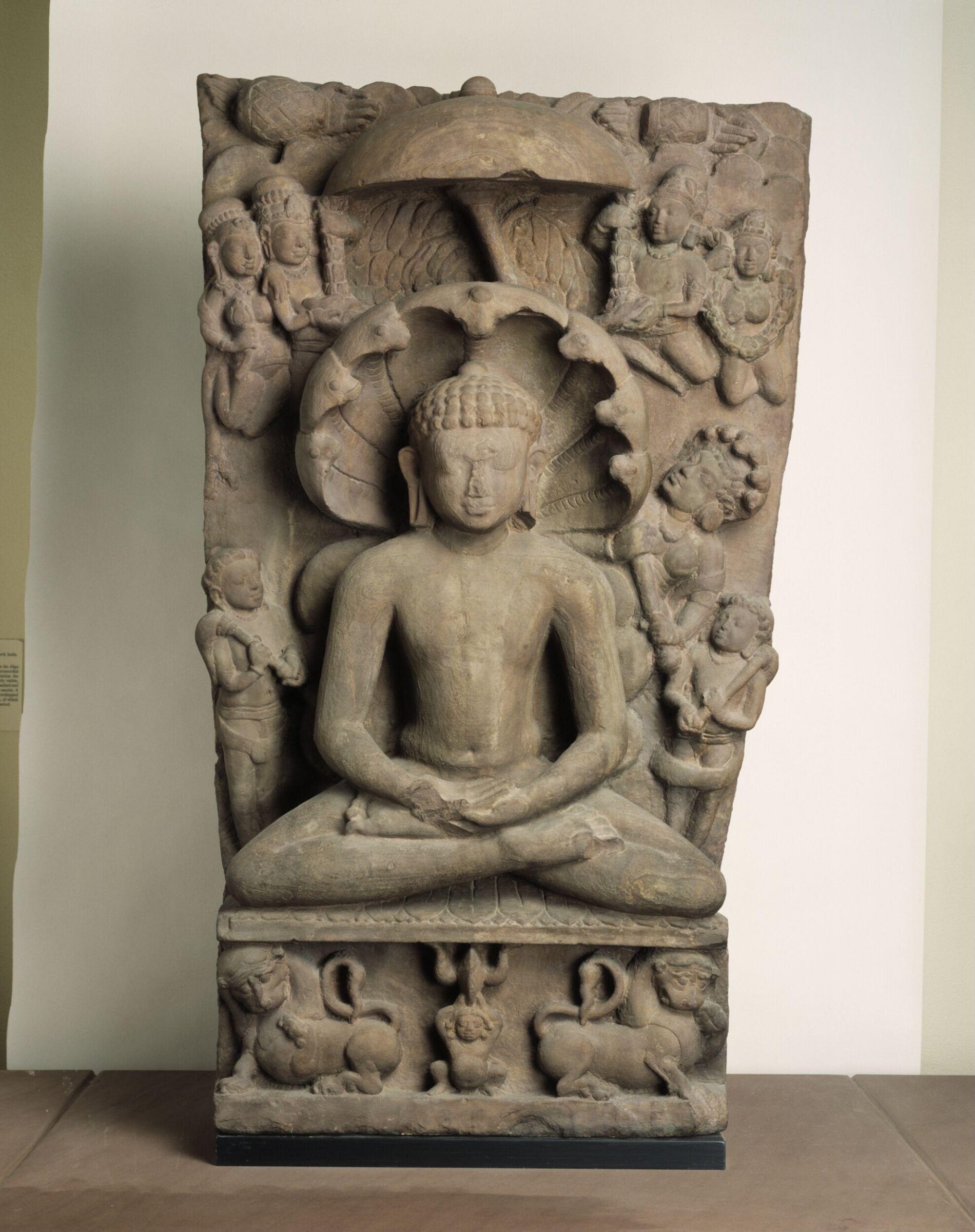
There are few large-scale images of the Buddha in eastern India and this example is among the finest to have been preserved. It shows the Buddha seated in meditation on a lotus throne (‘padmasana’) with a ‘vajra’ (thunderbolt). These features identify it specifically as a ‘diamond throne’ (‘vajrasana’).
The gesture of the lowered hand position (‘bhumisparsa-mudra’) is significant. It confirms that Shakyamuni is calling the earth to witness his resistance of the temptations of the demonic goddess Mara and the forces of worldly attachments. The combination of the ‘diamond throne’ and the mudra confirm that this image is intended to depict the historical Buddha at Bodhgaya, immediately prior to his Enlightenment.
继续阅读
This posture became a classic attitude in later Buddhist sculpture and was widely emulated elsewhere in the art of Buddhist Asia. Few monumental images of the Buddha survive from eastern India. Buddhism, weakened by the arrival of popular Hinduism and by Muslim invasions, was nearing collapse in the region at this time. Later, medieval Hinduism re-absorbed the Buddha as a divine incarnation (‘avatara’) of Vishnu, and many Buddha images of the Pala period (about 760-1142) appear to have been worshipped in this form.
维多利亚和阿尔伯特博物馆
作品信息
- 馆藏编号
- IM.112-1916
画面内容
已收入目录
出处
- 维多利亚和阿尔伯特博物馆
- 图片: 维多利亚和阿尔伯特博物馆 — © Victoria and Albert Museum, London