 Annibale Carracci意大利, 1560–1609
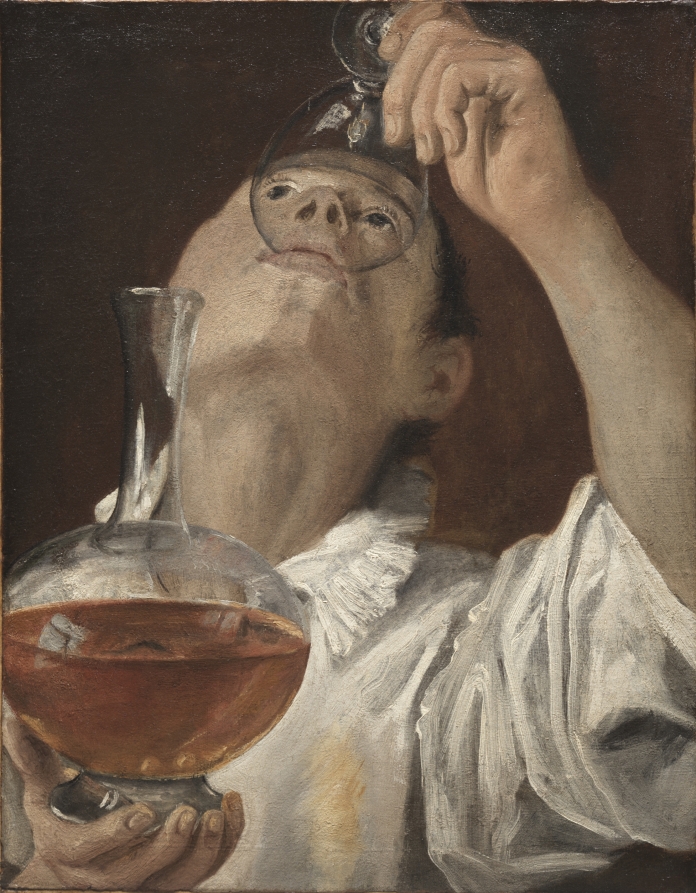
Boy Drinking
能看到吗?
是,正在展出
《Boy Drinking》现在在哪里? 克利夫蘭藝術博物館, 217 Italian Baroque, 克利夫兰. 是,正在展出. 核实 2026年11月16日.

闭馆· 明天 10:00 开馆
正对公众展出。
- 核实
- 此状态始于
- 出处
- 博物馆
关于这幅画
Light passing through glass distorts forms in Annibale Carracci's Boy Drinking, painted in 1582–1583 and now in the Cleveland Museum of Art, Cleveland. The rough canvas and unidealised subject belong to his approach based on observing nature. Annibale, his brother Agostino and their cousin Lodovico helped reform Italian painting around such observation. His manner occupied a position between Mannerism's polished artifice and the intensified drama of Caravaggio. Here the behaviour of light through a drinking vessel is recorded alongside the coarse texture of the support. On view in gallery 217.
博物馆的介绍
Together with his brother Agostino and cousin Lodovico, Annibale Carracci introduced artistic reforms in Italy based on close observation of the natural world. Annibale’s innovative and highly influential style steered a path between the smooth artificiality of Mannerism––in which style and technique took precedence over fidelity to nature––and the heightened drama of paintings by Caravaggio. In this remarkable early work, the coarse surface of the canvas, the inelegant subject matter, and the striking distortion of forms from light passing through glass all speak to his naturalistic approach.
克利夫蘭藝術博物館
作品信息
- 馆藏编号
- 1994.4
已收入目录
出处
- 克利夫蘭藝術博物館
- 图片: 克利夫蘭藝術博物館 — Museum open access
Annibale Carracci当时的生活
完整生平1578–1595
在博洛尼亚工作
1580
在帕尔马工作
1580
在威尼斯工作
1580–1581
A journey around Italy with Agostino
At the behest of the elder Ludovico Carracci, Annibale and Agostino travelled around Italy and studied the work of Titian, among others. From this came their interest in the glimmering colour taken from the Venetian painters.
1582
Opens a studio-academy in Bologna
In 1582 Annibale, his brother Agostino and his cousin Ludovico opened a painters’ studio in Bologna, at first called the Academy of the Desiderosi and then the Incamminati, “those opening a new way”. It is considered the first major art school based on life drawing and was the model for later art schools throughout Europe.
from 1582
Drawing from the nude in the academy
In the Academy students could draw from live nude models, which the Church had forbidden during the Counter-Reformation under the decrees of the Council of Trent. It taught both the theory and the practice of art, as well as perspective and plastic anatomy.