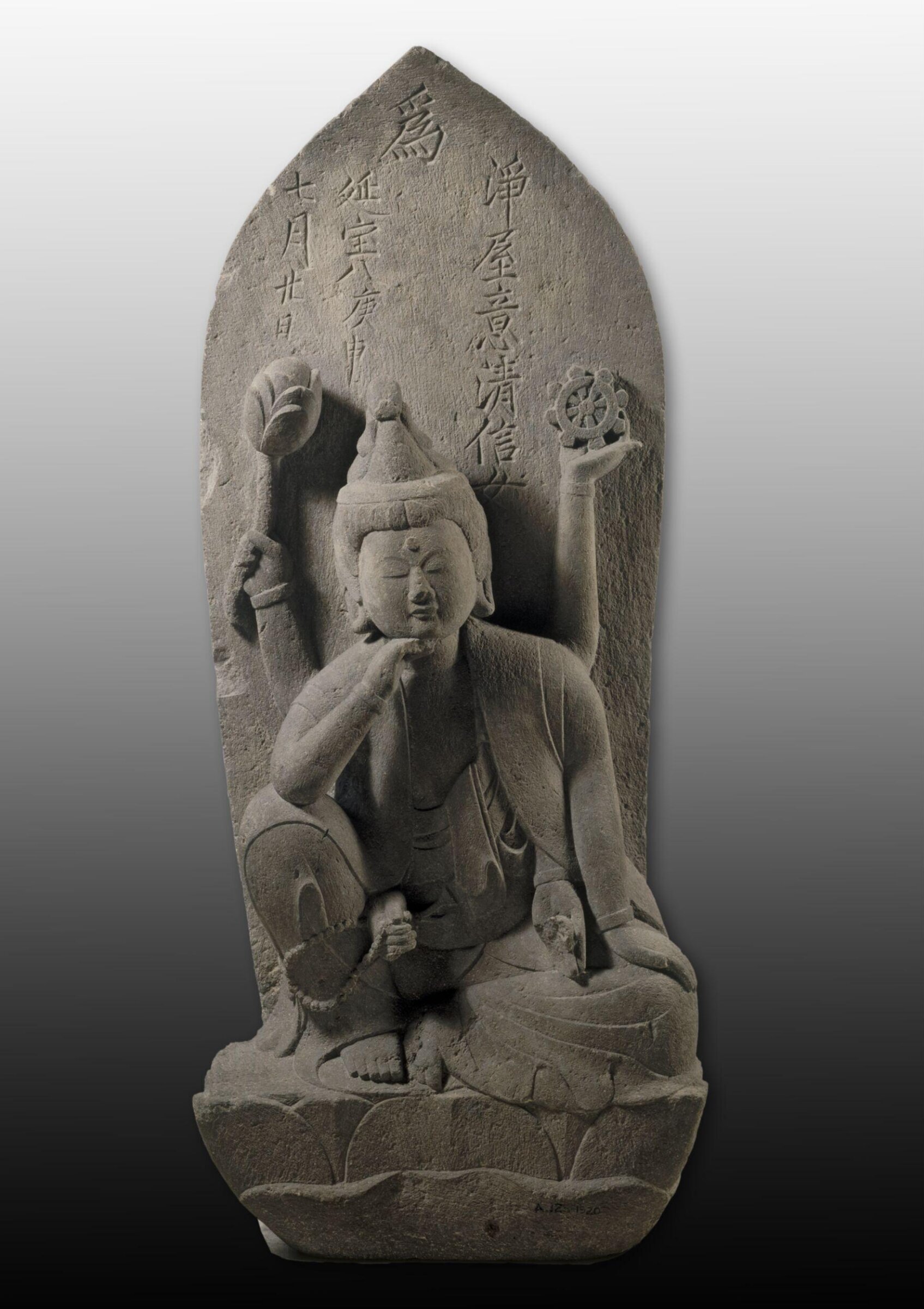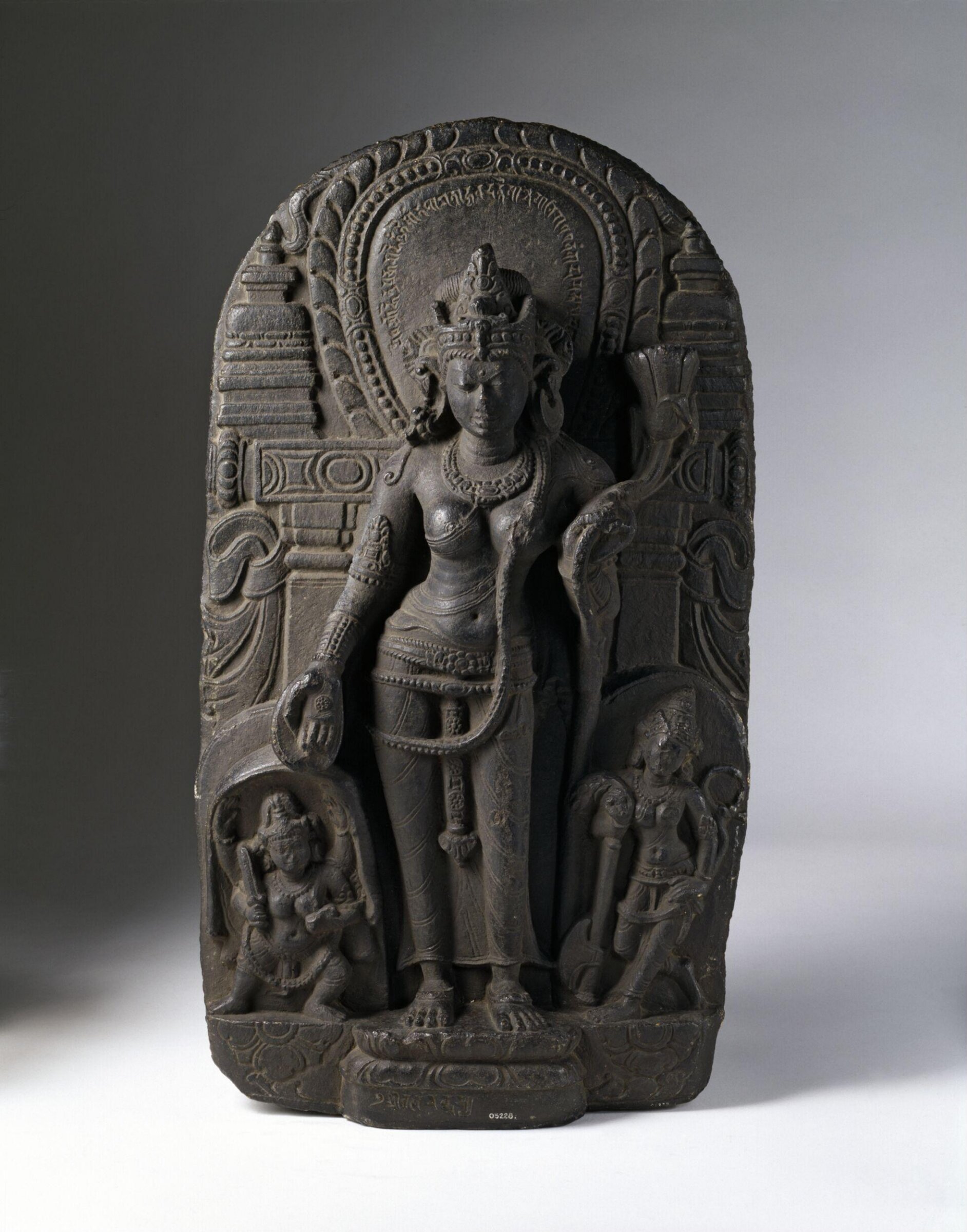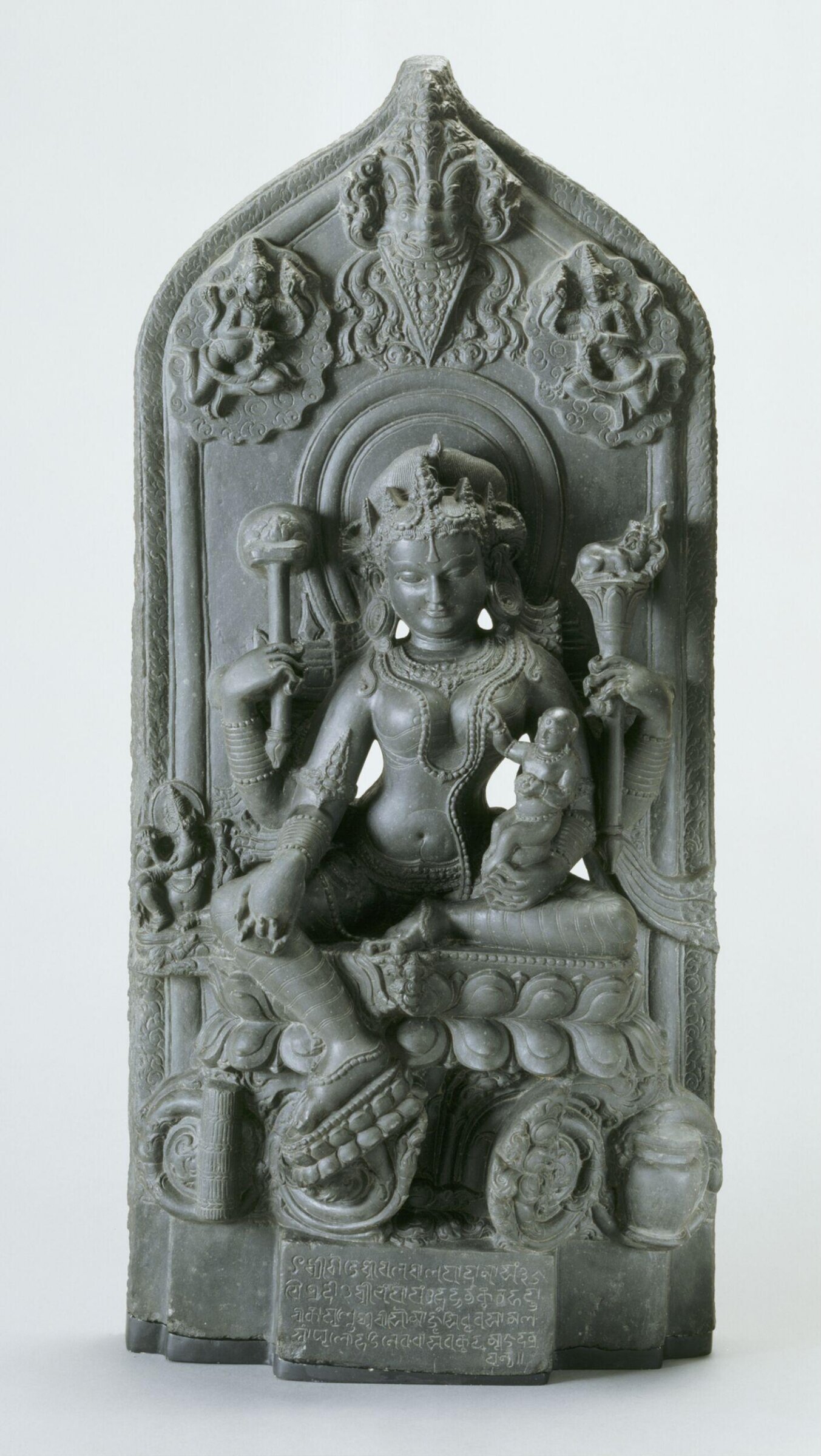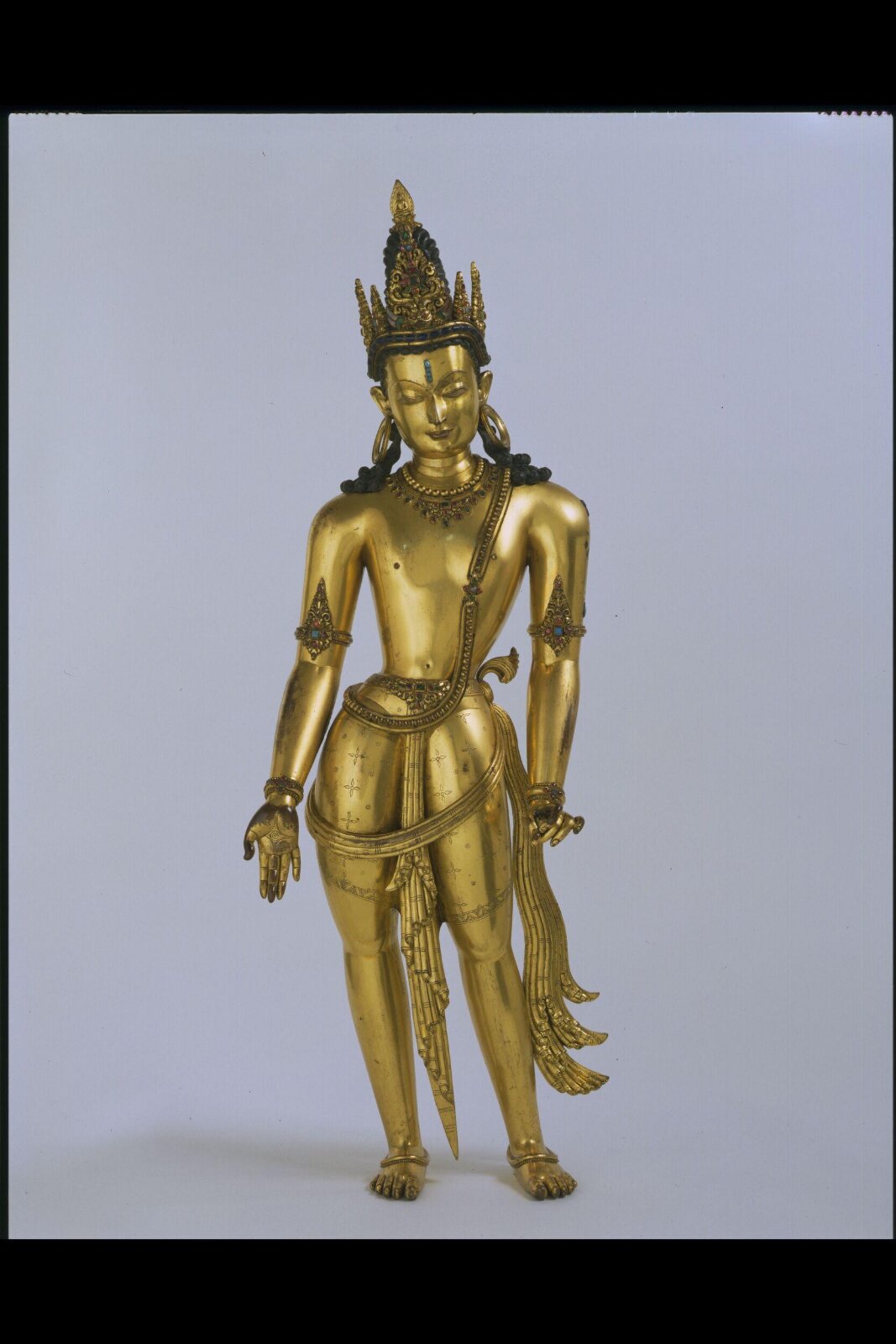
Bodhisattva Avalokitesvara
可否一睹真容?
可以,正在迎客

维多利亚和阿尔伯特博物馆
倫敦, 英国
展厅Buddhism, Room 18, The Robert H. N. Ho Family Foundation Galleries of Buddhist Art
正对公众展出。由谁担保,见下文。
- 核实
- 此状态始于
- 出处
- 博物馆
关于这件雕塑
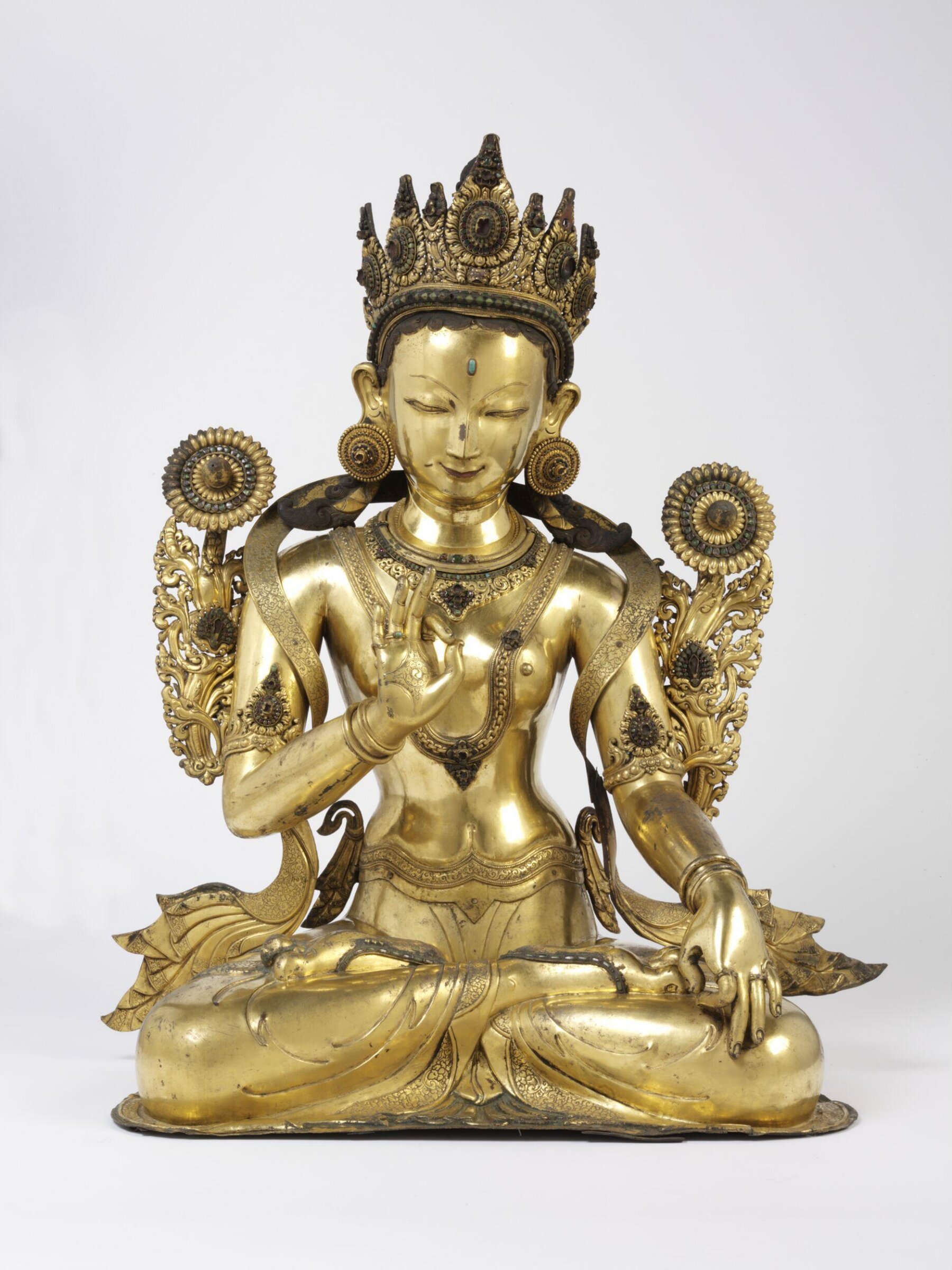
This figure represents the Bodhisattva Avalokitesvara, the Buddhist Lord of Compassion. He is seen here in his popular manifestation as Padmapani, the Lotus-holder.
继续阅读
Padmapani is a Bodhisattva, an enlightened being who voluntarily postponed passing into nirvana so that he could help others to gain salvation. The concept of the Bodhisattva was developed in the Mahayanist school of Buddhist thought, and gained enormous popularity in the Himalayas and the greater Asian world. The stillness and serenity of this figure speaks of the state of harmony to which the Bodhisattva aspires, whilst the flexed and sensuous pose in which he stands links him to the human world. The Bodhisattva's right hand is lowered in the gesture of granting wishes (varadamudra), and his left hand is poised to support the stem of a lotus (padma), but this is now missing. The figure is richly adorned with jewellery that is inset with precious and semi-precious stones. A five-pointed diadem surrounds his elaborately dressed and raised hair (jatamukuta), which is surmounted by a small image of the Buddha Amitabha of whom Avalokitesvara Padmapani is seen as an emanation.
Nepalese Newar craftsmen made this finely jewelled image for Tibetan patrons. The long tradition of Newar craftsmen from the Kathmandu Valley working for Tibetan patrons can be dated back to the 7th century A.D.
In 1922 the Victoria and Albert Museum purchased this sculpture from Major Lewis Bathe Rawling (1871-1940). He was the brother of Brigadier-General Cecil Godfrey Rawling (1870 - 1917) who had been a member of the British campaign led by Major Francis Younghusband (1863-1942) which fought its way from India to Lhasa, the capital of Tibet, in 1904. The aim of this military assault was to force Tibet to engage in trade with British India and to counter perceived Russian influence in the region. The Tibetan army proved no match for the British-led forces and thousands were killed. Many objects were brought back to Britain in consequence of the invasion. Some had been purchased, but many had been looted from Tibetan monasteries, temples, and homes.
The V&A's archive file of 1922 states that the sculpture was 'Acquired in the Shigatse district, Tibet, in 1904, by the late Brig.-General Rawling'. It has often been assumed that Rawling got the figure during the Younghusband Mission, as it was known, but the invading force did not go to Shigatse. Rawling was, however, one of four officers who made a subsequent journey through Shigatse in September 1904 to survey the site of a new British trade agency at Gartok in western Tibet. The sculpture was either sold or given to Rawling at this time or may even have been part of a diplomatic exchange. One of Rawling’s companions, William Frederick O’Connor (1870-1943), was conducting a covert assignment to form an alliance with the Panchen Lama, Thubten Choekyi Nyima (1883-1937), head of the Tashi Lhunpo monastery in Shigatse, to thwart the influence of the Dalai Lama, Ngawang Lobsang Thubten Gyatso (1876-1933).
作品信息
- 馆藏编号
- IM.239-1922