Édouard Manet法国, 1832–1883
Beggar with Oysters (Philosopher)
能看到吗?
是,正在展出
《Beggar with Oysters (Philosopher)》现在在哪里? 芝加哥藝術博物館, 展厅 222, 芝加哥. 是,正在展出. 核实 2026年9月29日.

芝加哥, 美國
闭馆· 明天 11:00 开馆
正对公众展出。
- 核实
- 此状态始于
- 出处
- 博物馆
关于这幅画
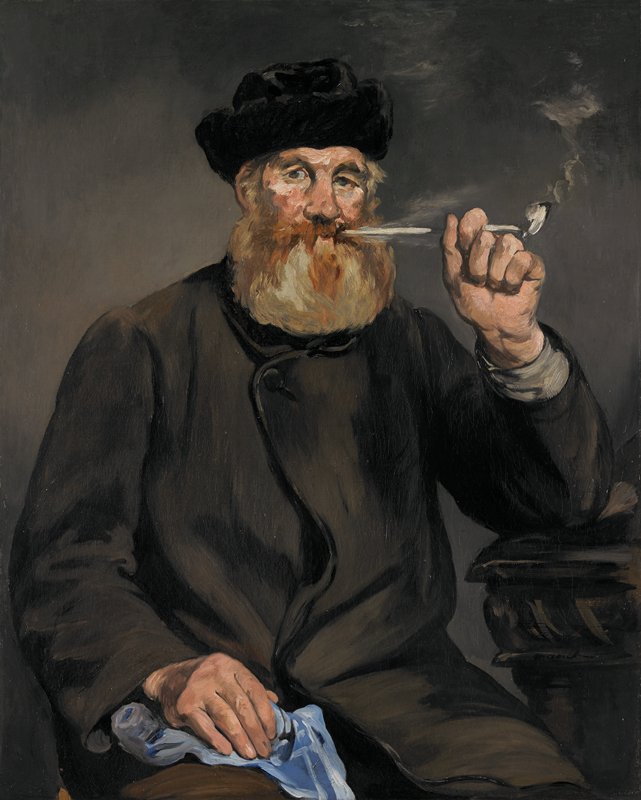
Along with Beggar with a Duffle Coat, Beggar with Oysters formed part of a series of four paintings collectively called The Philosophers. The title refers to traditional representations of the ancient stoic philosophers, whose poverty was associated with wisdom. The anonymous men in these paintings would have been recognizable to Édouard Manet’s contemporary audience as urban types—social outcasts populating the streets of Paris. By depicting them at such a large scale and set against empty, dark backgrounds, Manet subverted expectations for paint-ing at the time, granting his figures a portrait-like, even heroic presence typically reserved for noble, historical, or religious subjects. Through his format and series title, the artist encouraged viewers to see these often-disregarded people as possessing rare insight.
芝加哥藝術博物館CC BY 4.0
作品信息
- 馆藏编号
- 1931.504
画面内容
已收入目录
出处
- 芝加哥藝術博物館
- 图片: 芝加哥藝術博物館 — CC0
Édouard Manet当时的生活
完整生平1863
“The Luncheon on the Grass” at the Salon des Refusés
The Salon of 1863 rejected “The Luncheon on the Grass” (originally “Le Bain”), and Manet exhibited it at the Salon des Refusés, a parallel exhibition initiated by Napoleon III after a public outcry, the jury having accepted only 2,217 of more than 5,000 submissions. The juxtaposition of dressed men and a nude woman and the sketch-like handling caused a scandal; one critic compared the brushwork to a “floor mop”.
1863
Marries Suzanne Leenhoff
In 1863, a year after his father's death, Manet married Suzanne Leenhoff at a Protestant church: a Dutch-born piano teacher two years his senior with whom he had been romantically involved for about ten years. Auguste Manet had employed her to teach his sons the piano, and she may also have been Auguste's mistress.
1863
Married: Suzanne Manet
1865
“Olympia” at the Salon: a scandal
In 1865 the Salon accepted “Olympia”, and the frank depiction of a self-assured prostitute created a scandal; according to Antonin Proust, only the precautions taken by the administration prevented the painting from being punctured and torn. The popular press caricatured it, while the avant-garde, including Courbet, Cézanne and Monet, championed it.
1867
His own pavilion near the Pont de l'Alma
In 1867, during the World's Fair in Paris, Manet set up his own pavilion near the Pont de l'Alma and showed fifty of his best works of the past ten years. Possibly this step led to his works being accepted at the next two Salons.
1868
Friendship with Berthe Morisot
In 1868 Manet became a friend and colleague of Berthe Morisot; she is credited with convincing him to attempt plein air painting, to which Camille Corot had introduced her. Through Morisot, Manet became friends with Degas, Monet, Renoir, Sisley, Cézanne and Pissarro.