 Robert Rauschenberg美国, 1925–2008
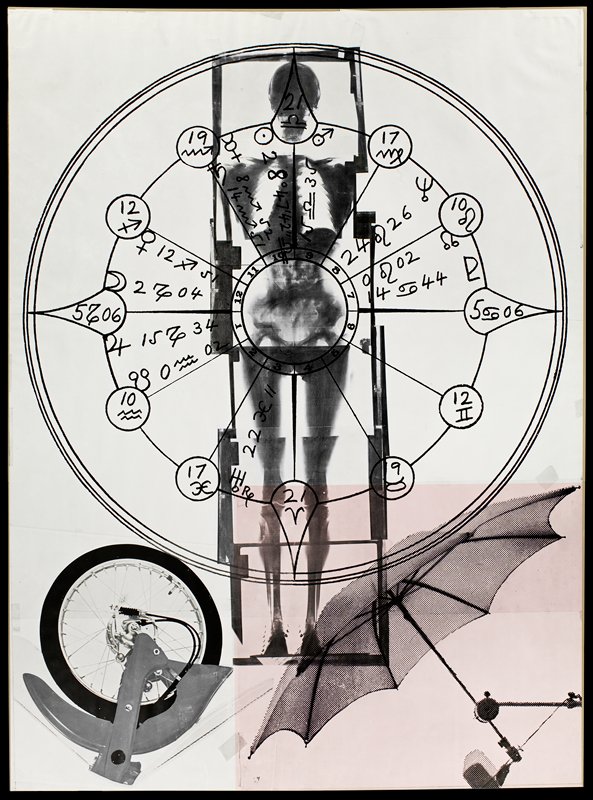
Autobiography (Broadside)

关于作品
One of Rauschenberg's largest prints, Autobirography features content of a more personal nature, including a full-body x-ray of the artist; an astrological chart (Libra); biographical passages arranged in concentric rings; a childhood photograph; and a documentary photograph of the artist's first performance piece Pelican (1963). Printed on a commercial press designed for billboard advertisements, this offset lithograph was intended to serve as a widely distributed broadside, an advertisement of sorts for the artist himself. Like many of his prints from the 1960s, Rauschenberg relies on juxtaposed photographic imagery to generate tthe work's meaning.
明尼阿波利斯美術館
作品信息
- 馆藏编号
- P.70.26a-c
已收入目录
出处
- 明尼阿波利斯美術館: the museum's own open data · 6天前获取
- 图片: 明尼阿波利斯美術館 — Robert Rauschenberg, Autobiography (Broadside), 1968 © Robert Rauschenberg Foundation
与此同时,在Robert Rauschenberg的生活中
完整生平1966
Founds E.A.T. with Billy Klüver
For “9 Evenings: Theatre and Engineering” at New York's 69th Regiment Armory Rauschenberg created the performance Open Score. The series was instrumental in the formation of Experiments in Art and Technology (E.A.T.), a non-profit for collaborations between artists and engineers which he and the Bell Laboratories scientist Billy Klüver officially launched in 1966.
1968年6月27日–1968年10月6日
Exhibition: 4. documenta
26 July 1968
Buys a house on Captiva Island
On 26 July 1968 Rauschenberg bought the Beach House, his first property on Captiva Island off the Florida coast, though it did not become his permanent home until the autumn of 1970. Other accounts date the purchase to 1970.
1969
Watches the Apollo 11 launch at NASA's invitation
NASA invited Rauschenberg to witness the launch of Apollo 11. In response he created his “Stoned Moon” series of lithographs, combining diagrams and images from NASA's archives with his own drawings and handwritten text.
autumn 1970
Moves to Captiva for good
From the autumn of 1970 the Captiva house became Rauschenberg's permanent home and studio. The first works made there were the “Cardboards” (1971–72) and “Early Egyptians” (1973–74) series, from locally sourced cardboard and sand: instead of urban imagery he now favoured the natural fibres of fabric and paper.
1970
Sets up Change, Inc. to help artists
Rauschenberg created Change, Inc., a programme awarding one-time emergency grants of up to $1,000 to visual artists in financial need.