Hendrick Goltzius荷兰, 1558–1617
A Seated Monkey on a Chain
可否一睹真容?
未知

阿姆斯特丹, 荷蘭
所有者已知,目前是否展出尚不清楚。
- 出处
- 博物馆
关于作品
With masterly strokes and hatching, Hendrick Goltzius drew this Asian rhesus monkey, recognizable by its pinkish face, framed by fur. He devoted a great deal of attention to the faithful rendering of the fur, cleverly using the white of the paper to create subtle contrasts of light and dark. A fettered monkey had a special meaning, alluding to sinful man who is shackled to the earth through his lust for wealth.
阿姆斯特丹国家博物馆
作品信息
- 馆藏编号
- RP-T-1888-A-1510
画面内容
已收入目录
出处
- 阿姆斯特丹国家博物馆
- 图片: 阿姆斯特丹国家博物馆 — public domain
与此同时,在Hendrick Goltzius的生活中
完整生平1590
Departure for Italy
He fled from his wife and, despite his illnesses, set out for Italy — via Hamburg and Munich to Venice, Bologna and Florence. Part of the way he traveled on foot, passing himself off as a commoner, "partly out of a love of mystification."
1591
Eight months in Rome
He arrived in Rome in January 1591 and stayed eight months (with a brief sojourn in Naples). He discovered Raphael, was especially impressed by Michelangelo and Giambologna, and studied art from classical sculpture to the masters of the Renaissance.
1591
Return to Haarlem with a collection of drawings
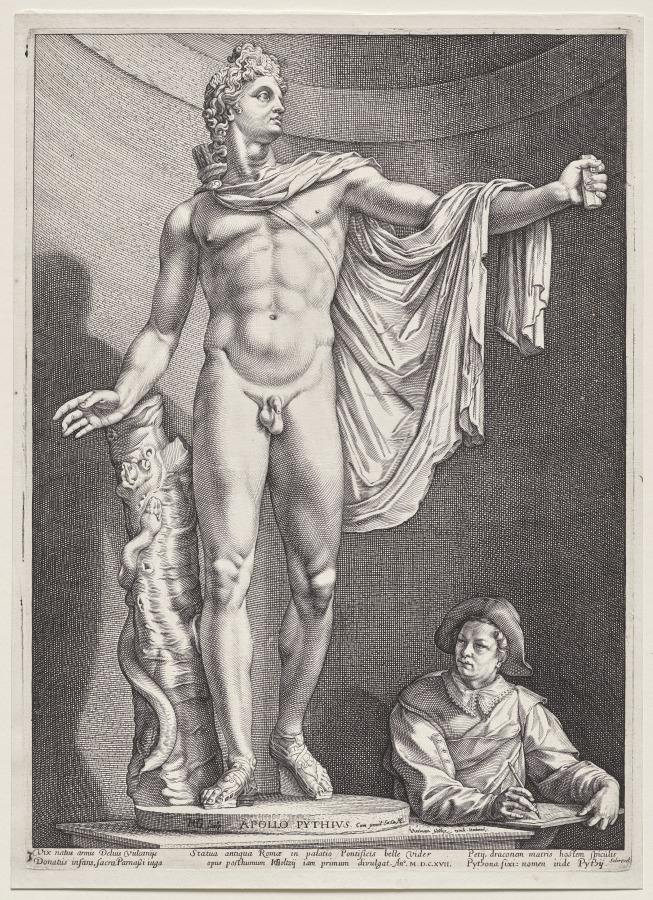
He returned to Haarlem, bringing from Italy a large collection of drawings that he used for the rest of his life; from the Roman material three engravings of classical statues are known, including the Farnese Hercules.
mid-1590s
Turn toward classicism
In the mid-1590s his art underwent a gradual stylistic turn toward classicism; at the same time he began executing large finished pen drawings on parchment in a calligraphic technique imitating the methods of burin engraving.
c. 1600
Abandoning engraving for painting
Around 1600, partial paralysis of his right hand (maimed in childhood in a fall onto burning coals) forced Goltzius to give up engraving and turn to painting; he handed over his print publishing to his stepson Jacob Matham. About fifty surviving paintings are attributed to him.
1603–1605
Pupil: Jan van den Bergh