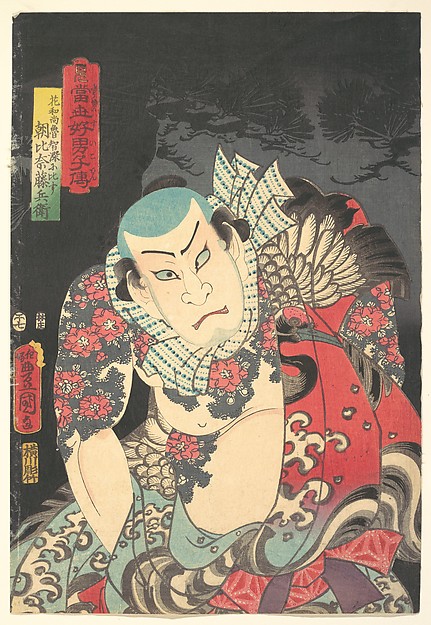
Utagawa Kunisada日本, 1786–1865
A Picnic
可否一睹真容?
未知

阿姆斯特丹国家博物馆
阿姆斯特丹, 荷蘭
所有者已知,目前是否展出尚不清楚。
- 出处
- 博物馆
关于作品
博物馆的介绍 — 荷兰语
Een rode mat met een shamisen (Japans snaarinstrument) en een picknickset. Net als het gedicht, verwijst ook de afbeelding naar een feestje ter gelegenheid van het bloeien van de kersenbomen. Wanneer de kersenbloesems in volle bloei zijn, zijn er in Japan traditiegetrouw veel feestjes met onder de bomen picknickende mensen.
阿姆斯特丹国家博物馆
作品信息
- 馆藏编号
- RP-P-1999-257-9
画面内容
已收入目录
出处
- 阿姆斯特丹国家博物馆
- 图片: 阿姆斯特丹国家博物馆 — public domain
与此同时,在Utagawa Kunisada的生活中
完整生平1808
Beginning of Work as a Book Illustrator
From 1808 he worked as a book illustrator, and the popularity of his drawings grew year by year. In 1808 or 1809 his first series of portraits of theatre actors appeared.
1809
The "Star" of the Utagawa School
Contemporaries called him the "star" of the Utagawa school; his first bijin-ga series and a series of views of Edo appeared at the same time, and in 1810–1811 he was judged the equal in skill of his teacher Toyokuni.
from 1810
The Pseudonym Gogotei
He began using the pseudonym Gogotei (a hidden reference to his father's ferry business), which appears on nearly all his kabuki-themed prints up to 1842.
1813
Second Master of Ukiyo-e After Toyokuni
A contemporary ranking of the most important ukiyo-e masters placed Kunisada second only to his teacher Toyokuni — official recognition in the art world of Edo.