Georges BraqueFransa, 1882–1963
Bass
Görebilir miyim?
Şu anda sergilenmiyor
“Bass” şu anda nerede? Koleksiyon: Art Institute of Chicago, Şikago. Şu anda sergilenmiyor. Kontrol edildi 2 Kasım 2026.

Şikago, Amerika Birleşik Devletleri
Koleksiyona ait, ancak şu anda sergilenmiyor.
- Kontrol edildi
- Bu durumun başlangıcı
- Kaynak
- Müze
Eser hakkında
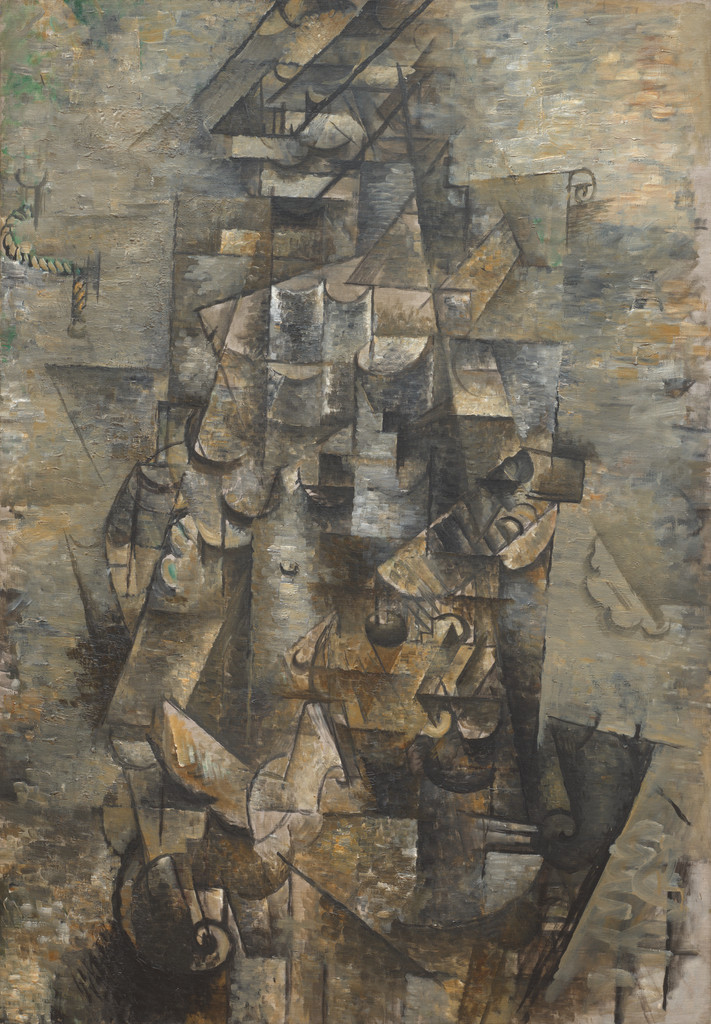
One of the more frequently depicted objects in Braque's limited stock of subjects is a bottle of liquor. Here, Braque provides the brand name for what must have been a bottle of Bass Ale, produced in England since 1777.
Art Institute of ChicagoCC BY 4.0
Ayrıntılar
- Envanter numarası
- 1955.605
Katalogda
Kaynaklar
- Art Institute of Chicago
- Görsel: Art Institute of Chicago — © the artist or rights holder
Georges Braque: hayatındaki yeri
Tüm yaşam öyküsü1909–1912
Creates Cubism together with Picasso
From 1909 to 1912 (other accounts say from as early as 1908) Braque worked with Picasso on the theoretical foundations of Cubism and became one of the movement's founders; for many years their paintings of the period were indistinguishable. Braque likened their partnership to being roped together on a mountain.
summer 1911
Summer in Céret, side by side with Picasso
The summer of 1911 was decisive for Cubism: Braque and Picasso painted side by side in Céret in the French Pyrenees, and their canvases of that time are hard, sometimes virtually impossible, to tell apart.
1912
Invents papier collé
In 1912 Braque and Picasso began experimenting with collage, and Braque invented the technique of papier collé — pasted paper.
1914
Goes to war, ending the partnership with Picasso
Braque and Picasso worked closely together until the outbreak of the First World War in 1914, when Braque enlisted in the French Army.
1915
Severe head wound at Carency
In battle at Carency Braque suffered a severe head wound and temporary blindness. He was trepanned and needed a long period of recuperation.
late 1916
Returns to painting
At the end of 1916 (other accounts say only in 1917) Braque took up painting again. Working alone now, he softened the harsh abstraction of Cubism; in these years still life almost entirely dominates his work.