ART WIKI37 788 visas
KartaSamlingKonstnärerMuseerUtställningarJournal
Logga in

ART WIKI

Var du kan se konst och när du kan besöka museet.

Samlingar: Art Institute of Chicago, Cleveland Museum of Art, Cooper Hewitt, Smithsonian Design Museum, Eremitaget, Getty Villa, Harvard Art Museums, Hirshhorn Museum and Sculpture Garden, J. Paul Getty Museum, Louvren, Metropolitan Museum of Art, Minneapolis Institute of Art, Museum of Modern Art, National Gallery of Art, National Museum of Asian Art, National Portrait Gallery (Smithsonian), Pusjkinmuseet, Rijksmuseum, Ryska museet, Smithsonian American Art Museum, Statens Museum for Kunst, Tretjakovgalleriet, Victoria and Albert Museum, Whitney Museum of American Art, Yale Center for British Art, Yale University Art Gallery, Ryska museifondens statliga katalog (274 museer), Europeana (19 museer), Wikidata (44 museer), Paris Musées (12 museer), Joconde, franska kulturministeriets museidatabas (495 museer) och Catalogo generale dei Beni Culturali, italienska kulturministeriets kulturarvskatalog (25 museer). Bilderna tillhör respektive rättighetsinnehavare.

Avdelningar

  • Karta
  • Sök
  • Samling
  • Mästerverk
  • Stulet och försvunnet
  • Bädda in verkets status
  • Visas nu
  • Konstnärer

Mer

  • Museer och gallerier
  • Utställningar
  • Journal
  • Varifrån uppgifterna kommer
  • Integritet och kakor
  • Om oss
  • Användarvillkor
StartsidaKartaBläddra

Bläddra

Rokokon, 1720–1780

122 071 verk från 388 museer2 231 visas nuRensa

/
The ancient Capitol ascended by approximately one hundred steps... (Campidoglio antico a cui si ascendeva per circa cento gradini...), from "Prima Parte di Architettura, e Prospettive", Giovanni Battista Piranesi, ca. 1750Giovanni Battista PiranesiThe ancient Capitol ascended by approximately one hundred steps... (Campidoglio antico a cui si ascendeva per circa cento gradini...), from "Prima Parte di Architettura, e Prospettive"ca. 1750Metropolitan Museum of Art
The so-called Villa of Maecenas at Tivoli. Interior with two figures in the opening of an arch above. (Veduta interna della Villa di Mecenate), Giovanni Battista Piranesi, ca. 1764Giovanni Battista PiranesiThe so-called Villa of Maecenas at Tivoli. Interior with two figures in the opening of an arch above. (Veduta interna della Villa di Mecenate)ca. 1764Metropolitan Museum of Art
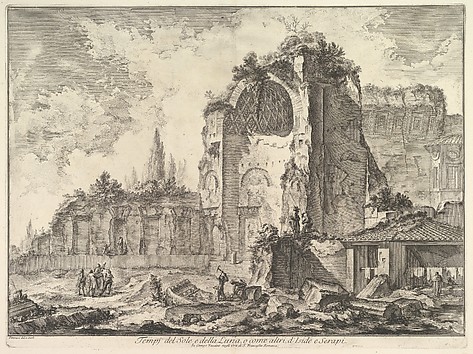
The Temple of Venus and Roma (erroneously called Temple of Sol and Luna) (Veduta degli avanzi di due triclini che appartenevano alla Casa aurea di Nerone), from "Vedute di Roma", Giovanni Battista Piranesi, ca. 1759Giovanni Battista PiranesiThe Temple of Venus and Roma (erroneously called Temple of Sol and Luna) (Veduta degli avanzi di due triclini che appartenevano alla Casa aurea di Nerone), from "Vedute di Roma"ca. 1759Metropolitan Museum of Art
Magnificent bridge with loggias, and arches erected by a Roman Emperor... (Ponte magnfiico con Logge, ed Archi erretto da un Imperatore Romane...), from "Prima Parte di Architettura, e Prospettive", Giovanni Battista Piranesi, ca. 1750Giovanni Battista PiranesiMagnificent bridge with loggias, and arches erected by a Roman Emperor... (Ponte magnfiico con Logge, ed Archi erretto da un Imperatore Romane...), from "Prima Parte di Architettura, e Prospettive"ca. 1750Metropolitan Museum of Art
Plate 13: Arch of Settimius Severus 1. Temple of Concord. 2. Ascent to the Capitoline Hill (Arco di Settimio Severo. 1. Tempio della Concordia. 2. Salita di Campidoglio.), from "Antichità Romane de' Tempi della Repubblica, e de' primi Imperatori", Giovanni Battista Piranesi, ca. 1748Giovanni Battista PiranesiPlate 13: Arch of Settimius Severus 1. Temple of Concord. 2. Ascent to the Capitoline Hill (Arco di Settimio Severo. 1. Tempio della Concordia. 2. Salita di Campidoglio.), from "Antichità Romane de' Tempi della Repubblica, e de' primi Imperatori"ca. 1748Metropolitan Museum of Art
View along the Via del Corso of the Palazzo dell'Accademia, established by Louis XIV, King of France for French students of Painting, Sculpture and Architecture..., from "Vedute di Roma" (Views of Rome), part I, Giovanni Battista Piranesi, ca. 1750–78Giovanni Battista PiranesiView along the Via del Corso of the Palazzo dell'Accademia, established by Louis XIV, King of France for French students of Painting, Sculpture and Architecture..., from "Vedute di Roma" (Views of Rome), part Ica. 1750–78Metropolitan Museum of Art
The Forum Romanum, or Campo Vaccino, from the capitol, with the Arch of Septimus Severus in the foreground left, Temple of Vespian right, and the Colosseum in the distance (Veduta di Campo Vaccino), from "Vedute di Roma", Giovanni Battista Piranesi, ca. 1775Giovanni Battista PiranesiThe Forum Romanum, or Campo Vaccino, from the capitol, with the Arch of Septimus Severus in the foreground left, Temple of Vespian right, and the Colosseum in the distance (Veduta di Campo Vaccino), from "Vedute di Roma"ca. 1775Metropolitan Museum of Art
Remains of ancient buldings among which stands the sepulchral urn of Marcus Agrippa made entirely of porphyry, which serves today as the Tomb of Clement XII... (Vestiggi d'antichi Edifici fra i quali evvi l'Urna Sepolcrale tutta d'un pezzo di...), from "Prima Parte di Architettura, e Prospettive", Giovanni Battista Piranesi, ca. 1750Giovanni Battista PiranesiRemains of ancient buldings among which stands the sepulchral urn of Marcus Agrippa made entirely of porphyry, which serves today as the Tomb of Clement XII... (Vestiggi d'antichi Edifici fra i quali evvi l'Urna Sepolcrale tutta d'un pezzo di...), from "Prima Parte di Architettura, e Prospettive"ca. 1750Metropolitan Museum of Art
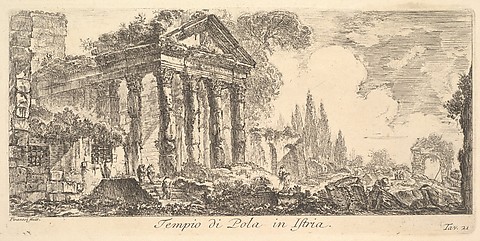
Plate 21: Temple of Pola in Istria (Tempio di Pola in Istria), from "Alcune Vedute di Archi Trionfali ed altri monumenti inalzati da Romani parte di quali se veggono in Roma e parte per l'Italia" (Some Views of Triumphal Arches and other monuments erected by the Romans, some of which are in Rome and some elsewhere in Italy), Giovanni Battista Piranesi, ca. 1748Giovanni Battista PiranesiPlate 21: Temple of Pola in Istria (Tempio di Pola in Istria), from "Alcune Vedute di Archi Trionfali ed altri monumenti inalzati da Romani parte di quali se veggono in Roma e parte per l'Italia" (Some Views of Triumphal Arches and other monuments erected by the Romans, some of which are in Rome and some elsewhere in Italy)ca. 1748Metropolitan Museum of Art
Plan of Rome..., from "Le Antichità Romane" (Roman Antiquities), Giovanni Battista Piranesi, ca. 1756Giovanni Battista PiranesiPlan of Rome..., from "Le Antichità Romane" (Roman Antiquities)ca. 1756Metropolitan Museum of Art
Imaginery ancient temple designed in the style of those built in honor of the Goddess Vesta... (Tempio antico inventato e disegnato alla maniera di quelli che si fabbricavano in onore della Dea Vesta...), from "Prima Parte di Architettura, e Prospettive", Giovanni Battista Piranesi, ca. 1750Giovanni Battista PiranesiImaginery ancient temple designed in the style of those built in honor of the Goddess Vesta... (Tempio antico inventato e disegnato alla maniera di quelli che si fabbricavano in onore della Dea Vesta...), from "Prima Parte di Architettura, e Prospettive"ca. 1750Metropolitan Museum of Art
View of St. Peter's Basilica and Piazza in the Vatican, from Vedute di Roma (Roman Views), Giovanni Battista Piranesi, ca. 1748Giovanni Battista PiranesiView of St. Peter's Basilica and Piazza in the Vatican, from Vedute di Roma (Roman Views)ca. 1748Metropolitan Museum of Art
Plate 7: Temple of Jupiter Tonans (Jupiter the Thunderer). 1. Temple of Concord. (Tempio di Giove Tonans. 1. Tempio della Concordia.), from "Antichità Romane de' Tempi della Repubblica, e de' primi Imperatori", Giovanni Battista Piranesi, ca. 1748Giovanni Battista PiranesiPlate 7: Temple of Jupiter Tonans (Jupiter the Thunderer). 1. Temple of Concord. (Tempio di Giove Tonans. 1. Tempio della Concordia.), from "Antichità Romane de' Tempi della Repubblica, e de' primi Imperatori"ca. 1748Metropolitan Museum of Art
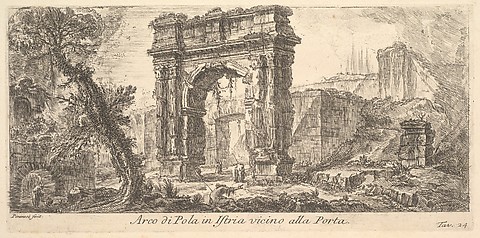
Plate 24: Arch of Pola in Istria near the Gate (Arco di Pola in Istria vicino alla Porta), from "Alcune Vedute di Archi Trionfali ed altri monumenti inalzati da Romani parte di quali se veggono in Roma e parte per l'Italia" (Some Views of Triumphal Arches and other monuments erected by the Romans, some of which are in Rome and some elsewhere in Italy), Giovanni Battista Piranesi, ca. 1750Giovanni Battista PiranesiPlate 24: Arch of Pola in Istria near the Gate (Arco di Pola in Istria vicino alla Porta), from "Alcune Vedute di Archi Trionfali ed altri monumenti inalzati da Romani parte di quali se veggono in Roma e parte per l'Italia" (Some Views of Triumphal Arches and other monuments erected by the Romans, some of which are in Rome and some elsewhere in Italy)ca. 1750Metropolitan Museum of Art
The Pyramid of Caius Cestius, with the Porta S. Paolo and adjoining road (Veduta del Sepolcro di Cajo Cestio), from "Vedute di Roma", Giovanni Battista Piranesi, ca. 1755Giovanni Battista PiranesiThe Pyramid of Caius Cestius, with the Porta S. Paolo and adjoining road (Veduta del Sepolcro di Cajo Cestio), from "Vedute di Roma"ca. 1755Metropolitan Museum of Art
The Drawbridge, from "Carceri d'invenzione" (Imaginary Prisons), Giovanni Battista Piranesi, ca. 1749–50Giovanni Battista PiranesiThe Drawbridge, from "Carceri d'invenzione" (Imaginary Prisons)ca. 1749–50Metropolitan Museum of Art
Plate 8: Arch of Drusus at the Porta S. Sebastiano in Rome (Arco di Druso alla Porta di Sebastiano in Roma), from "Antichità Romane de' Tempi della Repubblica, e de' primi Imperatori", Giovanni Battista Piranesi, ca. 1748Giovanni Battista PiranesiPlate 8: Arch of Drusus at the Porta S. Sebastiano in Rome (Arco di Druso alla Porta di Sebastiano in Roma), from "Antichità Romane de' Tempi della Repubblica, e de' primi Imperatori"ca. 1748Metropolitan Museum of Art
Chimneypiece in the Egyptian style: Two mummies in profile on the left and two figures brearing obelisks on the right (Ch. à l'ègyptienne), from Diverse Maniere d'adornare i cammini ed ogni altra parte degli edifizi...(Different Ways of ornamenting chimneypieces and all other parts of houses), Giovanni Battista Piranesi, ca. 1769Giovanni Battista PiranesiChimneypiece in the Egyptian style: Two mummies in profile on the left and two figures brearing obelisks on the right (Ch. à l'ègyptienne), from Diverse Maniere d'adornare i cammini ed ogni altra parte degli edifizi...(Different Ways of ornamenting chimneypieces and all other parts of houses)ca. 1769Metropolitan Museum of Art
S. Constanza (erroneously callled Temple of Bacchus) (Veduta interna del Sepolcro di S. Constanza, fabbricato da Costantino Magno, ed erroneamente detto il Tempio di Bacco, inoggi Chiesa della medisme Santa), from "Vedute di Roma", Giovanni Battista Piranesi, ca. 1756Giovanni Battista PiranesiS. Constanza (erroneously callled Temple of Bacchus) (Veduta interna del Sepolcro di S. Constanza, fabbricato da Costantino Magno, ed erroneamente detto il Tempio di Bacco, inoggi Chiesa della medisme Santa), from "Vedute di Roma"ca. 1756Metropolitan Museum of Art
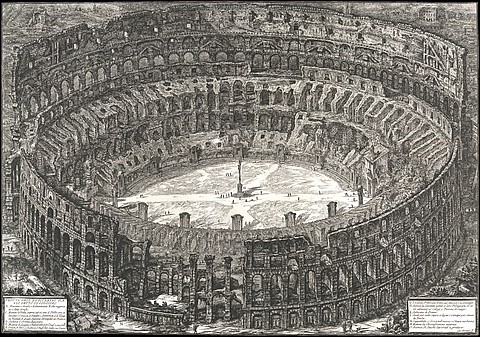
Veduta dell'Anfiteatro Flavio detto il Colosseo. From 'Vedute di Roma' (Views of Rome), Giovanni Battista Piranesi, 1776Giovanni Battista PiranesiVeduta dell'Anfiteatro Flavio detto il Colosseo. From 'Vedute di Roma' (Views of Rome)1776Metropolitan Museum of Art
Group of columns which support two arches of a great courtyard... (Gruppo di Colonne, che regge due archi d'un grande Cortile...), from "Prima Parte di Architettura, e Prospettive", Giovanni Battista Piranesi, ca. 1750Giovanni Battista PiranesiGroup of columns which support two arches of a great courtyard... (Gruppo di Colonne, che regge due archi d'un grande Cortile...), from "Prima Parte di Architettura, e Prospettive"ca. 1750Metropolitan Museum of Art
Partial elevation and plan of the first-order portico at the Theater of Marcellus (Dimostrazione di una parte de' portici del prim' ordine del Teatro di Marcello), from "Le Antichità Romane", Giovanni Battista Piranesi, 1756Giovanni Battista PiranesiPartial elevation and plan of the first-order portico at the Theater of Marcellus (Dimostrazione di una parte de' portici del prim' ordine del Teatro di Marcello), from "Le Antichità Romane"1756Metropolitan Museum of Art
Plate 6: Ruins of an ancient tomb in front of ruins of an ancient aqueduct (...), from "Part one of architecture and perspectives: drawn and etched by Gio. Batt'a Piranesi, Venetian Architect: dedicated to Nicola Giobbe" (Prima parte di Architetture, e prospettive inventate, ed incise da Gio. Batt'a Piranesi Architetto Veneziano dedicate al Sig. Nicola Giobbe), Giovanni Battista Piranesi, 1743Giovanni Battista PiranesiPlate 6: Ruins of an ancient tomb in front of ruins of an ancient aqueduct (...), from "Part one of architecture and perspectives: drawn and etched by Gio. Batt'a Piranesi, Venetian Architect: dedicated to Nicola Giobbe" (Prima parte di Architetture, e prospettive inventate, ed incise da Gio. Batt'a Piranesi Architetto Veneziano dedicate al Sig. Nicola Giobbe)1743Metropolitan Museum of Art
The Theatre of Marcellus (Teatro di Marcello), from "Vedute di Roma", Giovanni Battista Piranesi, ca. 1757Giovanni Battista PiranesiThe Theatre of Marcellus (Teatro di Marcello), from "Vedute di Roma"ca. 1757Metropolitan Museum of Art
Plate 9: Colonnaded hall according to the custom of the ancient Romans (...), from "Part one of architecture and perspectives: drawn and etched by Gio. Batt'a Piranesi, Venetian Architect: dedicated to Nicola Giobbe" (Prima parte di Architetture, e prospettive inventate, ed incise da Gio. Batt'a Piranesi Architetto Veneziano dedicate al Sig. Nicola Giobbe), Giovanni Battista Piranesi, 1743Giovanni Battista PiranesiPlate 9: Colonnaded hall according to the custom of the ancient Romans (...), from "Part one of architecture and perspectives: drawn and etched by Gio. Batt'a Piranesi, Venetian Architect: dedicated to Nicola Giobbe" (Prima parte di Architetture, e prospettive inventate, ed incise da Gio. Batt'a Piranesi Architetto Veneziano dedicate al Sig. Nicola Giobbe)1743Metropolitan Museum of Art
Frontispiece to "Opere varie di architettura, prospettive grotesshi antichità", Giovanni Battista Piranesi, 1750Giovanni Battista PiranesiFrontispiece to "Opere varie di architettura, prospettive grotesshi antichità"1750Metropolitan Museum of Art
S. Giovanni in Laterano, main façade, with Palace and Scala Santa on the right (Veduta della Basilica di S. Giovanni Laterano), from "Vedute di Roma", Giovanni Battista Piranesi, ca. 1749Giovanni Battista PiranesiS. Giovanni in Laterano, main façade, with Palace and Scala Santa on the right (Veduta della Basilica di S. Giovanni Laterano), from "Vedute di Roma"ca. 1749Metropolitan Museum of Art
The Skeletons, from "Grotteschi" (Grotesques), Giovanni Battista Piranesi, ca. 1748Giovanni Battista PiranesiThe Skeletons, from "Grotteschi" (Grotesques)ca. 1748Metropolitan Museum of Art
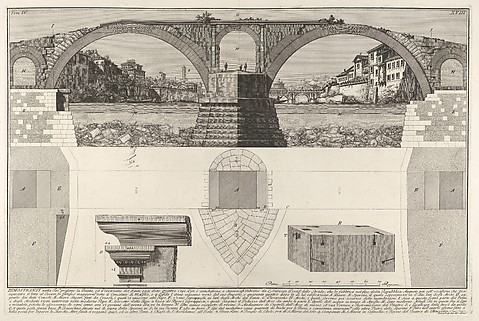
Plan and elevation of the Pons Fabricius (also known as the Quattro Capi Bridge), Rome, from "Le Antichità Romane", Giovanni Battista Piranesi, 1756Giovanni Battista PiranesiPlan and elevation of the Pons Fabricius (also known as the Quattro Capi Bridge), Rome, from "Le Antichità Romane"1756Metropolitan Museum of Art
View of the stone pavement of the Appian Way (Veduta dell'antica Via Appia), from "Le Antichità Romane", Giovanni Battista Piranesi, 1756Giovanni Battista PiranesiView of the stone pavement of the Appian Way (Veduta dell'antica Via Appia), from "Le Antichità Romane"1756Metropolitan Museum of Art
Plate 18: The Tomb of the Scipios (Sepolcro della famiglia de' Scipioni), from "Alcune Vedute di Archi Trionfali ed altri monumenti inalzati da Romani parte di quali se veggono in Roma e parte per l'Italia", Giovanni Battista Piranesi, ca. 1748Giovanni Battista PiranesiPlate 18: The Tomb of the Scipios (Sepolcro della famiglia de' Scipioni), from "Alcune Vedute di Archi Trionfali ed altri monumenti inalzati da Romani parte di quali se veggono in Roma e parte per l'Italia"ca. 1748Metropolitan Museum of Art
Various Roman Ionic capitals compared with Greek examples from Le Roy [S. Maria in Trastevere, S. Paoplo fuori le Mura, S. Clemente, etc.], tab. 20 from "Della Magnificenza e d'Architettura de'Romani" (On the Grandeur and the Architecture of the Romans by Gio. Battista Piranesi, Fellow of the Royal Society of Antiquaries of London), Giovanni Battista Piranesi, mid-18th centuryGiovanni Battista PiranesiVarious Roman Ionic capitals compared with Greek examples from Le Roy [S. Maria in Trastevere, S. Paoplo fuori le Mura, S. Clemente, etc.], tab. 20 from "Della Magnificenza e d'Architettura de'Romani" (On the Grandeur and the Architecture of the Romans by Gio. Battista Piranesi, Fellow of the Royal Society of Antiquaries of London)mid-18th centuryMetropolitan Museum of Art
Vase decorated with a Bacchanalian frieze, from "Vasi, candelabri, cippi, sarcofagi, tripodi, lucerne, ed ornamenti antichi disegnati ed incisi dal Cav. Gio. Batt. Piranesi, Vol. II" (Vases, candelabra, grave stones, sarcophagi, tripods, lamps, and ornaments designed and etched by Cavalieri Giovanni Battista Piranesi), Giovanni Battista Piranesi, 1778–80Giovanni Battista PiranesiVase decorated with a Bacchanalian frieze, from "Vasi, candelabri, cippi, sarcofagi, tripodi, lucerne, ed ornamenti antichi disegnati ed incisi dal Cav. Gio. Batt. Piranesi, Vol. II" (Vases, candelabra, grave stones, sarcophagi, tripods, lamps, and ornaments designed and etched by Cavalieri Giovanni Battista Piranesi)1778–80Metropolitan Museum of Art
Frontispiece, with Statue of Minerva, from "Vedute di Roma", Giovanni Battista Piranesi, ca. 1748Giovanni Battista PiranesiFrontispiece, with Statue of Minerva, from "Vedute di Roma"ca. 1748Metropolitan Museum of Art
Veduta interna dell'Atrio del Portico di Ottavia (Internal View of the Atrium of the Portico of Octavia), in: 'Vedute di Roma' (Views of Rome), Giovanni Battista Piranesi, 1760Giovanni Battista PiranesiVeduta interna dell'Atrio del Portico di Ottavia (Internal View of the Atrium of the Portico of Octavia), in: 'Vedute di Roma' (Views of Rome)1760Metropolitan Museum of Art
Plate 3: Ancient mausoleum erected for the ashes of a Roman emperor (Mausoleo antico eretto per le ceneri d'un imperadore romano), from "Part one of architecture and perspectives: drawn and etched by Gio. Batt'a Piranesi, Venetian Architect: dedicated to Nicola Giobbe" (Prima parte di Architetture, e prospettive inventate, ed incise da Gio. Batt'a Piranesi Architetto Veneziano dedicate al Sig. Nicola Giobbe), Giovanni Battista Piranesi, 1743Giovanni Battista PiranesiPlate 3: Ancient mausoleum erected for the ashes of a Roman emperor (Mausoleo antico eretto per le ceneri d'un imperadore romano), from "Part one of architecture and perspectives: drawn and etched by Gio. Batt'a Piranesi, Venetian Architect: dedicated to Nicola Giobbe" (Prima parte di Architetture, e prospettive inventate, ed incise da Gio. Batt'a Piranesi Architetto Veneziano dedicate al Sig. Nicola Giobbe)1743Metropolitan Museum of Art
View through the Herculaneum Gate, Pompeii, Giovanni Battista Piranesi, 1778Giovanni Battista PiranesiView through the Herculaneum Gate, Pompeii1778Metropolitan Museum of Art
Frontispiece, with Statue of Minerva, from "Vedute di Roma", Giovanni Battista Piranesi, ca. 1748Giovanni Battista PiranesiFrontispiece, with Statue of Minerva, from "Vedute di Roma"ca. 1748Metropolitan Museum of Art
Plate 15: Forum of Augustus (Foro di Augusto), from "Antichità Romane de' Tempi della Repubblica, e de' primi Imperatori", Giovanni Battista Piranesi, ca. 1748Giovanni Battista PiranesiPlate 15: Forum of Augustus (Foro di Augusto), from "Antichità Romane de' Tempi della Repubblica, e de' primi Imperatori"ca. 1748Metropolitan Museum of Art
Chimneypiece in the Egyptian style: Groups of three female nudes at the base of each jamb, surmounted by larger kneeling figures), from Diverse Maniere d'adornare i cammini ed ogni altra parte degli edifizi...(Different Ways of ornamenting chimneypieces and all other parts of houses), Giovanni Battista Piranesi, ca. 1769Giovanni Battista PiranesiChimneypiece in the Egyptian style: Groups of three female nudes at the base of each jamb, surmounted by larger kneeling figures), from Diverse Maniere d'adornare i cammini ed ogni altra parte degli edifizi...(Different Ways of ornamenting chimneypieces and all other parts of houses)ca. 1769Metropolitan Museum of Art
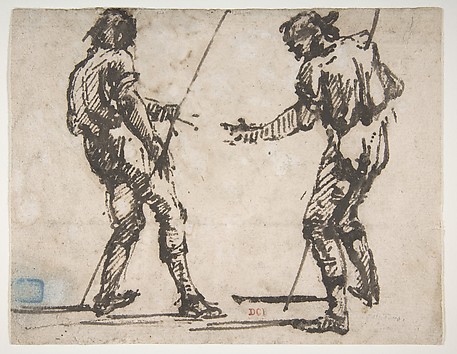
Two Men Holding Long Staffs (recto); Proof impression of part of an etching, and scribbles in the artist's hand (verso), Giovanni Battista Piranesi, 1720–78Giovanni Battista PiranesiTwo Men Holding Long Staffs (recto); Proof impression of part of an etching, and scribbles in the artist's hand (verso)1720–78Metropolitan Museum of Art
The so-called Temple of Salus, on the road to Albano (Tempio antico volgarmente detto della Salute), Giovanni Battista Piranesi, ca. 1763Giovanni Battista PiranesiThe so-called Temple of Salus, on the road to Albano (Tempio antico volgarmente detto della Salute)ca. 1763Metropolitan Museum of Art
View of the Façade of the Basilica of S. Croce in Gerusalemme [the Holy Cross in Jerusalem], from Vedute di Roma (Roman Views), Giovanni Battista Piranesi, ca. 1750Giovanni Battista PiranesiView of the Façade of the Basilica of S. Croce in Gerusalemme [the Holy Cross in Jerusalem], from Vedute di Roma (Roman Views)ca. 1750Metropolitan Museum of Art
The Temple of Vespasian and Titus (Veduta del Tempio di Giove Tonante), Giovanni Battista Piranesi, ca. 1756Giovanni Battista PiranesiThe Temple of Vespasian and Titus (Veduta del Tempio di Giove Tonante)ca. 1756Metropolitan Museum of Art
St. Giovanni in Laterano, Interior, from "Vedute di Roma" (Views of Rome), Giovanni Battista Piranesi, ca. 1768Giovanni Battista PiranesiSt. Giovanni in Laterano, Interior, from "Vedute di Roma" (Views of Rome)ca. 1768Metropolitan Museum of Art
View of the exterior of St. Peter's Basilica in the Vatican, from Vedute di Roma (Roman Views), Giovanni Battista Piranesi, ca. 1748Giovanni Battista PiranesiView of the exterior of St. Peter's Basilica in the Vatican, from Vedute di Roma (Roman Views)ca. 1748Metropolitan Museum of Art
Plan of a spacious and magnificent College designed after the ancient gymnasia of the Greeks and the baths of the Romans..., from "Opere Varie di Architettura, prospettive, grotteschi, antichità; inventate, ed incise da Giambattista Piranesi Architetto Veneziano" (Various Works of Architecture, perspectives, grotesques and antiquities; designed and etched by Giambattista Piranesi, Venetian Architect), Giovanni Battista Piranesi, 1750Giovanni Battista PiranesiPlan of a spacious and magnificent College designed after the ancient gymnasia of the Greeks and the baths of the Romans..., from "Opere Varie di Architettura, prospettive, grotteschi, antichità; inventate, ed incise da Giambattista Piranesi Architetto Veneziano" (Various Works of Architecture, perspectives, grotesques and antiquities; designed and etched by Giambattista Piranesi, Venetian Architect)1750Metropolitan Museum of Art
The Tomb of Nero, from "Grotteschi" (Grotesques), Giovanni Battista Piranesi, ca. 1748Giovanni Battista PiranesiThe Tomb of Nero, from "Grotteschi" (Grotesques)ca. 1748Metropolitan Museum of Art
55