Man RayUSA, 1890–1976
Tanja Ramm
Kan jag se verket?
Ja, visas nu
Var finns ”Tanja Ramm” nu? Art Institute of Chicago, Sal 1, Chicago. Ja, visas nu. Kontrollerat 2 november 2026.

Chicago, USA
Stängt· öppnar i morgon 11:00
Visas för allmänheten.
- Kontrollerat
- Denna status sedan
- Källa
- Museet
Om verket
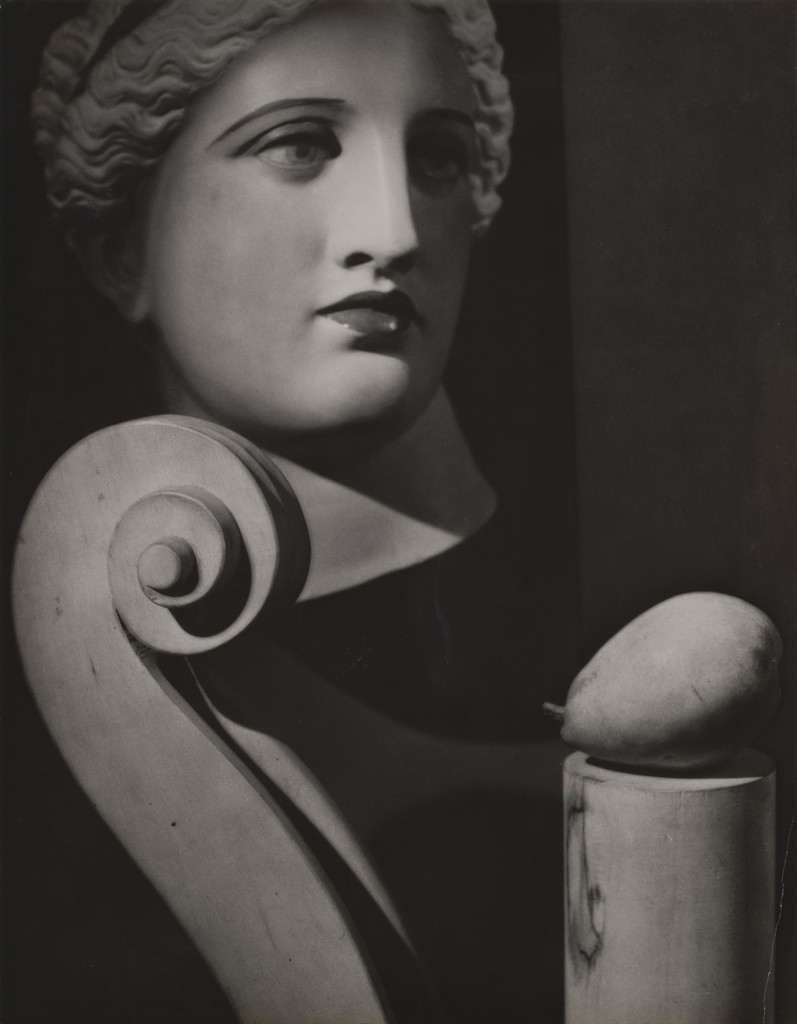
In addition to participating in the Parisian art circles of the 1920s, Man Ray supported himself with portraiture and fashion photography for magazines like Vanity Fair and Vogue. As evidenced by his photograph of the model Tanja Ramm, studio work afforded him room to experiment. Man Ray made a series of views of Ramm that departed from his more conservative portraits by incorporating solarization, one of his signature darkroom techniques, which involved exposing developed but unfixed negatives to additional light. The success of this photograph led him to employ the technique for future portraits, including those of painter Giorgio de Chirico and Surrealist writer André Breton.
Art Institute of ChicagoCC BY 4.0
Uppgifter
- Inventarienummer
- 1979.95
I katalogen
Källor
- Art Institute of Chicago
- Bild: Art Institute of Chicago — © the artist or rights holder
I Man Rays liv
Hela livet1920s
A photography studio: portraits of Paris bohemia
Convinced that he cannot make a living from his art alone, Ray buys a camera and opens a studio; he creates a series of famous photographic portraits of Erik Satie, James Joyce, Gertrude Stein and Jean Cocteau.
1920s
Discovering Eugène Atget with Berenice Abbott
Together with his assistant Berenice Abbott, Ray discovers the photography of Eugène Atget, bringing it to the attention of the Surrealists and a wider public.
1927
Portraits of the Maharaja of Indore and his wife
A series of photographs of Maharaja Yashwant Rao Holkar II of Indore and his wife Sanyogita Devi, taken during their 1927 visit to Europe, reflects Ray's international fame as a portrait photographer.
1929
An affair with Lee Miller and solarization
Ray begins a love affair with the Surrealist photographer Lee Miller, who is also his photographic assistant; together they reinvent the technique of solarization. Miller leaves him in 1932.