 Хэблот Найт БраунАнглия, 1815–1882
The First Scene
Можно увидеть?
Сейчас не выставлена
Где сейчас «The First Scene»? Собрание: Музей Виктории и Альберта, Лондон. Сейчас не выставлена. Проверено 25 сентября 2026 г.

Лондон, Великобритания
Числится в собрании, но в залах её сейчас нет.
- Проверено
- Этот статус с
- Источник
- Музей
О работе
Словами музея — на английском
Hablot Knight Browne (1815-1882) studied sporadically at the St. Martin's Lane Academy life class and was apprenticed to the engraver William Finden. He established an illustrator's workshop in 1834. He began collaborating with Charles Dickens on The Posthumous Papers of the Pickwick Club first signing himself as 'Nemo' and then 'Phiz' (a depicter of physiognomies) to harmonize with Dickens' 'Boz'. Working under the name of 'Phiz', Browne produced illustrations for a number of Dickens books, including Dombey and Son and Martin Chuzzlewit, as well as publications by the author Anthony Trollope. Following the publication of Dickens' Our Mutual Friend (1864-5), which was illustrated by Marcus Stone, Hablot Knight Browne's style became unfashionable resulting in his producing less work.
Читать дальше
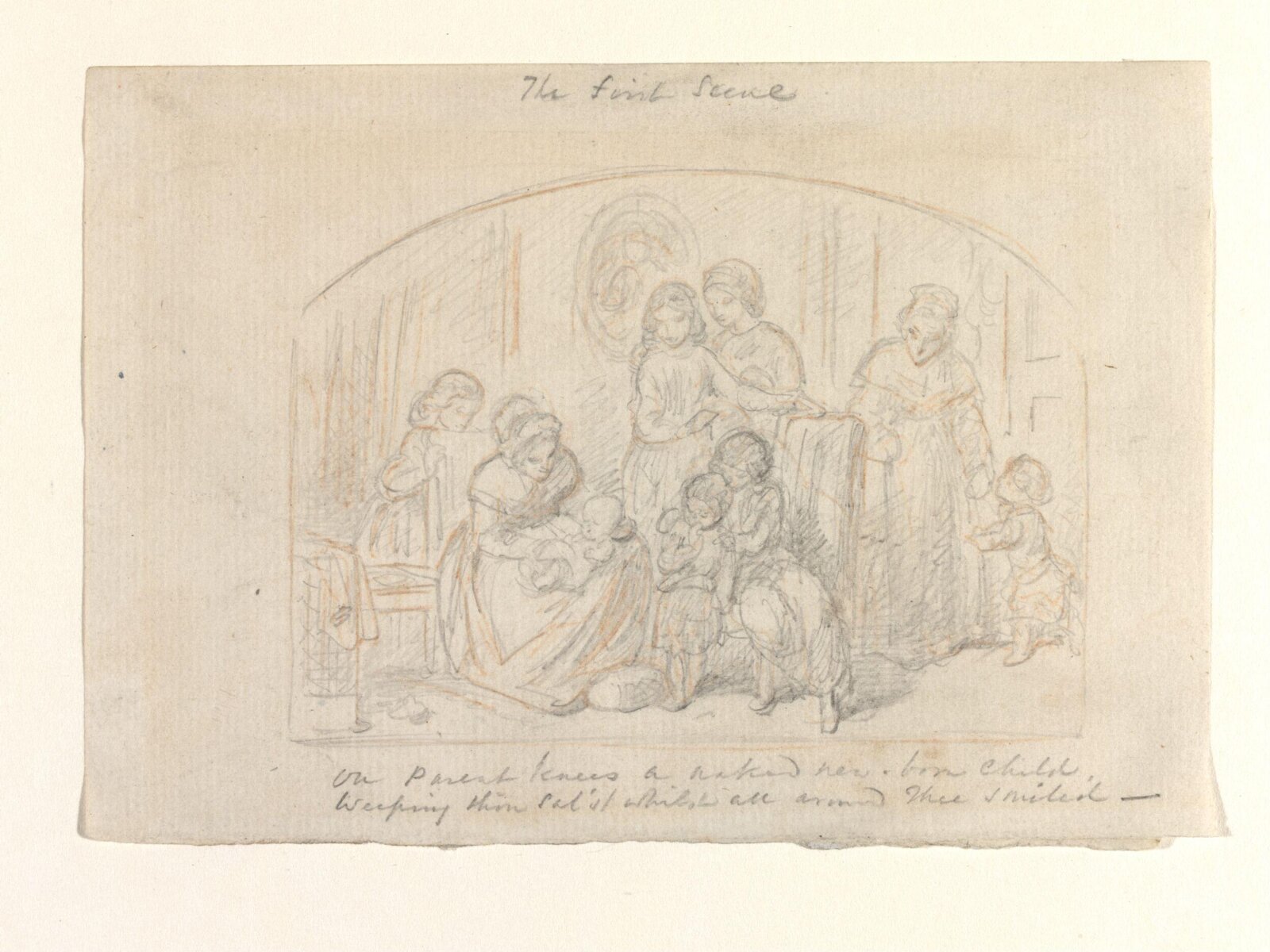
This illustration titled First Scene is a pair to one titled Last Scene (museum number E. 104-1948). It is not known if these illustrations are for a particular publication. First Scene presents a family wearing mid nineteenth century dress. The illustration is set within a drawn an arched frame. They gather around a new born baby, which is sat on a woman's knee in the centre of the room. Hablot Browne has brought variety to the composition by showing the figures both standing and sitting around the child. The different postures allow the artist to explore each figure's reaction to the arrival of a new child in their family. Above the arch is the title First Scene while below the artist has described the scene in two lines. The inclusion of a framing device and words in the composition suggest that this illustration and its companion, Last Scene were intended to be published. Scenes of family life such as this one were of popularity in the Victorian era.
The handwritten text below the image is from a Persian poem translated by Sir William Jones (1746-1794):
"On parent knees, a naked new-born child,
Weeping thou sat'st while all around thee smiled;
So live, that sinking in thy last long sleep,
Calm thou mayst smile, while all around thee weep."
Музей Виктории и Альберта
Сведения
- Инвентарный номер
- E.833-2000
В каталоге
Источники
- Музей Виктории и Альберта
- Изображение: Музей Виктории и Альберта — © Музей Виктории и Альберта









