 Жак КаллоФранция, 1592–1635
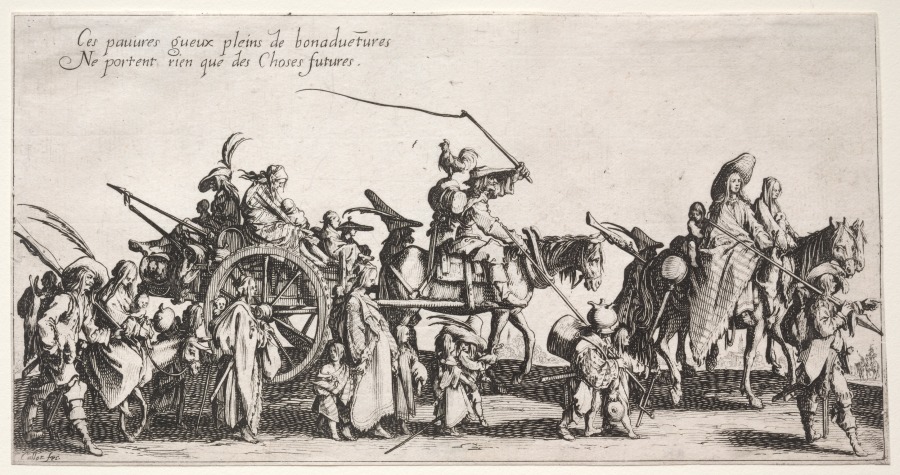
The Bohemians
Можно ли лицезреть?
Сейчас не принимает

Художественный музей Кливленда
Кливленд, США
Числится в собрании, но в залах её сейчас нет.
- Проверено
- В этом положении с
- Источник
- Музей
О работе
Словами музея — на английском
Jacques Callot, a masterful draftsman, spent the greater part of his life at the ducal courts of Tuscany and Lorraine, where he produced prints to record festivals and theatrical performances. He also executed religious subjects and scenes reflecting many aspects of daily life including war, pervasive in 17th-century Europe. When returning to France from Italy, Callot probably saw bands of rootless men, women, and children-a common sight-which became the subject of The Bohemians. He conceived of these four prints as a long frieze; the lines in each of the sheets extend into the sheet that follows. The first two scenes depict a procession of scrawny horses and disheveled families in tattered, exotic clothing. The last two show these vagrants pillaging a farm and then enjoying a feast.
Читать дальше
The inscriptions, from left to right, comment on the action: The only things these poor fortune-telling beggars carry with them are things yet to come. Are these not fine messengers, straying through foreign lands? You who take pleasure in their words, watch out for your blancs, testons and pitolles (coins). When all is said and done, they find that their fate is to have come from Egypt to this feast.
Художественный музей Кливленда
Сведения
- Инвентарный номер
- 2004.42
В каталоге
Источники
- Художественный музей Кливленда
- Изображение: Художественный музей Кливленда — открытый доступ музея
А тем временем в жизни художника
Вся жизнь целиком1611–1621
Место работы: Флоренция
1614–1621
При дворе Козимо II Медичи
Под руководством Париджи Калло работает при дворе великого герцога Тосканского Козимо II Медичи во дворце Уффици, оформляя празднества и театральные представления, — позднее это даст ему темы для серий гротескных гравюр; во флорентийские годы он становится независимым мастером и нередко трудится для Медичи.
1621
Возвращается в Нанси после смерти Козимо II
После смерти великого герцога Козимо II Медичи Калло откликается на желание герцога Карла IV Лотарингского видеть его при своём дворе и возвращается в Лотарингию, где его принимают лестно; оставаясь в Нанси, он рассылает оттиски по всей Европе, а Рембрандт становится увлечённым коллекционером его гравюр.
1621–1635
Место работы: Нанси