Genta Ishizuka
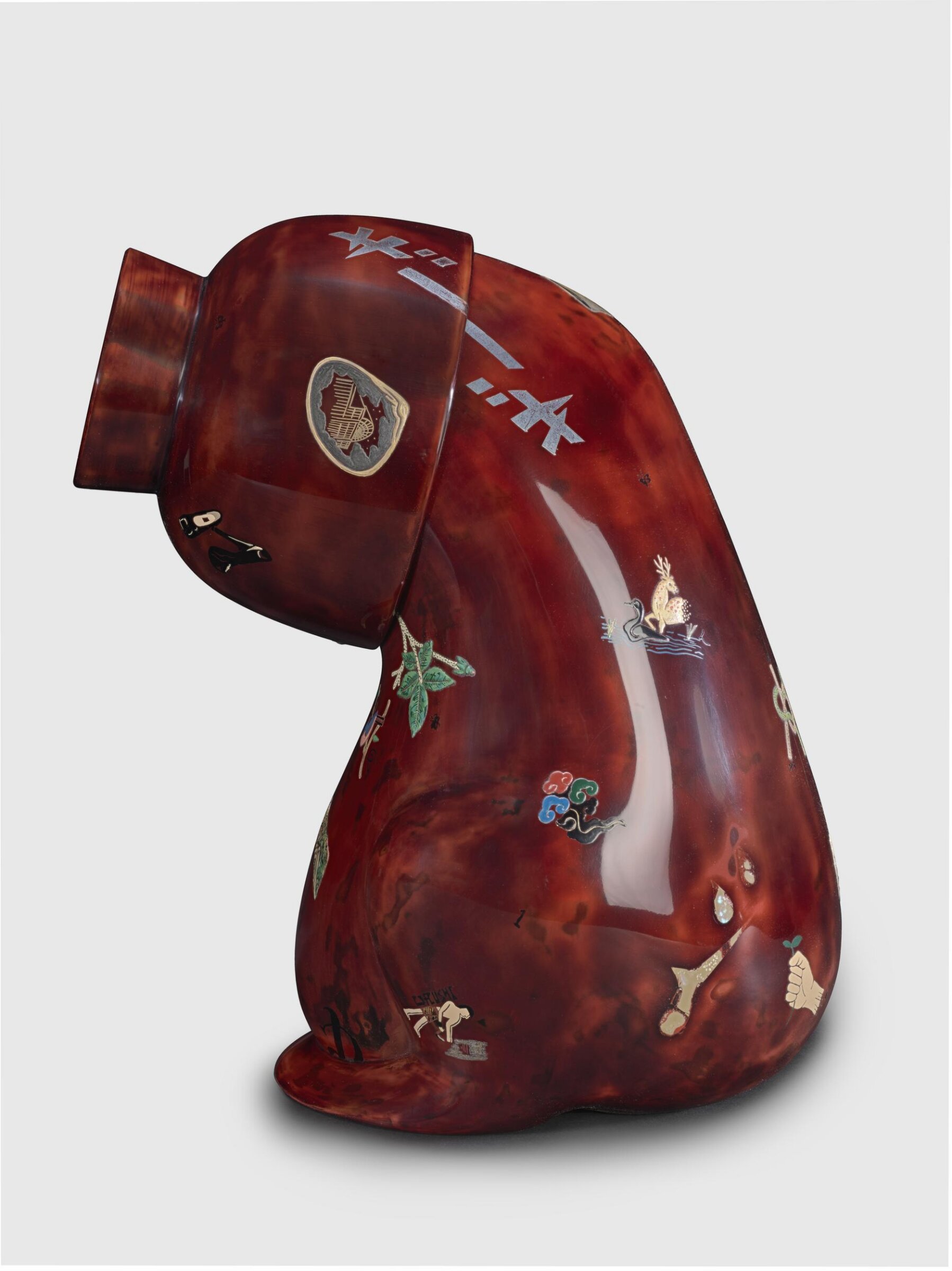
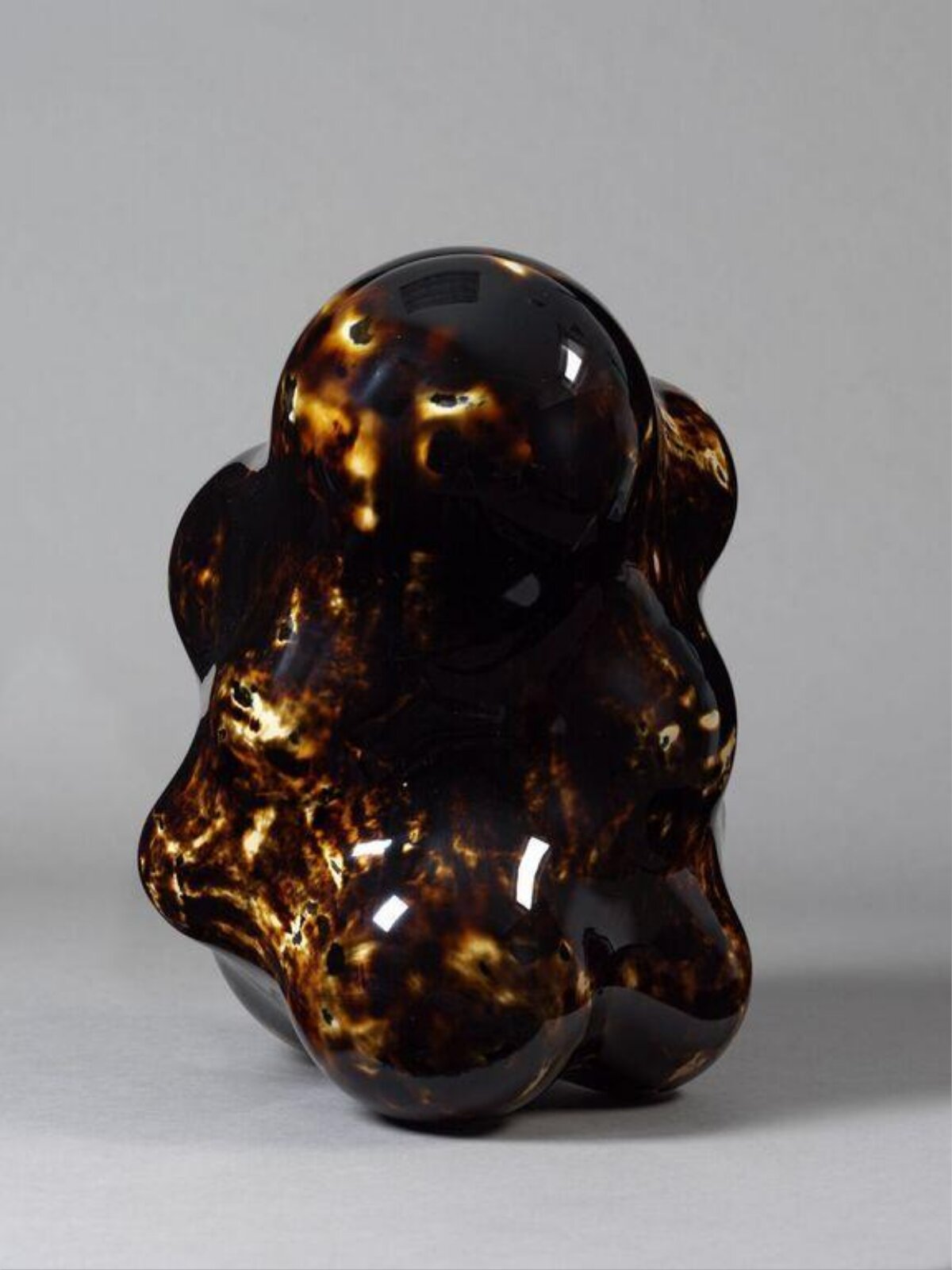
Surface Landscape #1
Можно ли лицезреть?
Сейчас не принимает

Музей Виктории и Альберта
Лондон, Великобритания
Числится в собрании, но в залах её сейчас нет.
- Проверено
- В этом положении с
- Источник
- Музей
О скульптуре
Словами музея — на английском
Asian lacquer is a remarkable material. The variety found in Japan, where it has been used for many thousands of years, is known as urushi. It consists of the sap of the Toxicodendron vernicifluum tree. Tapped, processed and applied to a substrate by brush or spatula in a series of thin layers, urushi hardens when high levels of humidity cause enzymes within it to trigger its polymerization into a kind of natural plastic.
Hardened urushi is glossy, robust and impervious to water, alchohol and other common substances. Its one weakness is vulnerability to light, especially UV light, which causes surface micro-cracking and loss of sheen.
Working with urushi is a challenging and time-consuming business. Despite this, urushi continues to be used extensively in Japan for making tableware and other domestic objects, and also for creating unique works of art.
Читать дальше
This particular piece by Ishizuka was made using the kanshitsu (dry-lacquer) method. The technique was initially used in Japan during the seventh and eighth centuries to produce Buddhist sculptures. It is popular today because of the freedom it gives makers to experiment with novel shapes.
Kanshitsu resembles papier-mâché in how a substrate is created by applying successive layers of adhesive-impregnated material over a mould. Kanshitsu differs from papier-mâché in that the material used is hemp cloth rather than paper and the adhesive consists wholely or partly of urushi.
Once the thin but rigid form has been made, it is covered with foundation layers consisting of urushi and fillers of varying degrees of fineness. Hardening followed by polishing with whetstones and charcoal between applications ensures that the surface remains smooth throughout.
The making process is completed with the application of several layers of pure urushi, which can be pigmented or clear. The mottled effect was achieved by applying layers of differently coloured urushi and polishing partially through them after hardening.
The unique quality of Ishizuka’s smoothly undulating shapes comes from the way he manipulates polystyrene spheres of varying diameters inside stretchy 2-way knitted (tricot) nets to create the underlying forms over which he builds his urushi-impregnated hemp substrates. Where did he get the idea for this? The answer is oranges in supermarkets sold in mesh bags.
A point Ishizuka likes to stress about his approach to using the kanshitsu technique is that it is heteronomous, which is to say that he is subject to forces or laws external to himself. In practical terms, this means that rather than setting out with a fixed idea of what he intends to make, he responds dynamically to the movement of the polystyrene spheres in their nets and then, once the substrate has hardened, applies and polishes the foundation and pure urushi layers as if in dialogue with the object evolving in front of him. This way of working is not unique to Ishizuka, but the fact that he actively draws attention to it suggests he sees it as a particularly positive and enjoyable aspect of what he does.
Ishizuka was born in Kyoto in 1982. When at high-school, his father, a cabinet maker, took him to see an exhibition of the work of Kuroda Tatsuaki (1904-1982). Kuroda was to world of modern Japanese urushi what Hamada Shōji (1894-1978) was to the world of modern Japanese ceramics. Ishizuka’s encounter with Kuroda was a life-changing moment and he went on to study urushi at Kyoto City University of Arts. After completing his BFA in 2006, he spent four months in London, including one term on the Design Products Programme at the Royal College of Art, whose head at that time was Ron Arad. He completed his MFA at Kyoto City University of Arts in 2008 and has been a freelance artist since then.
Музей Виктории и Альберта
Сведения
- Инвентарный номер
- FE.63-2017
В каталоге
Источники
- Музей Виктории и Альберта
- Изображение: Музей Виктории и Альберта — © Музей Виктории и Альберта