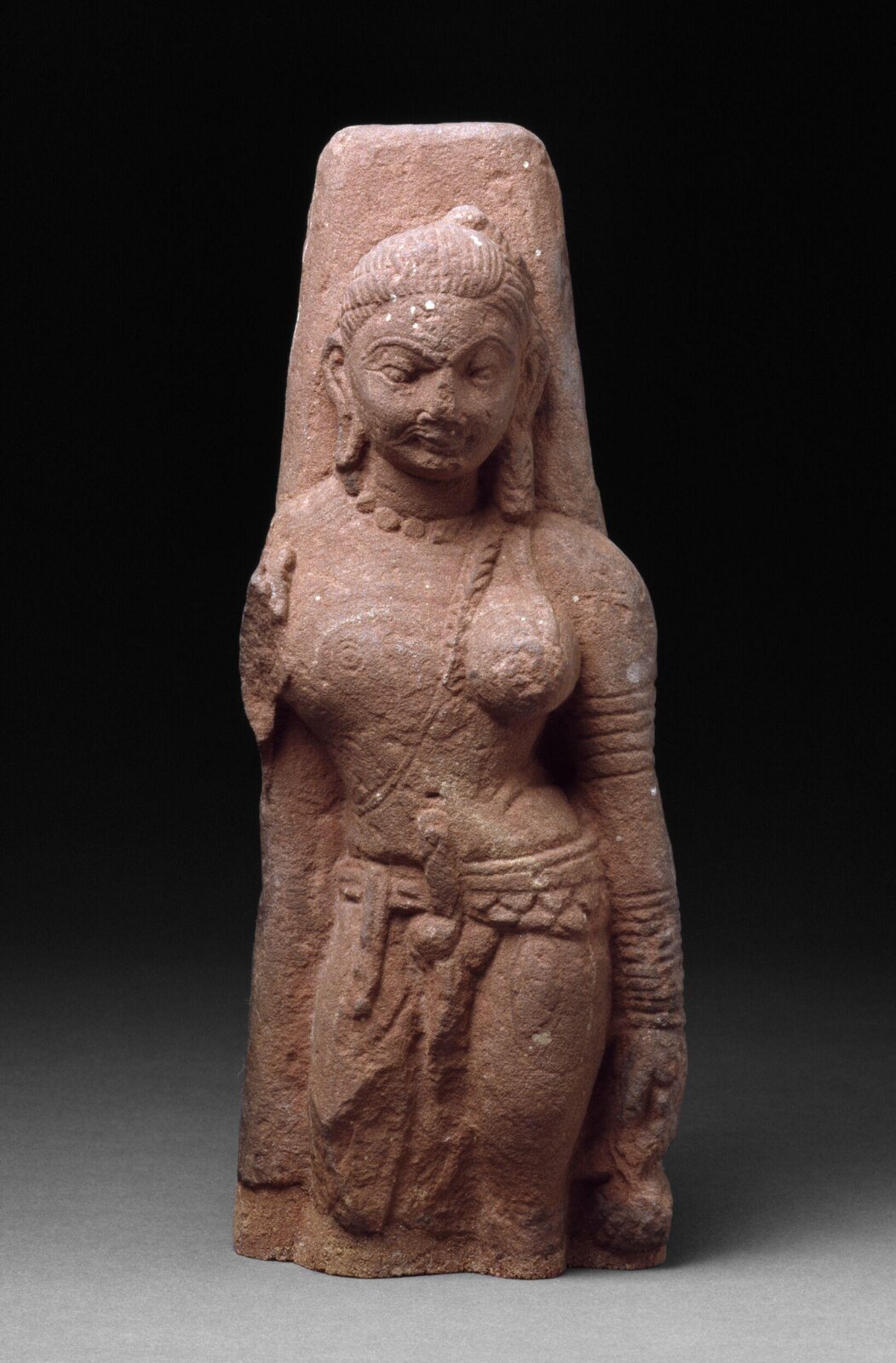
Shiva Ardhanarishvara
Можно ли лицезреть?
Сейчас не принимает

Музей Виктории и Альберта
Лондон, Великобритания
Числится в собрании, но в залах её сейчас нет.
- Проверено
- В этом положении с
- Источник
- Музей
О скульптуре
Словами музея — на английском
This red sandstone carving shows a knee-length composite figure in high relief. It represents Shiva in the Ardhanarishvara Murti, the name of the androgynous form in which Shiva is depicted as 'the Lord who is Half-woman'. This form was among the earliest anthropomorphic sculptures of Shiva to appear. In this manifestation, Shiva reveals himself in a form that is both male and female, divided vertically, with his consort Parvati occupying his left-half. This example, from the early Kushan period, is amongst the earliest known occurrences of this subject. In addition to these all too rare examples of Kushan period Ardhanarishvara figures, this subject also appears as one of the Shiva’s faces on some of the earliest caturmukhalinga (‘four-faced linga’). These depictions, important from the beginnings of anthropomorphic representation of the Brahmanical gods, give form to concepts already expressed in the most ancient compendium of Indian religious thought, the Rigveda.
Читать дальше
Carved in high relief, the composite figure stands in a relaxed manner, with a vertical division separating the two entities. Shiva’s form is on the right, distinguished by a taut muscular and ‘masculine’ form and the aroused penis which projects upwards from his waist-cloth. Shiva’s third eye is vertically divided and only half represented; similarly, the hair styles differ, set apart by this vertical divide. Parvati’s half is more rounded and ‘feminine’ in its form, and displays a single breast, long tresses of hair and a decorated girdle, clearly distinguished from Shiva’s simple waist cord. Parvati’s hand appears to hold a flower; the missing arm of Shiva presumably was gesturing protection (abhayamudra), as seen on other surviving examples of this subject.
The figure stands against a linga, Shiva’s emblem. It is trapezoidal in shape. On the reverse the carved anatomical markings suggest phallic associations. A demonic face is also carved in low relief, perhaps a depiction of Rudra the ‘howler’, the wild Vedic god from whom Shiva (‘’the auspicious”) claims his ancestry.
Музей Виктории и Альберта
Сведения
- Инвентарный номер
- IM.5-1931
В каталоге
Источники
- Музей Виктории и Альберта
- Изображение: Музей Виктории и Альберта — © Музей Виктории и Альберта







